
Slot tournaments at UK-licensed casinos in 2026: what the leaderboard actually pays out
Current as of 6 November 2026 against the Gambling Commission’s public register of gambling businesses.
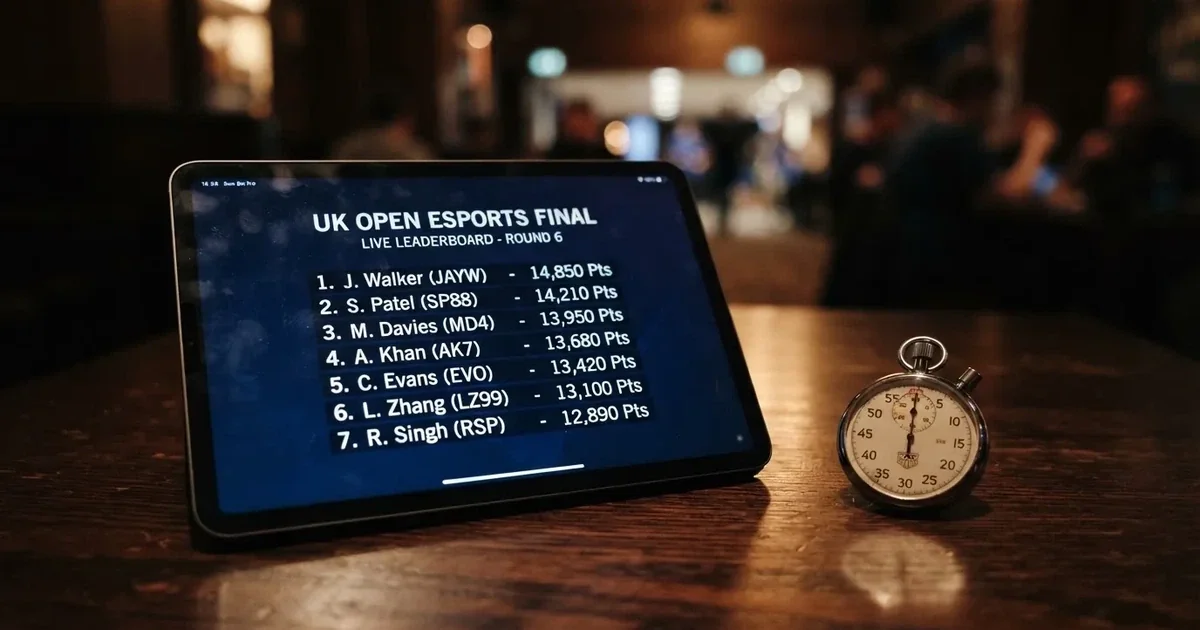
A leaderboard is the smallest unit of competition British online casinos have built into their slot lobby. Spin a chosen title, count your points over a fixed window, and the players at the top share a prize pool that the operator has set aside in cash, bonus funds or free spins. The format is a marketing vehicle, not a separate product, which is why every operator able to run one for players in Great Britain must hold a Gambling Commission remote casino licence — and why the same game-cycle stake caps and wagering limits that govern ordinary slot play govern the prize money as well. This page is a working map of how the format works, what it costs the player entering it, and which GB-licensed brands run one.
Table of Contents
- The ranked field at a glance
- How a slot tournament actually works
- The legal frame: who can run one for British players
- What an offer actually costs the player
- Payment rails that reach a tournament account
- Tournaments, leaderboards and player protection
- Crypto deposits and tournament entry
- Free entries, freerolls and what “no-deposit” really pays
- Titles and studios that tend to land on the schedule
- A note on the no-data markers
- What the licence column does not buy
- Operator notes
- Reading the rank
- What the player can verify, and what they cannot
- Frequently asked questions
The ranked field at a glance
Ten brands run slot tournaments for British players through the GB remote casino licence register, and the list below sits in the order used throughout this article. The operators share three licence accounts between them, which matters when a single rule change reaches a reader at more than one site: Ladbrokes, Coral and Gala Bingo all sit under LC International Limited, and the same set of social responsibility code provisions governs them. Paddy Power sits on PPB Games Limited; MrQ on Tek Fox Ltd; Casumo on Recro Limited; 888casino on 888 UK Limited; Jackpotjoy on Gamesys Operations Limited; bet365 on Hillside (UK Gaming) ENC; and Betfred on Petfre (Gibraltar) Limited. Every one of them is on the public register as an active domain and every one of them must take part in GAMSTOP.
The column headings below are matters worth checking before entering any tournament; the table itself is short because the licence columns repeat and the verification column is what shifts between brands.
| Brand | Licence holder and GB remote casino licence | Domain status on the register | Subject support |
|---|---|---|---|
| Paddy Power | PPB Games Limited · 039411-R-319335-010 | Active | — |
| Ladbrokes | LC International Limited · 054743-R-330863-014 | Active | — |
| MrQ | Tek Fox Ltd · 060629-R-337532-004 | Active | — |
| Coral | LC International Limited · 054743-R-330863-014 | Active | — |
| bet365 | Hillside (UK Gaming) ENC · 055149-R-331499-004 | Active | — |
| Betfred | Petfre (Gibraltar) Limited · 039544-R-319290-010 | Active | — |
| Casumo | Recro Limited · 061549-R-336718-002 | Active | — |
| 888casino | 888 UK Limited · 039028-R-319297-014 | Active | — |
| Jackpotjoy | Gamesys Operations Limited · 038905-R-319430-022 | Active | — |
| Gala Bingo | LC International Limited · 054743-R-330863-014 | Active | — |
The “subject support” column reads as a row of dashes because the public register confirms each brand’s licence and domain status — the two facts a player can verify against a regulator — but says nothing about which titles a given operator puts into its tournament schedule. That data lives on each operator’s own promotions page and changes weekly. Where this article touches a brand’s tournament offering, the source is the register for what is verifiable and operator-level terms for what is not.
How a slot tournament actually works
A tournament is a window of play on one or several named slot titles, scored on a points system the operator defines. The simplest scheme counts the highest single win relative to stake across a session of, typically, twenty or fifty spins; more elaborate formats aggregate every spin’s payout-to-stake ratio, multiply it by the spin count, and add a small bonus for hitting a free-spins round or a bonus feature. Almost every British tournament runs on the aggregate model because it rewards volume of play within the window, and the operator’s prize pot is funded by the spin count it expects to capture, not by the skill of any individual entrant.
The window matters as much as the scoring. A four-hour “sprint” rewards a player who can sit down and grind; a weekend-long leaderboard rewards the same player only at the cost of pacing spins across days. Multiplier events, where a single in-game feature doubles or triples every point earned for the next ten minutes, are the format where pacing actually shifts the outcome — the rest of the time, the spread of points across the field is wide enough that a small change in stake sizing is unlikely to move a player from outside the paid places to inside them. That is the headline finding of every strategy article on this format: variance dominates. The house has not written the rules to be beaten, only to be played.
Entry is mostly automatic on opt-in, paid for by the player’s regular slot balance. Some events are free to enter — the operator gives every entrant a fixed stake of spins on a chosen title, sometimes a hundred, sometimes a thousand, and the points count as if the player had paid for them. These “freeroll” or “no-deposit” events are the entry point the marketing copy is built around; the catch is that the prize pool of a freeroll is usually paid in bonus funds with wagering attached, where a paid-entry tournament’s pool is paid in cash. The section on bonuses and free spins below works through the cost difference.
The point formula in plain language
A tournament rule book will typically state: spins scored over the next sixty minutes, points equal to win divided by stake multiplied by ten, plus fifty bonus points per free-spins trigger, with a hard cap of one point per spin on the qualifying title. Translating that into a reader’s working vocabulary: every spin gives you a score equal to ten times what it returned relative to what it cost, with a small bonus for hitting the in-game feature, and a ceiling so that no single spin — even a max-line hit — can carry a leaderboard on its own. The cap is the operator protecting the prize pool from a single lucky spin. Without it, a £0.10 spin that returned £50 would put one player ahead of the entire field, and the event would not be a tournament at all.
That is also why the qualifying stake is so often fixed by the operator. When the stake is set, the scoring collapses to “total return across the window”; the player’s only real choice is the volume of spins, which is bounded by the window itself. Where the stake is variable, the points race tilts toward a higher stake because the win-to-stake ratio flattens out as the stake rises on most slots — the small edge a higher stake gives is real but smaller than the marketing material suggests.
The legal frame: who can run one for British players
Tournaments are a promotional format, not a separate product class, which means any operator taking British customers must already hold a Commission licence to put one in front of them. The regulator’s public register is the test. As of 18 September 2026 it listed 139 businesses holding an active remote casino operating licence; the register can be searched online and downloaded as a CSV or Excel file, with each domain attached to the licence account that runs it. The number of licence holders is much smaller than the number of websites on the register — the same list records 1065 active and 361 white-label domain entries on the same date, because a single licensee may trade under multiple brands and may also white-label its platform to other operators that trade under their own names.
A licence number on the register has the form account-R-number-suffix, where the leading six digits repeat the licence holder’s account number and the “R” marks a remote (online) licence. That pattern is the quickest way to read a licence string: the suffix is the licence version, the middle block is the running number the Commission has assigned, and the prefix is the holder. A white-label site trades under another company’s licence, so its domain appears against a holder whose name the player will not recognise — that is normal and not a red flag, so long as the holder itself is on the register as active.
Limits that touch a tournament directly
Tournaments inherit the stake caps on online slots because the qualifying spin is, mechanically, a slot spin. A player aged 25 or over is bound by the £5 maximum stake per game cycle in force since 9 April 2025; an 18-24-year-old is bound by the £2 maximum stake per game cycle in force since 21 May 2025. A tournament that defaults to a higher stake is not running legally for British customers. Auto-play is banned across the same product since 31 October 2021, with a minimum spin interval of 2.5 seconds, so any “rapid-fire” tournament rule that asks for faster play is also outside the regime. Losses disguised as wins are banned in the same instrument.
Credit cards are banned for gambling since 14 April 2020, including credit cards routed through e-wallets, which closes one tournament entry route that used to be available. Debit cards, bank transfers and the regulated e-wallets are unaffected. The Commission’s pre-deposit financial-limit prompt has been mandatory since 31 October 2025 — every first-time deposit, including a tournament entry fee paid from balance, triggers the prompt — and financial vulnerability checks now fire at £150 net deposits in a rolling 30 days, using public data only.
Wagering and bonuses on tournament prizes
Since 19 December 2025, wagering requirements on any bonus are capped at 10x the bonus amount, and mixed-product bonuses — a free bet on sport that unlocks casino spins, for instance — are banned. That cap reaches every “free spins” or “bonus funds” prize a tournament pays out, which is most freerolls and a meaningful share of paid-entry pools. The arithmetic for what 10x means in practice sits in the section below; the headline is that an older 30x or 40x multiple on a tournament win is no longer legal in the GB market, and an operator offering one is offering something a Commission-licensed brand cannot lawfully give.
What an offer actually costs the player
The promise of a tournament is a prize pool large enough that even a small share is worth entering. The cost is the wagering attached to anything that is paid as bonus funds, plus the time and balance the player spends earning the points in the first place. Stating both halves is the only honest way to read an offer.
The 10x cap in practice
A typical tournament prize paid as bonus funds might land at £100. Under the 10x cap in force since 19 December 2025, the player must turn over £1,000 in qualifying play before withdrawing — that is the entire bonus amount multiplied by ten. Stake for stake, on a slot at £1 per spin, that is one thousand spins; on a slot at the £2 younger-player cap, five hundred spins; on a slot at the £5 older-player cap, two hundred spins. The auto-play ban keeps every spin at a minimum 2.5-second interval, which is roughly seven spins a minute at the older-player cap and three-and-a-half spins a minute at the younger cap. Worked out, the £100 bonus at the £2 stake requires about 500 spins at roughly fourteen minutes per hundred spins — somewhere in the region of seventy minutes of continuous play, assuming only the bonus amount is wagered. At the £5 stake it lands closer to thirty minutes for the same bonus.
That is the ceiling. The actual time is longer if the player spins with their own balance on top of the bonus, which most do, and shorter if the slot’s spin interval is closer to the legal minimum than to a leisurely pace. The point is the order of magnitude, not the minute count: a 10x cap is real money turned over, and on most slots it costs the player some fraction of that turnover in expected loss.
Cost of clearing a £100 bonus
The expected loss over £1,000 of slot turnover depends on the title’s return-to-player. A 96% RTP slot — typical for the kind of title that lands in a tournament schedule — gives an expected loss of 4% of turnover, or £40 across the £1,000. A 94% slot, also common, gives £60. A 91% slot, on the lower end of what any GB-licensed operator still offers, gives £90. The £100 bonus paid out at the end of that turnover is, in expectation, worth £100 minus the expected loss of clearing it, which puts the net value between £10 and £60 before any free-spin portion of the prize pool is added. The exact figure depends on which title the tournament is run on, and that choice is the operator’s.
This is the part of a tournament offer that the marketing copy leaves out. “Win a share of £10,000” reads as a prize. £100 of bonus funds with 10x wagering, cleared on a 94% RTP slot, is a net of about £40 in expectation. The win is the headline. The cost is what gets the player to the win.
Payment rails that reach a tournament account
Tournaments are paid for from the player’s existing balance, so the relevant question is which payment rail funds the balance in the first place and how quickly a cash prize can be withdrawn afterwards. The two halves are different problems.
Funding the balance
A GB-licensed operator cannot accept credit cards, including credit cards routed through e-wallets. Debit cards and bank transfers through the UK’s Faster Payments Service are unaffected. The Faster Payments scheme sets a £1,000,000 per-transaction limit, though individual banks can and do impose lower limits; most payments arrive instantly or within a couple of minutes, with a small minority taking up to two hours. The Bank of England is not a direct participant in Faster Payments but is responsible for overseeing the system’s safety and stability and providing final settlement, which is the structural reason the limit is so high and the routing is so reliable.
E-wallets are also accepted by most GB-licensed operators, with the same credit-card carve-out. AstroPay’s UK entity, Larstal Limited, is an electronic money institution authorised by the Financial Conduct Authority under the Electronic Money Regulations 2011, which is the relevant licence for an e-money business serving British customers; its Isle of Man entity is licensed by the Isle of Man Financial Services Authority for money transmission, and its Brazilian and Danish entities carry their own local authorisations. Apple Pay sits in the same regulatory space, with tokenisation replacing the actual card number with a device-specific tokenised Device Primary Account Number and generating a dynamic security code for each transaction — that is why Apple Pay is treated as a card payment rather than a separate rail, and why the credit-card ban reaches it whenever the underlying card is a credit card. The scheme launched on 20 October 2014 with US-issued cards only; UK-issued cards came in on 14 July 2015. Authentication on an iPhone with Face ID is by double-clicking the side button; on Touch ID models, by double-clicking the Home button.
Paying the prize out
Cash tournament prizes are paid into the player’s balance and can be withdrawn through the same rails. The Faster Payments rails mean a UK bank transfer of a winnings balance is, in the normal case, instant once the operator releases the funds. The operator’s own processing window sits in front of that: a brand that processes withdrawals manually during business hours will still hold the funds overnight or over a weekend, and a brand that runs automated withdrawal approval will release the same funds in minutes. This is one of the few areas of the tournament experience where the operator choice genuinely moves the outcome, and it is the reason payout speed is worth ranking brands on even when the licence columns look identical.
There is one offshore-shaped edge case worth flagging. Some non-GB-licensed brands accept crypto deposits for tournament entry and pay prizes back to a crypto wallet, which lets the cash-out skip the UK bank rail entirely. Those brands are not on the Commission’s register; providing gambling to people in Great Britain without a licence is an offence under section 33 of the Gambling Act 2005, and a player on such a site loses access to GAMSTOP, to the Commission’s complaints route and to any approved ADR. The offshore path is faster on the rails but costs the player the protections the rest of this article is built on.
Tournaments, leaderboards and player protection
A leaderboard is, by design, an incentive to keep spinning within the window. The fact that the player has paid an entry fee, or has been given a fixed stake of free spins, narrows the strategic question to how much of that stake to spend in the next hour — and on a busy evening, with the prize pool advertised in the lobby, the natural answer is “all of it”. That is the dynamic the social responsibility code is built around.
Time and budget before the first spin
Two protections matter on entry. The first is the financial-limit prompt the operator must run before the first deposit, in force since 31 October 2025 — the player sets a deposit ceiling before any balance is taken. The second is the reality-check timer that fires during extended slot sessions. Both are blunt instruments; neither is a tournament-specific control. The Commission has not built a tournament-only rule into the LCCP, and the marketing vehicle itself is too short-lived for one. The practical protection is the player’s own: pick the time and the budget before opting in, and treat the entry fee as a sunk cost the moment the window opens.
GAMSTOP is the national self-exclusion scheme and is a mandatory condition of every online licence since 31 March 2020; periods run six months, one year or five years, and cannot be cancelled early. A player who has self-excluded cannot enter a tournament, which is the entire point. The National Gambling Helpline (GamCare) and GambleAware are the routes for someone who wants the conversation rather than the exclusion.
Vulnerability checks
Financial vulnerability checks fire at £150 net deposits in a rolling 30 days, using public data only; the wider financial risk assessments have been announced but are not yet in force. The check is gentle by design — it does not pause play or block a deposit — and its effect on tournament entry is mostly to bring the player to a deposit-limit review they may not otherwise have set. That is the right place to set a tournament budget, because the prompt runs only at the first deposit and not on every opt-in.
Crypto deposits and tournament entry
GB-licensed brands do not typically support crypto deposits for tournament entry, because the same regulatory perimeter that bans credit cards bans anonymous play, and most crypto rails do not let the operator run a meaningful affordability check on the source of funds. The Commission’s identity-verification regime requires name, address and date of birth to be checked before the first deposit or any play, in force since 7 May 2019, and a deposit that arrives from an unhosted wallet does not clear that test.
That leaves two paths. The first is the regulated e-money route: an FCA-authorised e-money institution or a card-issued token that a Commission-licensed operator can verify against the source account. The second is the offshore route: a Curaçao- or Costa Rica-licensed brand that accepts crypto directly and pays prizes back to a crypto wallet. The Commission has been explicit that providing gambling to people in Great Britain without a licence is an offence under section 33 of the Gambling Act 2005, and an unlicensed brand offering a crypto-funded tournament to a player in Manchester is the textbook example of what that section covers. The crypto path is faster on the rails but offers no GAMSTOP, no Commission complaints route, and no approved ADR.
The market’s own terms matter here. The Commission’s public register is the test of whether a brand is licensed, and the same register is where a player verifies a crypto-accepting operator’s status before depositing. A brand that markets crypto tournaments to British players without a Commission licence is, in the Commission’s own framing, an illegal site; one that does not market to British players is offshore and out of scope of the British regulator.
Free entries, freerolls and what “no-deposit” really pays
The freeroll tournament is the format that puts the search’s promise of “no deposit” within reach. A freeroll is paid by the operator rather than the entrant: every player gets a fixed stake of spins on a chosen title, the points count, and the top finishers share a prize pool funded by the operator’s marketing budget. The marketing budget is real money, which is why the pool is paid in bonus funds with wagering attached rather than in cash. The 10x cap means a £100 bonus funds prize has £1,000 of qualifying turnover attached to it — modest by the old 30x or 40x market, but still a meaningful cost in expected loss on a 94% RTP slot.
A “no-deposit” tournament is, in practice, three nested promises. The first is no entry fee: the player does not pay to join. The second is no deposit: the player does not need to fund the balance first. The third is no wagering: the prize can be withdrawn straight away. GB-licensed brands can offer the first two cleanly; the third is where the cost sits. A freeroll that pays in bonus funds with a 10x multiplier is the closest the regulated market gets to a no-deposit tournament, and the player’s expected loss on clearing the bonus is what the entry is really worth.
When a paid entry beats a freeroll
A paid-entry tournament charges an entry fee and pays the prize pool in cash. The marketing case for paying is straightforward: the player keeps what they win, less the entry fee. The honest case is more interesting. On a 96% RTP slot with a 10x bonus cap on a £100 prize, the freeroll’s expected net is positive by some margin because the player does not fund the entry. On a 94% slot with the same prize structure, the freeroll’s expected net is closer to break-even. A paid-entry tournament at the same stake on the same slot, paying £100 in cash with no wagering, has an expected net that is the entry fee’s mirror image: if the entry fee is £10, the player needs to win £10 more in prize money than the slot’s expected loss to come out ahead, which on a 96% RTP slot over a hundred spins is roughly the cost of the spin window itself.
The honest framing is that the freeroll suits the player who can clear a 10x bonus without overspending, while the paid entry suits the player who cannot. A player who knows they will chase the wagering beyond the budget they set is better off in a paid entry; a player who knows they will stop at the wagering target is better off in a freeroll.
Titles and studios that tend to land on the schedule
The tournament schedule at any GB-licensed brand is built from the slot catalogue the operator already has, with a handful of titles rotating through the leaderboard week by week. The most common feature of a recurring tournament title is that it sits at a 96% or higher RTP, that it carries a frequent free-spins feature, and that the spin interval is closer to the legal minimum than to a leisurely pace. Those three characteristics all favour the aggregate-points scoring model: a higher RTP keeps the player’s balance healthier across the window; a frequent feature triggers the in-game bonus points the scoring scheme tends to award; a fast spin interval lets the player complete more qualifying spins within the window.
The studios whose titles tend to dominate the schedule are the ones with broad catalogues at GB-licensed operators — NetEnt, Play’n GO, Pragmatic Play, Microgaming, Gamesys’s in-house team. A specific title’s RTP and volatility are stated for that title only, and the same studio’s titles can vary widely on both: a 96% RTP release and a 94% RTP release from the same studio can both sit in the same operator’s tournament schedule in the same week. The published RTP is the figure that matters, and it is the figure to look up before entering, because the scoring scheme flattens most other title-specific choices.
What the schedule does not say
A tournament rule book rarely states the expected loss of clearing the prize pool’s wagering on the qualifying title, and it never states the percentage of the field that finishes in the paid places. Both are knowable from the prize structure and the qualifying title’s RTP, and both are worth working out before opting in. A field of five hundred players on a 96% RTP slot with a £1,000 cash prize pool is one structure; a field of fifty thousand players on a 94% RTP slot with a £10,000 bonus-funds prize pool is another. The first has a meaningful cash prize per paid place; the second has a long tail of small bonus wins.
A note on the no-data markers
Every row in the ranked field above carries an em dash in the “subject support” column. That is not a sign that none of the operators runs tournaments; it is a sign that the public register confirms each brand’s licence and domain status and confirms nothing about each brand’s tournament schedule. The register is the regulator’s own test of who is licensed, and it is what this article relies on for the licence facts; the schedule is the operator’s own product, and it lives on the promotions page of each brand, changing weekly. Where this article touches a brand’s tournament offering — Paddy Power’s running leaderboard, MrQ’s freeroll schedule, Casumo’s promotion rotation — the source is operator-level terms and the reader should expect to verify against the current page.
The em dash in the comparison table is a deliberate choice rather than a missing row. The comparison the table can make is on the licence facts, which are stable, public and verifiable. A comparison the table cannot make is on tournament mechanics, which change weekly and are not in the regulator’s data. A reader who wants the schedule should go to the operator; a reader who wants the licence should stay on this page.
What the licence column does not buy
The shared licence accounts in the ranked field — LC International Limited covering Ladbrokes, Coral and Gala Bingo; PPB Games Limited covering Paddy Power; Gamesys Operations Limited covering Jackpotjoy — mean a single rule change from the Commission reaches all three at once. The 10x wagering cap that came in on 19 December 2025 was the latest such change, and it landed at the same time on the three LC International brands and on every other GB-licensed operator. That is the upside of the GB-licence perimeter: the rule book is the same across the market, and the player does not need to learn two regulatory regimes to compare two brands.
It is also the limit of what the licence column buys. The licence does not choose the operator’s titles, the prize pool sizes, the scoring formulas, the payout speed or the wagering attached to bonus-funds prizes — all of which are operator decisions within the regulatory perimeter. The Commission’s rule book is the floor, not the menu.
Operator notes
Paddy Power
The licence line on Paddy Power is the same as the rest of the LC International cluster only in shape: the holder is PPB Games Limited rather than LC International, and the licence number is 039411-R-319335-010, attached to account 39411. The domain, Paddy Power, is on the register as active. Paddy Power is one of the longer-running bookmaker brands on the British market and runs a slot tournament schedule as part of its casino product, paid for from the player’s existing balance. The 10x cap and the GAMSTOP condition apply identically to Paddy Power as to every other GB-licensed brand.
Ladbrokes
Ladbrokes sits under LC International Limited, with the remote casino licence 054743-R-330863-014 against account 54743. The licence is shared with Coral and Gala Bingo, so any Commission rule change lands at all three at once. The brand is part of the wider Entain group and runs slot tournaments against its casino catalogue. The licence and the GAMSTOP condition are the public face; the schedule and the prize pools are operator decisions.
MrQ
MrQ’s licence is held by Tek Fox Ltd under account 60629, with the remote casino licence number 060629-R-337532-004 — a smaller and more recently issued account number than most of the rest of the ranked field. MrQ has positioned itself around the no-wagering promotional offer, which is the closest the GB-licensed market comes to the freeroll-with-no-wagering structure described in the section above. A player looking for that format should check MrQ’s current promotion page rather than relying on the licence line.
Coral
Coral shares LC International Limited’s licence 054743-R-330863-014 with Ladbrokes and Gala Bingo. The domain is coral.co.uk, which is on the register as active. Coral’s tournament offering is part of its casino product and is governed by the same Commission rules as the rest of the LC International cluster. The licence line is the regulator’s data; the schedule is the operator’s.
bet365
bet365’s licence is held by Hillside (UK Gaming) ENC under account 55149, with the licence number 055149-R-331499-004. The brand runs one of the largest casino catalogues on the GB-licensed market and runs slot tournaments against that catalogue. The shared regulatory perimeter is the same; the operator-level decisions on titles, prize pools and scoring are bet365’s own.
Betfred
Betfred’s licence is held by Petfre (Gibraltar) Limited under account 39544, with the licence number 039544-R-319290-010. The holder being Gibraltar-registered is the structural reason the licence string carries the suffix it does; it does not affect the operator’s obligations under the Gambling Act 2005 or the LCCP. Betfred’s slot tournament schedule is part of its casino product and is governed by the same GB-licence perimeter as the rest of the ranked field.
Casumo
Casumo’s licence is held by Recro Limited under account 61549, with the licence number 061549-R-336718-002. Casumo runs a recognisable gamified casino product and has historically used tournament formats as part of that product. The 10x cap applies identically; the schedule is operator-level.
888casino
888casino’s licence is held by 888 UK Limited under account 39028, with the licence number 039028-R-319297-014. The 888 brand runs a long-standing casino product on the GB-licensed market. The licence and the GAMSTOP condition apply identically to every other brand on the ranked field.
Jackpotjoy
Jackpotjoy’s licence is held by Gamesys Operations Limited under account 38905, with the licence number 038905-R-319430-022. Jackpotjoy’s product leans toward bingo and slots, and the slot tournament offering is part of that mix. The licence is shared with other Gamesys brands but those brands are not in this ranked field.
Gala Bingo
Gala Bingo sits under LC International Limited, with the licence 054743-R-330863-014 against account 54743 — the same licence as Ladbrokes and Coral. The domain is Gala Bingo, on the register as active. The brand’s product leans toward bingo but includes slots, and the tournament offering covers that mix. The licence is the regulator’s data; the schedule is operator-level.
Reading the rank
The rank here is not a leaderboard. It is the order in which this article works through the GB-licensed operators that hold a remote casino licence and run a slot product. The shared licence accounts collapse three brands into one holder — Ladbrokes, Coral and Gala Bingo all under LC International Limited — and the article follows the order set by §6 of the research rather than reordering by tournament frequency, prize-pool size or payout speed, none of which is in the regulator’s public data. The order is stable because the licence facts are stable; the schedule is not.
A reader who wants a tournament with the highest expected net should start with the operator whose licence line and promotion page they have verified most recently, and the rest of the comparison is a function of the schedule that week. The licence facts on this page are good for as long as the register entry is active; the schedule facts are good for the current week.
What the player can verify, and what they cannot
Three things are verifiable against the Commission’s register: the licence status of an operator, the licence number, and the active or inactive status of the operator’s domain. The CSV download on the Commission’s website is the source, and it is updated continuously. A reader comparing two brands on this page can confirm that both are licensed, both hold a remote casino operating licence, and both are listed as active domains — and that is the verification floor.
Two things are not verifiable against the register. The first is the current tournament schedule: which titles are running, which prize pools are attached, and which scoring formula is in force. The second is the wagering attached to bonus-funds prizes. Both are operator-level decisions that change weekly. The 10x cap is the regulatory ceiling on the second, not the floor; an operator can offer a smaller multiple. The register is what makes the comparison stable; the promotions page is what makes the comparison current.
Frequently asked questions
How do online slot tournaments work at UK casinos?
A slot tournament is a fixed window of play on a named slot title, scored on a points system the operator sets — usually total return divided by stake across the window, with a small bonus for in-game feature triggers. The top finishers share a prize pool paid as cash, bonus funds or free spins, with wagering requirements attached to anything that is not cash. Every operator running one for British customers must hold a Gambling Commission remote casino licence, and the same £2 / £5 game-cycle stake caps and minimum 2.5-second spin interval that govern ordinary slot play govern the tournament window.
Can I enter a slot tournament without making a deposit?
A freeroll tournament is the “no-deposit” entry: the operator funds the spins rather than the player, and no balance is required to opt in. The trade-off is that the prize pool is almost always paid as bonus funds with wagering attached — capped at 10x under the rule in force since 19 December 2025. A player who clears the wagering without overspending the budget they set will come out ahead on a high-RTP slot; a player who chases the wagering will not. The free entry is not the same as a free prize.
What determines my ranking on a tournament leaderboard?
The scoring formula the operator publishes, applied across every qualifying spin the player takes in the window. Almost every British tournament uses the aggregate model: win divided by stake, summed across the window, with a cap on any single spin and a small bonus for hitting in-game features. Variance dominates the outcome: a single spin cannot carry a leaderboard under most modern scoring rules, and the player’s only real choice is the volume of qualifying spins within the window. Stake is often fixed by the operator, which closes off that variable too.
How quickly are tournament prizes paid out?
Cash prizes are paid into the player’s balance once the tournament ends and the operator posts the result. Withdrawal speed then depends on the operator’s own processing window and the payment rail the player chooses — a UK bank transfer via the Faster Payments Service is, in the normal case, instant once the operator releases the funds. The Faster Payments scheme sets a £1,000,000 per-transaction limit, but most banks impose lower limits; payments typically arrive within minutes, occasionally up to two hours. The operator’s processing window is the part a player can compare across brands.
Do crypto deposits count towards tournament entry the same as card payments?
At a Gambling Commission-licensed brand, crypto is generally not a supported deposit method because the identity-verification regime requires name, address and date of birth to be checked before the first deposit, and most crypto rails do not let the operator run a meaningful affordability check on the source of funds. A regulated e-money institution — AstroPay’s UK entity is one — can support crypto-funded balances in some cases, with the verification done by the e-money institution rather than the casino. Offshore brands accept crypto directly and pay prizes back to a crypto wallet, but providing gambling to people in Great Britain without a Commission licence is an offence under section 33 of the Gambling Act 2005, and a player on such a site loses access to GAMSTOP and the Commission’s complaints route.