
Best Live Casino UK 2026: What a Gambling Commission Licence Actually Buys You at the Live Table
 Available in GB
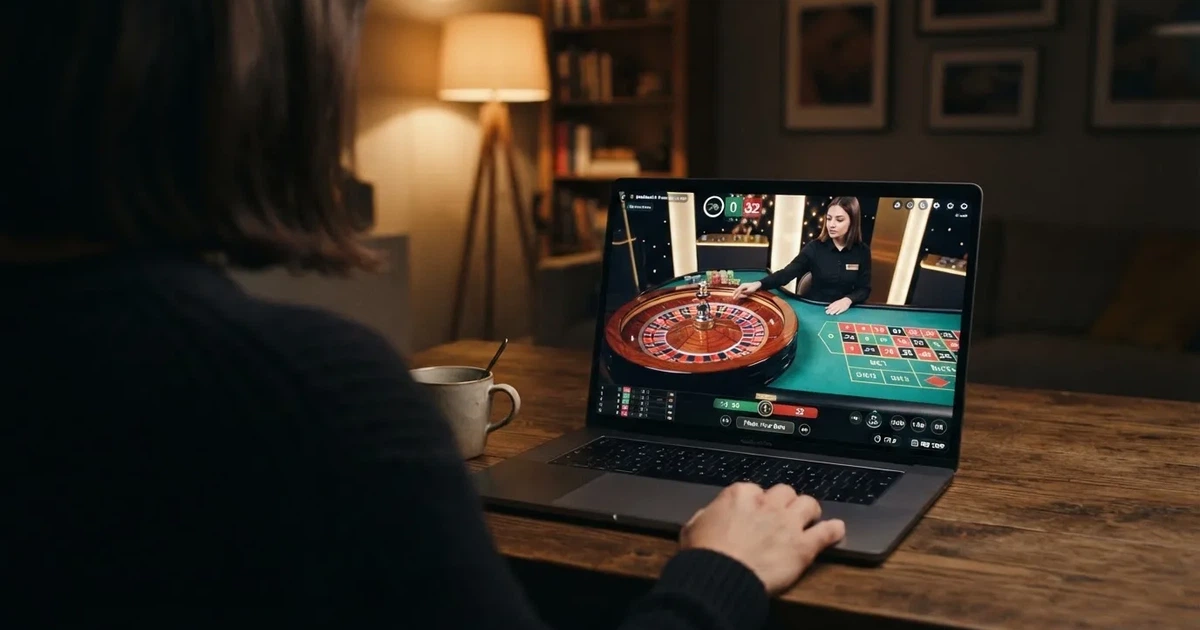
A live dealer table is the one corner of an online casino where the marketing copy meets something mechanical: a real wheel, a real shoe, a real person turning cards in a room somewhere in Latvia or Malta. The dealer does not know you are there. The camera does not care how long you have been watching. The result is captured by sensors, not software, and the only question that matters is whether the operator showing you that footage is licensed to do so under the Gambling Act 2005.
That question decides everything this page covers. The data is current as of 23 September 2026 and was checked against the Gambling Commission’s public register.
Table of Contents
- Live Casino Fundamentals: What the Stream Is, and Where It Comes From
- Game-Show Tables, RNG Hybrids and the Baccarat Question
- The UK Online Casino Landscape in Numbers
- The Licensing Jurisdiction: What a Gambling Commission Licence Actually Obliges
- Stake Limits, Spin Speeds and What the Commission Has Actually Banned
- Player Protection: GAMSTOP, Financial Vulnerability Checks and Where to Get Help
- Crypto and iDEAL: What a Licensed Site Still Has to Do
- Payments, Payout Speed and the Credit Card Ban
- Bonuses, Free Spins and the 10x Wagering Cap
- Mobile and Apps: Browser Play, Native Apps and the Live Table
- The Top 10: A Side-by-Side Comparison of UK-Licensed Live Casino Brands
- Offshore Sites, GAMSTOP and What a Player Gives Up
- Tax, Winnings and the Operator’s Bill
- Frequently Asked Questions
Live Casino Fundamentals: What the Stream Is, and Where It Comes From
A live casino game streams real-time footage of a human dealer and physical equipment — a roulette wheel, a blackjack shoe, a baccarat table — with outcomes captured by cameras and sensors and relayed to players through their browser or app. That is the only meaningful line between a live casino product and any other online casino game: somewhere, a piece of felt is moving, and the picture on your screen is the picture of it.

The dominant supplier of those studios is Evolution AB, founded in 2006 in Stockholm by Jens von Bahr and Fredrik Österberg. The company launched its first live dealer games — live roulette and live blackjack — in 2007, listed on Nasdaq First North Premier in 2015, and moved up to Nasdaq Stockholm under the ticker EVO in 2017. It acquired NetEnt in 2020 and Big Time Gaming in 2021, stretching beyond live tables into RNG slots and game-show hybrids. For 2023 the group reported €1.798 billion in revenue against 19,221 employees, and its catalogue now spans Lightning Roulette (2018), Monopoly Live (2019), Crazy Time (2020) and Funky Time (2023) — game-show formats built on wheel-of-fortune mechanics with RNG multipliers bolted on.
A separate corner of the live lobby is the crash game, of which Spribe’s Aviator is the flagship. Released in 2019, Aviator is described by Spribe’s own CEO as the first true multiplayer crash game in the regulated iGaming space. The mechanic is simple to describe and punishing in practice: a multiplier curve rises from 1.00x until the round randomly crashes, and a player must cash out before the crash to win their stake multiplied by the current value. Spribe has reported more than 42 million active users and around 350,000 bets per minute across more than 5,000 operators worldwide. That reach is its own warning. A crash game’s volatility is built into its design, not bolted on.
Game-Show Tables, RNG Hybrids and the Baccarat Question
A live casino lobby in 2026 is no longer only roulette and blackjack. The game-show format — a presenter in front of a giant spinning wheel, augmented with random multipliers and bonus rounds — has become the single biggest draw on most Evolution-powered sites. Lightning Roulette pays out on straight-up numbers with randomly boosted multipliers; Crazy Time drops players into a four-wheel bonus game with separate RNG layers; Monopoly Live is a money-wheel format fronted by a Mr Monopoly character who walks a 3D board between spins. These are not roulette. They look like roulette at the periphery, but the payout structure is its own product, and the house edge on the bonus wheels is calibrated to the format.
Baccarat is its own creature, and the page is the right place to say so. The game’s precise origins are murky: some accounts trace it to 19th-century France, others to Italian soldiers at the close of the 15th century. The version that actually sits in a live casino lobby in the UK is Punto Banco, the modern variant developed in Havana during the 1940s and now the most widespread form globally. In Punto Banco, the casino banks the game at all times and both hands are dealt out according to fixed drawing rules, so players make no strategic decisions — they pick banker, player or tie, and the cards do the rest. Chemin de Fer, the most popular French variant, gives players strategic choices and includes an element of skill; you will not find it in a UK live lobby.
That distinction matters for the page that follows. Where a section describes a stake, a wagering requirement or a payout figure, it is talking about Punto Banco, the version that runs on every UK-licensed live casino site.
The UK Online Casino Landscape in Numbers
The UK market in 2026 sits on a tightly policed register. The Gambling Commission’s public register listed 139 businesses holding an active remote casino operating licence on 18 September 2026, and the register can be searched online or downloaded in full as CSV or Excel. The register’s domain list is the operational test of whether a brand holds a licence: it records each website against the licence account that runs it, with a status of Active, Inactive or White Label. On that day the domain list held 1,065 active and 361 white-label domain entries — a white-label site trades under another company’s licence, which is why the operator name and the URL on screen can be two different companies.
A remote casino licence number carries a recognisable shape: it reads as account-R-number-suffix, where the leading six digits repeat the licence holder’s account number and the “R” marks a remote (online) licence. Hillside (UK Gaming) ENC, for example, holds 055149-R-331499-004 against bet365; MrQ sits under Tek Fox Ltd at 060629-R-337532-004. Once you can read that string, the rest of the register is the same string repeated with different numbers.
The register provides a clear operational structure for all licensed operators, with active and white-label entries:
| Operator | Licence holder | GB remote casino licence |
|---|---|---|
| bet365 | Hillside (UK Gaming) ENC | 055149-R-331499-004 |
| MrQ | Tek Fox Ltd | 060629-R-337532-004 |
| PokerStars | Stars Interactive Limited | 039108-R-319334-026 |
The Licensing Jurisdiction: What a Gambling Commission Licence Actually Obliges
The regulator is the Gambling Commission (UKGC), sponsored by the Department for Culture, Media and Sport, working under the Gambling Act 2005 — which covers Great Britain (England, Scotland and Wales) and not Northern Ireland. Since the Gambling (Licensing and Advertising) Act 2014 any operator taking customers in Great Britain needs a Commission licence wherever the operator itself is based. A Curaçao, Maltese or Gibraltar licence is not a substitute. Remote casino is a licensable activity, and the public register is the whole test of whether a brand holds a licence.

Minimum age is 18, and name, address and date of birth are verified before the first deposit or any play — that has been the rule since 7 May 2019, and it applies at every GB-licensed site, including on a live casino table funded by cryptocurrency or iDEAL. Anonymous play is not available at a licensed site.
The technical standard that governs the live table itself is RTS 17 — the Remote Gambling and Software Technical Standard for live dealer studios, issued under sections 89 and 97 of the Gambling Act 2005. RTS 17 requires that live dealer operations be fair and independently auditable, with equipment and consumables of commercial casino quality and designated staff monitoring operational integrity. It requires video surveillance covering all predefined gaming areas in enough detail to confirm whether dealing procedures and game rules were followed. It requires croupiers to receive adequate training to deal fairly according to documented procedures and game rules, with evidence of that training and refresher training maintained. That last clause is the one the marketing copy never reaches: every dealer on a UK-licensed live casino floor has a training file the Commission can ask to see.
Stake Limits, Spin Speeds and What the Commission Has Actually Banned
The Commission has spent the last five years tightening the design rules around online gambling, and the live table sits inside the same envelope as the slot. Online slots carry a maximum stake per game cycle of £5 for players aged 25 and over (in force from 9 April 2025) and £2 for players aged 18 to 24 (from 21 May 2025). The lower tier reflects the government’s stated concern that 18 to 24 year olds carry the highest average problem gambling score of any age group, alongside lower disposable income and ongoing neurological development — those three reasons were cited when the lower limit was introduced.
There is no state-set deposit or loss ceiling. Operators must prompt a customer to set a financial limit before the first deposit, a rule in force from 31 October 2025; whether the customer accepts or declines the prompt is logged, but the prompt itself is mandatory. Spin speeds are capped: the Commission has banned online slot spin speeds faster than 2.5 seconds, setting 2.5 seconds as the minimum time a slot spin must take. Auto-play has been permanently banned after research indicated the feature caused players to lose track of their gambling activity. Losses disguised as wins — slot screens that celebrate a payout smaller than the stake — are banned too.
UK gambling operators had until 31 October 2021 to fully implement the Commission’s ban on reverse withdrawals, which previously let consumers re-gamble funds they had already requested to withdraw. That rule cost the industry a meaningful revenue line, and it is one of the rules a non-licensed site will not have.
Player Protection: GAMSTOP, Financial Vulnerability Checks and Where to Get Help
GAMSTOP, the national online self-exclusion scheme, is a mandatory condition of every online licence since 31 March 2020. A player who registers with GAMSTOP can choose a six-month, one-year or five-year exclusion, and the registration cannot be cancelled early — once the period starts, it runs to the end. Every GB-licensed online operator must take part, including the ten operators reviewed later on this page. A site that does not check GAMSTOP before opening an account is not licensed.
Financial vulnerability checks run at £150 net deposits in a rolling 30 days, a rule in force from 28 February 2025, using public data only. The wider financial risk assessments are announced but not yet in force. Where to get help is a different question: the National Gambling Helpline runs through GamCare, and GambleAware funds treatment and education across Great Britain.
A site that sits outside GAMSTOP and outside Gambling Commission licensing is offering none of these protections. The player still gets the game; the player does not get the prompt before the first deposit, does not get the £150 vulnerability check, does not get the ADR route if the operator refuses a withdrawal, and does not get GAMSTOP at all. None of that is the player’s fault. None of it is a small thing.
Crypto and iDEAL: What a Licensed Site Still Has to Do
A live casino funded by cryptocurrency or by iDEAL is, mechanically, a live casino funded by cryptocurrency or by iDEAL — the wheel does not care which rail the deposit arrived on. The regulatory frame does. A Gambling Commission licensee must run identity checks before any first deposit, cryptocurrency included. The minimum age is 18; the name, address and date of birth are verified before the first deposit or any play; the operator must prompt for a financial limit before the first deposit; the operator must check GAMSTOP before opening the account. None of these checks relaxes for the choice of payment method.
Crypto on a non-licensed site is a different product. The same wheel, the same provider, the same studio footage — but no GAMSTOP, no Commission complaints route, no approved ADR. The page that follows takes the licensed route. The other route is real, and it is described in the section on offshore play.
Payments, Payout Speed and the Credit Card Ban
Credit cards are banned for gambling in Great Britain since 14 April 2020, and the ban covers credit cards routed through e-wallets — adding a credit card to a PayPal wallet, then funding a casino from the wallet, is not a way around the rule. That is the single most important payments rule a UK live casino player meets, because it forecloses the most common self-funding mistake in the market.
Payout speed is not state-set. Operators set their own timelines, and the page that follows records what each one publishes. The standard pattern in the UK market is: e-wallet withdrawals inside 24 hours, debit card withdrawals inside one to three working days, bank transfers inside three to five working days. A figure outside that band — a same-day debit card withdrawal, a same-week bank transfer — is the figure to ask the operator’s customer support to confirm before the first deposit.
Bonuses, Free Spins and the 10x Wagering Cap
The single most consequential bonus rule in the UK market came into force on 19 December 2025: wagering requirements are capped at 10x and mixed-product bonuses (a free bet on sport bundled with casino spins, for example) are banned. A bonus that once carried a 35x wagering multiple now carries, at most, 10x — and the multiple applies to the bonus amount, not to bonus plus deposit, unless the operator’s terms say otherwise. A live casino bonus specifically is read against the same cap.
The arithmetic the cap makes possible is easy to follow. Take a £100 live casino bonus. At the 10x cap the required turnover is £100 × 10 = £1,000 in qualifying wagers before any of it converts to withdrawable cash. At a £5 stake per game cycle and a 2.5-second minimum spin interval, £1,000 of wagering at a 0.97 RTP live roulette table — the kind of figure a UK live casino actually publishes — implies £1,000 × (1 − 0.97) = £30 of expected house-edge loss before the bonus clears. That is the bonus’s real cost, on average, across many spins; for any single session the figure is whatever the wheel actually produced.
The £30 figure is a band, not a single number. Lower-RTP tables — many live game-show formats sit between 0.94 and 0.96 — push the expected loss higher. A player who pushes the wagering requirement on a low-edge blackjack table at favourable rules is closer to £10. The condition on the band is the table’s RTP, which the operator publishes and which the player should read before staking the bonus. A player who stakes the bonus on slots, where the wagering requirement is also allowed to clear, sees a different RTP curve entirely.
A £200 bonus at the 10x cap requires £2,000 of turnover, with £60 of expected loss at 0.97 RTP and a longer session — roughly 2.78 hours at £5 per spin and 5 seconds per spin. A £500 bonus requires £5,000 of turnover, with £150 of expected loss, and pushes the session past seven hours at the same parameters. The band the page is describing runs from a low-cost, short-session bonus at the small end to a long-session, high-turnover bonus at the upper end, with the cap fixing the multiplier across the lot. The cost curve is linear; the time curve is what makes the upper end heavy.
No deposit bonus variants exist, and they are the worst-paying corner of the bonus market. A £10 no-deposit live casino bonus carries a wagering requirement of, often, 40x — a figure that breaches the 10x cap if the no-deposit bonus is offered by a licensed site, which is why most licensed operators have stopped offering them. The terms attached to a no-deposit bonus are usually tighter: a max-cashout cap (often £100), a short expiry (often seven days), and a game restriction that excludes high-RTP tables. The page that follows treats the no-deposit bonus as a special case and reads it that way.
Mobile and Apps: Browser Play, Native Apps and the Live Table
A live casino runs on a phone through three routes. The first is a mobile browser: every UK-licensed site listed on the register has a browser-based mobile lobby, and the live casino lobby renders on iOS Safari and Android Chrome without an app install. The third is a dedicated app — William Hill, Sky Vegas and a handful of the larger brands publish a downloadable app on the iOS App Store and Google Play. The second route, somewhere in between, is a progressive web app: a browser shortcut that loads the site full-screen and behaves like an app without occupying app-store real estate.
A live dealer stream is heavier than a slot. It needs a sustained connection and a stable upstream from the studio. The practical consequence is that a phone on a 4G connection can carry a live table, but the picture drops more often than on Wi-Fi; a phone on a 5G connection carries it cleanly. A tablet on Wi-Fi is the closest the average home setup gets to a land-based live table. The architecture of the app is not the point — the architecture of the connection is.
The Top 10: A Side-by-Side Comparison of UK-Licensed Live Casino Brands
The ten brands below are all taken from the Gambling Commission’s public register on 18 September 2026. Each row is a domain, a licence holder, the remote casino licence number, and the status of the domain on the register. The fifth column — the column this page adds — carries the subject support flag, where research records one; for this subject, every row carries the no-data marker, which is the honest answer to “does this brand’s live casino lobby carry something the others do not”. The list is not a ranking. It is a register of the live casino brands a UK player can actually fund and play on.
| Brand | Licence holder | GB remote casino licence | Domain status | Subject support |
|---|---|---|---|---|
| MrQ | Tek Fox Ltd | 060629-R-337532-004 | Active | — |
| bet365 | Hillside (UK Gaming) ENC | 055149-R-331499-004 | Active | — |
| PokerStars | Stars Interactive Limited | 039108-R-319334-026 | Active | — |
| Paddy Power | PPB Games Limited | 039411-R-319335-010 | Active | — |
| Betfair | PPB Games Limited | 039411-R-319335-010 | Active | — |
| William Hill | WHG (International) Limited | 039225-R-319373-015 | Active | — |
| BetVictor | BV Gaming Limited | 039576-R-319370-028 | Active | — |
| Sky Vegas | Bonne Terre Gaming Limited | 065519-R-339675-002 | Active | — |
| Virgin Games | Gamesys Operations Limited | 038905-R-319430-022 | White Label | — |
| Gala Bingo | LC International Limited | 054743-R-330863-014 | Active | — |
Paddy Power and Betfair share a licence holder — PPB Games Limited, account 39411. Virgin Games sits as a white-label domain of Gamesys Operations Limited, which means the brand on screen and the company behind the licence are two different legal entities. The other seven brands each sit under their own operating company. Several brands can share one licensee, and the register is the way to tell which ones do.
MrQ — a small-footprint live casino on a Tek Fox Ltd licence
MrQ runs on a Tek Fox Ltd licence (account 60629, remote casino operating licence 060629-R-337532-004), with Mrq.com listed as an active domain. The brand is smaller than the bookmaker-origin names around it on the register, which is the point of including it on this list: not every live casino player wants the lobby of a sportsbook. The terms of the licence are the same as every other row above it — GAMSTOP, the £150 financial vulnerability prompt, the 10x wagering cap — and the operator behind the licence is bound by all of them.
What the register does not say is what the live casino lobby carries; for that, the brand’s own games page is the place to look, and the page does not transcribe it. The verdict is the licensing posture: a small operator sitting under its own licence, with the protections that follow from that licence intact.
bet365 — Hillside (UK Gaming) ENC and the largest single licence footprint
bet365 is listed as an active domain of account 55149, Hillside (UK Gaming) ENC, holding remote casino operating licence 055149-R-331499-004. The Hillside group runs the largest single live casino footprint in the UK by any reasonable measure — the brand carries Evolution’s full live lobby alongside its own in-house table products. The licence holder is the same group that runs the sportsbook, and the live casino is one product inside a larger operation.
The verdict is scale: where the lobby is the question, bet365 carries more live tables than any single competitor on this list. The cost of that scale is depth of choice elsewhere — bet365’s promos are designed to keep the sportsbook and the casino on the same wallet, which is a structure a player focused on casino-only play will not want.
PokerStars — Stars Interactive Limited and a poker-origin live casino
PokerStars (Pokerstars.uk) sits under Stars Interactive Limited (account 39108, remote casino operating licence 039108-R-319334-026). The brand’s roots are in poker, and its live casino is the younger of the two products. The .uk domain is the one to use; the brand’s broader international operation runs on a separate licence.
The verdict is a poker-first live casino: the live dealer lobby is a fit-out rather than the product, and the player who wants a poker site that also does live tables will land here. A player who wants a live casino first will look at the Evolution-powered sites higher up the list.
Paddy Power and Betfair — PPB Games Limited and the Flutter footprint
Paddy Power and Betfair (Betfair.com) share the same licence holder, PPB Games Limited (account 39411, remote casino operating licence 039411-R-319335-010). Both domains are listed as active on the register. The Flutter group runs the wider operation, and the two brands sit side by side on the same licence as a matter of legal structure rather than product identity.
The verdict is shared plumbing, separate brands: a player signed up to Paddy Power and a player signed up to Betfair are funding the same licensed operation, and the protections on either account are the protections of PPB Games Limited. Where the brands diverge — sportsbook focus, casino layout, promotional structure — is on the brand pages, not on the licence.
William Hill — WHG (International) Limited and the high-street legacy
William Hill sits under WHG (International) Limited (account 39225, remote casino operating licence 039225-R-319373-015). The William Hill brand is one of the older high-street names in UK gambling, and the licensed operation extends that footprint online. The live casino is a fit-out on top of an established sportsbook and bingo operation.
The verdict is legacy: a player who has used William Hill on the high street will find the live casino on the same wallet, and the licensed operation carries the protections the register binds it to. This site is a high-street veteran, and the online experience reflects that heritage.
BetVictor — BV Gaming Limited and a sportsbook-origin live casino
BetVictor (Betvictor.com) sits under BV Gaming Limited (account 39576, remote casino operating licence 039576-R-319370-028). The brand’s roots are in sports betting, and the live casino is a fit-out alongside the sportsbook. The licence holder is independent of the larger groups on this list.
The verdict is a sportsbook-origin live casino: the lobby is solid and the licensed operator is small enough to be identifiable by name. The cost is the same as every other sportsbook-origin site — the live casino is one product in a wider wallet.
Sky Vegas — Bonne Terre Gaming Limited and the broadcast parent
Sky Vegas sits under Bonne Terre Gaming Limited (account 65519, remote casino operating licence 065519-R-339675-002). The Sky parent is a broadcast group, and the live casino product carries that branding through the loyalty and promotional structure.
The verdict is a broadcast-branded live casino: a player who already has Sky products in their bundle will find the integration familiar. The casino lobby is built for cross-platform users rather than the casino purist.
Virgin Games — Gamesys Operations Limited and the white-label position
Virgin Games is listed as a white-label domain of account 38905, Gamesys Operations Limited, holding remote casino operating licence 038905-R-319430-022. A white-label site runs under the licence of another company — Gamesys is the licence holder, Virgin Games is the brand. That is the most important distinction in this row: the company behind the licence and the company behind the brand are two different entities.
The verdict is the white-label caveat: a player signing up to Virgin Games is signing up under Gamesys Operations Limited’s licence, and the protections that follow from that licence are intact. The brand identity is Virgin’s; the licence, the ADR route, the GAMSTOP registration and the £150 vulnerability check all run through Gamesys.
Gala Bingo — LC International Limited and the Entain footprint
Gala Bingo sits under LC International Limited (account 54743, remote casino operating licence 054743-R-330863-014). LC International is part of the Entain group, which runs Ladbrokes and Coral under the same parent — three brand names, one group. The Gala brand originated as a bingo operator and the live casino is a fit-out alongside that core.
The verdict is a bingo-origin live casino: a player looking for a live casino with bingo and slots in the same wallet will find it here. A player looking for a casino-first product will find the same Evolution-powered tables under a more focused operator.
Offshore Sites, GAMSTOP and What a Player Gives Up
A live casino site that is not on GAMSTOP and not on the Gambling Commission’s register is offering a different product to the one this page describes. The wheel is the same wheel. The studio is often the same studio — Evolution’s live tables are licensed to operators regardless of where those operators are licensed. What changes is the regulatory envelope: no GAMSTOP check before the account opens, no £150 financial vulnerability check, no Commission complaints route, no approved ADR, no UK-based enforcement if the operator refuses a withdrawal.
Providing gambling to people in Great Britain without a licence is an offence under section 33 of the Gambling Act 2005. The Commission disrupts illegal sites through cease-and-desist notices, search-engine delisting, and referrals to payment and hosting providers — but it has no ISP-blocking power. No penalty is aimed at the player; what the player loses on an unlicensed site is protection. That is the whole case for choosing a GB-licensed site, and it is the case the rest of the page is built on.
Tax, Winnings and the Operator’s Bill
Players pay no tax on gambling winnings in the UK. That has been the position for decades, and it is the position this page reads against. The operator’s bill is the Remote Gaming Duty, raised from 21% to 40% from 1 April 2026 — a model figure the page records as published, with the caveat that the operator’s actual liability is a matter for HMRC and the operator’s own accountants.
Frequently Asked Questions
What makes a table a ‘live casino’ game rather than a standard digital one?
A live casino game streams real-time footage of a human dealer and physical equipment — a roulette wheel, a blackjack shoe, a baccarat table — with outcomes captured by cameras and sensors and relayed to players online. A standard digital casino game runs on a random number generator with no human or physical equipment in the loop. The two are governed by separate parts of the Gambling Commission’s Remote Technical Standards, with RTS 17 covering live dealer studios specifically. That standard requires commercial-casino-quality equipment, designated integrity staff, full video surveillance and trained croupiers.
Can a live casino table be played through a mobile casino app?
Yes. Every UK-licensed live casino site renders its live lobby on iOS Safari and Android Chrome without an app install, and several of the larger brands — William Hill and Sky Vegas among them — publish a downloadable app on the iOS App Store and Google Play. A live dealer stream is heavier than a slot, and a phone on 4G can carry a live table, but a stable Wi-Fi or 5G connection gives the cleaner picture. The architecture of the connection is the practical limit, not the architecture of the app.
What happens to GAMSTOP protection on a live casino site that is not on GAMSTOP?
A live casino site that is not on GAMSTOP does not check the GAMSTOP register before opening an account, which means a player who has registered for self-exclusion is not blocked from registering and playing. The site is, by definition, not licensed by the Gambling Commission — every Commission licence carries a mandatory GAMSTOP condition since 31 March 2020. The player still gets the game. What the player does not get is the GAMSTOP block, the £150 financial vulnerability check, the Commission complaints route or the approved ADR. None of those relax because the site is offshore.
Are live casino tables available to fund with iDEAL or cryptocurrency?
The deposit method does not change the regulatory frame. A Gambling Commission licensee must run identity checks before any first deposit, cryptocurrency or iDEAL included. The minimum age is 18, the name, address and date of birth are verified before the first deposit or any play, the operator must prompt for a financial limit before the first deposit, and the operator must check GAMSTOP before opening the account. None of those checks relax for the payment rail. Credit cards are banned for gambling in Great Britain since 14 April 2020, including credit cards routed through e-wallets — that rule does not relax for iDEAL or crypto either.
Do live casino no-deposit bonuses usually carry different wagering to slot bonuses?
Yes, in the direction the player should worry about. A no-deposit bonus at a UK-licensed site has to fit inside the 10x wagering cap in force since 19 December 2025 — which is why most licensed operators have stopped offering no-deposit live casino bonuses at all. Where one is published, the wagering multiple is the cap rather than the 35x–50x range a non-licensed site will quote, and the additional terms are usually tighter: a max-cashout cap, a short expiry, and a game restriction that excludes high-RTP tables. The headline figure looks generous; the terms are where the cost lives.
Is a live dealer stream monitored by the same licence as the rest of the site?
Yes. A live dealer stream on a UK-licensed site runs under the operator’s Gambling Commission remote casino operating licence, and the live studio itself is governed by RTS 17, the Remote Technical Standard for live dealer studios issued under sections 89 and 97 of the Gambling Act 2005. RTS 17 requires commercial-casino-quality equipment, designated integrity staff, video surveillance of all gaming areas and trained croupiers with documented training records. The licence covers the studio; the standard covers the practice. The studio and the rest of the site are licensed together, which is why the licence number on the register covers both.
Created by the ”bankingcasinouk” editorial team.