
A 200% match bonus at a UK casino in 2026: what the rules changed and what they didn’t
A 200% bonus triples the money on the table. Deposit £100, play with £300; deposit £200, play with £600. The shape is fixed, the size sits inside a cap, and the play-through turns the bonus into money a player can actually take out. The arithmetic around that offer moved in December 2025, and most of what is written about 200% bonuses online predates that change. This page is about the shape of the deal as it stands in 2026: the licence that lets a brand offer one, the 10x wagering cap that bounds how onerous the terms can be, and the routes a British player still has — debit card, bank transfer, e-wallet, paysafecard — when funding the first deposit.

Current as of 6 November 2026. Licence data verified against the Gambling Commission’s public register.
Table of Contents
- What a 200% bonus actually is
- The licence that lets a 200% bonus be offered
- GAMSTOP, age checks, and why a 200% bonus cannot be anonymous
- Funding the deposit: cards, bank transfer, paysafecard, and crypto
- What “200% up to £X” means in pounds
- The 10x wagering cap and what it leaves on the table
- How a 200% bonus is paid out — and where the friction sits
- Responsible play: limits, checks, and the deposit-prompt
- The operator set: who can run a 200% bonus under a UK licence
- Choosing between the brands: what the licence tells you and what it doesn’t
- Practical routes through a 200% bonus
- What the cap leaves out — and what is still up to the operator
- The crypto route, and why it sits outside this comparison
- Where the bonus hits the player hardest
- The state of the offer in 2026
- The bottom line
- Frequently asked questions
What a 200% bonus actually is
A match bonus is a multiplier applied to a first deposit, credited as bonus funds on top of the cash deposited. A 100% bonus doubles the bankroll. A 200% bonus adds twice the deposit amount in bonus money, taking total playable funds to three times the deposit. The structure is simple; the conditions attached to it are what decides whether it is worth taking.
Two features separate a 200% match from a flat free spin bundle or a no-deposit offer. First, the player funds it. The bonus scales with what is paid in, so a small deposit triggers a small bonus, and a larger deposit triggers a larger one up to the cap. Second, the bonus carries a wagering requirement. Until that requirement is met, the bonus sits in a separate balance, the stake limits in the UK still apply, and the player cannot withdraw it as cash.
The cap matters because it sets the ceiling. A “200% up to £200” promotion on a £200 deposit would credit a £400 bonus, leaving £600 playable; the same promotion on a £50 deposit would credit a £100 bonus, leaving £150 playable. Read the cap against the planned deposit size, because a smaller bonus on a smaller deposit can clear faster than a larger bonus on a larger one — and faster clearing means fewer spins at the stake limit before any of it converts to withdrawable cash.
The wagering requirement carries the rest of the cost. At a UK-licensed casino, that requirement is bounded. Since 19 December 2025 no online casino bonus operating under a Gambling Commission licence may attach a wagering requirement higher than 10x the bonus amount, or 10x the deposit plus bonus combined where the offer is a deposit match. A 200% match promotion that previously carried a 35x or 50x playthrough on the bonus alone cannot do so any more. That ceiling shapes every line of the comparison that follows.
The licence that lets a 200% bonus be offered
Every brand in this guide is licenced by the Gambling Commission under the Gambling Act 2005. The Commission maintains a public register of every business holding an active remote casino operating licence — the licence type that covers websites and apps taking customers in Great Britain. On 18 September 2026 the register listed 139 such businesses; the register also carries a separate domain list, holding 1065 active and 361 white-label domain entries on the same date, which records each website against the licence account that runs it. A white-label site trades under another company’s licence, so a domain flagged as White Label on the register is operating on a third party’s permission rather than its own.

The licence number itself is informative. It has the form (account)-R-(number)-(suffix), where the leading six digits repeat the licence holder’s account number and the “R” marks a remote (online) licence. So a licence such as 054743-R-330863-014 identifies LC International Limited as account 54743, with a remote operating licence ending in 014. The same prefix on Gala Bingo’s record (Gala Bingo) tells a reader that both domains sit under one licence holder. Ladbrokes and Gala Bingo, in other words, are not two operators competing against each other on a fundamental level — they are two front doors on the same licence.
What the licence gets a player is the rules that follow it. GAMSTOP screening, age verification before play, identity checks, the slot stake limit, the wagering cap, and access to the Commission’s complaints route if a dispute cannot be resolved directly with the operator. What it does not get a player is anonymity. A brand that runs a 200% bonus without verifying name, address, and date of birth is not a brand on this register. That cuts both ways. It removes a category of offer that used to be sold as a feature; it also removes the unregulated end of the market where the verification step was simply skipped.
GAMSTOP, age checks, and why a 200% bonus cannot be anonymous
The Commission has tightened the conditions on bonus offers in step with the broader player-protection regime. The credit card ban, in force since 14 April 2020, removed the funding source most closely linked to harmful play: around 800,000 UK consumers used credit cards to gamble in 2018, and 22% of online gamblers who used credit cards to fund play were classed as problem gamblers. E-wallets cannot route a credit card deposit either, so the ban closes that bypass as well.
GAMSTOP, the national online self-exclusion scheme, is a mandatory condition of every online licence since 31 March 2020. A player signs up once, choosing a six-month, one-year, or five-year exclusion, and the exclusion cannot be cancelled early. Every GB-licensed brand must check new registrations against GAMSTOP, so a self-excluded player cannot simply open an account elsewhere. The check sits behind the verification step. That verification, in turn, has been required since 7 May 2019: name, address, and date of birth are confirmed before the first deposit or any play.
A 200% bonus advertised on a site that does none of this is not a 200% bonus offered under a UK licence. It may be a legitimate offer under a different regulator’s framework, but the protection regime that applies in Great Britain — GAMSTOP, the ADR route, the Commission’s enforcement backstop — does not travel with it. The Commission’s own enforcement against offshore sites targeting British customers (cease-and-desist notices, payment and hosting referrals, search-engine delisting) does not include ISP blocking, and penalties are aimed at the operator rather than the player. What a player loses on an unlicensed site is not money; it is the protection that the licence would have given them. The choice is not “regulated versus unregulated” as an abstract preference; it is “what recourse exists if a withdrawal stalls or a bonus term is misapplied”.
Funding the deposit: cards, bank transfer, paysafecard, and crypto
The 200% match fires on a first deposit. The funding route is partly a practical question — what the player uses to pay — and partly a question about whether the route sits inside the same regulatory perimeter. Four categories of funding route cover almost every first deposit at a UK-licensed brand.
Debit cards and bank transfer are the default. They are unaffected by the credit card ban; Visa Debit, Mastercard Debit, and the Faster Payments Service all work directly with a GB-licensed operator. Faster Payments, run by Pay.UK, operates around the clock and most transfers arrive in minutes, with a per-transaction scheme limit of £1,000,000 — though a player’s own bank may impose a lower daily cap. Bank transfer tends to be the slowest of the four, mainly because the casino side runs anti-fraud checks on a new payment route before crediting the deposit, rather than because the rail itself is slow.
E-wallets — PayPal, Skrill, Neteller, and similar — sit in a middle band. The deposit is near-instant; the withdrawal, where the same e-wallet is used, tends to clear faster than a bank transfer. The credit card ban applies to e-wallet funding: a player cannot load an e-wallet from a credit card and then use the wallet to deposit at a casino. Debit-funded e-wallets are unaffected.
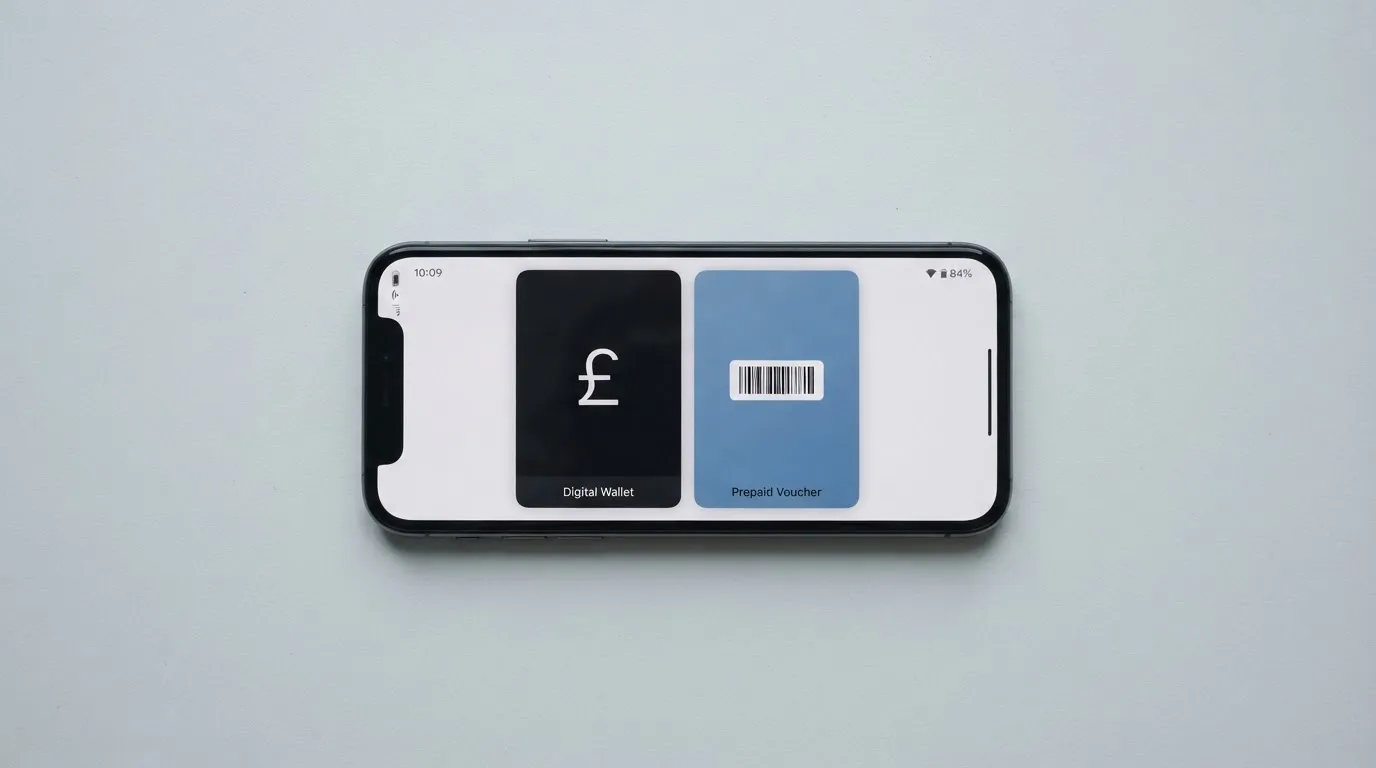
Paysafecard is a prepaid voucher route that buys its privacy in cash. A 16-digit code bought at a corner shop converts to a casino deposit without sharing bank details. That privacy has a limit: the same deposit still counts towards the player’s own spending limit at the casino, and the same GAMSTOP check still applies before the first deposit is credited. A paysafecard-funded 200% bonus is still a licensed offer, just one funded anonymously at the till.
Crypto-funded bonuses are the route that sits least comfortably inside the UK framework. A brand licensed in Curaçao or Malta may take Bitcoin, Ethereum, or USDT and offer a 200% bonus on top. The brand may not, however, hold a Commission licence — and without one, none of the protection regime that runs through the rest of this page applies. The choice for a British player who wants a crypto-funded 200% bonus is whether the funding route or the regulatory perimeter matters more. They cannot have both.
What “200% up to £X” means in pounds
The shape of a 200% match, as advertised, has three numbers: the percentage (200), the cap (£X), and the wagering multiple. The cap is what limits the maximum bonus a player can claim; the wagering multiple is what determines the play-through before the bonus converts.
A worked example. Take a “200% up to £200, 10x on bonus” promotion.
A £100 deposit triggers a £200 bonus, taking playable funds to £300. The wagering requirement, under the December 2025 cap, is at most 10x the bonus: £200 × 10 = £2,000 of qualifying turnover. At a £2 stake per spin (the limit for 18–24-year-olds, and a comfortable level for many 25+ players at £5) the £2,000 turnover is 1,000 spins. At a five-second spin interval — the practical cadence under the auto-play ban, which prohibits a slot spin faster than 2.5 seconds — 1,000 spins is around 83 minutes of play.
The arithmetic tells a player two things. First, the bonus itself is the play-through driver, not the deposit. A smaller deposit with the same percentage match carries the same play-through in absolute terms, because the bonus scales with the deposit. Second, the play-through is bounded. Before 19 December 2025, the same offer might have carried a 35x wagering multiple on the bonus, requiring £7,000 of turnover and around five times as long to clear. The December 2025 cap is not a marginal change; it cuts the play-through on a typical 200% offer by more than half.
A second example, at the other end. A £10 deposit triggers a £20 bonus, taking playable funds to £30. The 10x play-through on the bonus is £200 of turnover — 100 spins at a £2 stake, around eight minutes of play. The bonus clears quickly because it is small. A player who treats the 200% offer as a way to stretch a small bankroll through one extended session is in this zone: the play-through is short enough that the bonus can convert to cash before the bankroll is gone.
A third example shows where the cap changes the shape. A £500 deposit on the same “200% up to £200” promotion still triggers only a £200 bonus — the cap kicks in. The £500 deposit sits in cash; the £200 bonus sits in bonus funds. The player has £700 to play with, but only £200 of it carries a wagering requirement. That is a different offer than a “200% up to £500” promotion, where the same £500 deposit would have triggered a £1,000 bonus with £10,000 of required turnover. The cap is the lever that changes the deal; the percentage is the headline that distracts from it.
The 10x wagering cap and what it leaves on the table
The 10x cap was introduced on 19 December 2025 and applies to every online casino bonus offered under a Gambling Commission licence. The cap covers two cases: wagering requirements on the bonus alone, and wagering requirements on deposit plus bonus combined. A 200% match promotion is the second case — the bonus sits on top of the deposit, so the qualifying turnover base is the deposit plus the bonus, or the bonus alone if the operator structures it that way.
The cap does not cover everything. It does not ban wagering requirements altogether; it caps them at 10x. It does not ban bonuses; it caps their size relative to the play-through needed to clear them. It does ban mixed-product bonuses — offers that combine, say, a sports bet with casino spins, which historically hid a heavy casino wagering requirement behind a familiar sports product. The ban closes that loophole.
What remains is a market of small, fast-clearing offers. The 200% match promotion, structured at the cap, is closer to a deposit multiplier than to a loyalty scheme. A player who deposits and clears the bonus in one session is in the offer’s sweet spot. A player who deposits, plays lightly, and returns days later is fighting the offer’s clock. The clock is set by the operator’s stated validity period — typically 7, 14, or 30 days — and the offer expires if the play-through is not met in that window.
The cap does not affect every offer uniformly. A 100% bonus on a large deposit, capped at the same wagering multiple, has a higher absolute play-through than a 200% bonus on a small deposit. The percentage still changes the shape of the deal; the cap only sets the upper bound on how onerous the play-through can be. Read the cap on the bonus, not the cap on the deposit.
How a 200% bonus is paid out — and where the friction sits
The bonus is credited as bonus funds on top of the cash deposit. The two balances are separate until the wagering requirement is met. The stake limit on online slots applies to both balances: £5 per spin for players aged 25 and over (in force from 9 April 2025), £2 per spin for 18–24-year-olds (from 21 May 2025). The slot spin itself may not be faster than 2.5 seconds, auto-play is banned, and a “loss disguised as a win” — a spin that returns less than the stake but plays a celebratory sound — is banned as a presentation.
The practical shape of the playthrough is a long sequence of bounded-stake spins, paid out of a combined cash-and-bonus balance. The cash balance absorbs the losses first in most operators’ implementations; the bonus balance is drawn down only after the cash balance reaches zero. The reverse order — bonus funds spent first — is the more player-friendly implementation, because losing bonus funds before cash funds leaves the cash untouched for withdrawal. Read the bonus terms for which order applies.
The friction sits at the withdrawal step. A player who has cleared the wagering requirement can withdraw the cash balance immediately. A player who has not cleared it cannot withdraw the bonus, and on most offers cannot withdraw the deposit either without forfeiting the bonus. The forfeit is the trap. A player who deposits £200 to claim a £400 bonus, plays for twenty minutes, and decides to walk away with the deposit intact will discover that the bonus terms require either completing the play-through or forfeiting the bonus — and on most offers, forfeiting the bonus means forfeiting the bonus winnings too, not the deposit. The bonus changes the withdrawal decision.
Responsible play: limits, checks, and the deposit-prompt
The Commission’s responsible-gaming regime has two layers that touch the 200% bonus directly. The first is the deposit-prompt rule, in force since 31 October 2025, which requires operators to prompt a customer to set a financial limit before the first deposit. A player who sets a £200 monthly deposit limit cannot deposit more than £200 in any rolling 30-day window. The 200% bonus is unaffected by the limit; the player can still claim it. What changes is the ceiling against which the bonus is claimed.
The second is the financial vulnerability check, in force since 28 February 2025, which runs at £150 net deposits in a rolling 30 days using public data only. The check is automated and lightweight — a soft credit-style trace against public records — and it triggers a prompt to the player to set or adjust a limit, or to take a time-out. A player who clears the £150 threshold without setting a limit is not blocked from depositing further; they are asked to do so. A player who clears the threshold with a limit set is unaffected.
GAMSTOP sits behind both layers. A self-excluded player does not reach the deposit screen at all. A player who has set a casino-side deposit limit but is not on GAMSTOP is bounded by their own setting. A player who has not set a limit and is not on GAMSTOP is bounded only by the Commission’s stake limits and their own bankroll. The three layers stack; the player who wants the most protection opts into all of them.
The National Gambling Helpline (GamCare) and GambleAware are the routes for a player who wants help outside the casino. The Commission’s ADR route — an alternative dispute resolution provider approved by the Commission — is the route for a player who has a complaint about a bonus term, a withdrawal delay, or an account closure. The ADR route is a feature of the licence, not of the bonus. A player on an unlicensed site has none of these routes.
The operator set: who can run a 200% bonus under a UK licence
Ten brands sit in this comparison. Each holds an active remote casino operating licence on the Commission’s public register; each is the licensee — or sits under the same licensee — that runs the brand’s main casino site. The brands vary on game selection, payment routes, and bonus structure, but they share the same regulatory perimeter. A player who picks one over another is choosing between offers on a licensed floor, not between a licensed floor and an unlicensed one.
The table below records each brand, the entity that holds its licence, the licence number on the Commission’s register, and the domain’s status. The licence number carries the licence holder’s account as its prefix; brands with a shared prefix share a licensee. Several of the brands in the table — Ladbrokes and Gala Bingo, for example — share the same licence holder (LC International Limited, account 54743) and sit under the same remote casino operating licence. They are not independent operators in the regulatory sense; they are two domains on one licence.
The table covers what the Commission’s register carries directly. Where the research carries no figure on a brand’s 200% bonus specifically, the cell is left empty — the absence is the information. A brand may run a 200% promotion at any time; the table is not an inventory of current offers.
| Brand | Licence holder | GB remote casino licence | Domain status on the register | Subject support |
|---|---|---|---|---|
| Sky Vegas | Bonne Terre Gaming Limited (account 65519) | 065519-R-339675-002 | Active domain (Sky Vegas) | — |
| Midnite | Dribble Media Limited (account 42647) | 042647-R-321653-022 | Active domain (Midnite.com) | — |
| PokerStars | Stars Interactive Limited (account 39108) | 039108-R-319334-026 | Active domain (Pokerstars.uk) | — |
| Unibet | Platinum Gaming Limited (account 45322) | 045322-R-324275-019 | Active domain (unibet.co.uk) | — |
| Ladbrokes | LC International Limited (account 54743) | 054743-R-330863-014 | Active domain (Ladbrokes.com) | — |
| BetVictor | BV Gaming Limited (account 39576) | 039576-R-319370-028 | Active domain (Betvictor.com) | — |
| Jackpotjoy | Gamesys Operations Limited (account 38905) | 038905-R-319430-022 | Active domain (Jackpotjoy.com) | — |
| 888casino | 888 UK Limited (account 39028) | 039028-R-319297-014 | Active domain (888casino) | — |
| Gala Bingo | LC International Limited (account 54743) | 054743-R-330863-014 | Active domain (Gala Bingo) | — |
| Casumo | Recro Limited (account 61549) | 061549-R-336718-002 | Active domain (Casumo.com) | — |
The “Subject support” column is the same across every row because the research did not collect brand-level data on the 200% bonus specifically — the offers change, the register does not. A reader who wants to know whether Sky Vegas or Casumo is running a 200% promotion this week needs to check the brand’s own promotions page, not the Commission’s register. The register confirms the brand is licensed to run one; it does not catalogue current offers.
Sky Vegas — the slots-focused end of the licence
Sky Vegas sits under Bonne Terre Gaming Limited, with its domain Sky Vegas listed as an active remote casino site on the Commission’s public register. The brand’s house identity is slot-heavy, with the game catalogue tilted toward titles that the Commission’s slot stake limits were written to constrain — short-cycle games where the £2 / £5 stake-per-spin ceiling bites hardest. A player claiming a 200% match here is claiming it on a site where the wagering requirement plays out across slots almost exclusively, and where the spin cadence under the 2.5-second floor is the rhythm the bonus is timed against. Sky Vegas suits a player who wants the bonus cleared in slots and is comfortable with a narrow game catalogue.
Midnite — the newer licence, the broader catalogue
Midnite (Midnite.com) operates under Dribble Media Limited. The licence was issued more recently than several of the established brands, and the catalogue reflects that — a wider mix of slots, live casino, and sports-betting-adjacent products, with the latter offered as a separate vertical rather than as a casino-game bonus trigger. The mixed-product bonus ban that took effect alongside the 10x wagering cap in December 2025 closes off the “bet on sport, get casino spins” route that some brands used to sell, so Midnite’s casino bonus is now a casino-only promotion. This brand is a strong option for players who want to focus exclusively on casino gameplay without sportsbook overlap.
PokerStars — the poker-rooted catalogue, casino bolted on
PokerStars (Pokerstars.uk) sits under Stars Interactive Limited. The brand’s identity is poker-first; the casino product is a side offering attached to a poker account. A player claiming a 200% match here is claiming it on a site whose loyalty scheme and reward structure are built around poker hands and tournament entries rather than casino spins. The casino bonus can be a useful top-up for a player who plays both, but it is not the centre of the offer — the centre is the poker product. A player who wants the casino bonus as a primary reason to sign up may find the catalogue thinner than at a casino-first brand.
Unibet — the multi-vertical brand, casino as one of several
Unibet (unibet.co.uk) sits under Platinum Gaming Limited and operates across casino, sports, and poker verticals from a single account. The 200% bonus, when it runs, is a casino-only promotion under the December 2025 rules; a player cannot claim casino bonus funds and then satisfy the wagering requirement with sports bets. This operator is well-suited for users already engaged with its multi-vertical platform who want to extend their experience to the casino section.
Ladbrokes — the high-street name on a remote licence
Ladbrokes (Ladbrokes.com) sits under LC International Limited, the same licence holder as Gala Bingo. The brand carries high-street recognition from its bookmaking history, and the casino product is one of several gambling verticals on the same licence account. A player who has a Ladbrokes account from the betting shop and wants a casino promotion is in this brand’s natural audience; a player who has no prior Ladbrokes relationship is choosing a casino product whose identity is partly shaped by the betting-shop brand. The licence is the same as Gala Bingo’s; the front door is different.
BetVictor — the established remote licence
BetVictor (Betvictor.com) sits under BV Gaming Limited. The brand has run a remote casino for years, and the licence account carries both the casino and the sportsbook. The 200% bonus, when it runs, is a casino-only promotion; the sportsbook sits on the same account but does not contribute to casino wagering. Dedicated casino players might find the multi-vertical structure extensive, but it remains a solid choice for those seeking established sportsbook-linked casinos.
Jackpotjoy — the bingo-rooted catalogue, slots attached
Jackpotjoy (Jackpotjoy.com) sits under Gamesys Operations Limited. The brand’s identity is bingo-first; the slots and casino games are an attached product on a bingo-shaped account. A player who wants to claim a 200% casino bonus here is claiming it on a site whose loyalty and reward structure is built around bingo rooms and community games. The catalogue is narrower than at a casino-first brand, and the spin cadence on slots is the same 2.5-second floor regardless. It serves bingo enthusiasts particularly well.
888casino — the casino-first brand on a single-vertical licence
888casino (888casino) sits under 888 UK Limited. The brand is casino-only in the UK; the broader 888 group runs sports and poker on separate licences in other markets, but the UK remote casino licence is a single-vertical product. It is a natural destination for those seeking a casino-centric experience without the distractions of a sportsbook or poker room. The catalogue is wider than at many bingo-rooted or poker-rooted brands.
Gala Bingo — same licence as Ladbrokes, bingo-shaped front door
Gala Bingo sits under LC International Limited — the same licence holder as Ladbrokes. The brand is bingo-first, with slots and casino games attached. The two domains are not two operators competing; they are two front doors on the same licence, and the casino bonus on one is structurally the same offer as the casino bonus on the other, with different branding around it. Users can choose between the two based on their preference for specific bingo features.
Casumo — the adventure-shaped casino product
Casumo (Casumo.com) sits under Recro Limited. The brand is casino-only in the UK, with a gamified loyalty structure built around trophies, levels, and a “valuables” chest that releases rewards over time. The 200% bonus, when it runs, plays out across the casino catalogue and the loyalty rewards continue independently. A player who wants the bonus to clear on a casino-only site with a gamified progression layer is in this brand’s wheelhouse; a player who wants a flat, no-frills casino bonus may find the loyalty layer more ornament than substance.
Choosing between the brands: what the licence tells you and what it doesn’t
The licence tells a reader that every brand in this comparison runs under the same regulatory perimeter. GAMSTOP, age verification, the credit card ban, the slot stake limit, the 10x wagering cap, the auto-play ban, the deposit-prompt, and the ADR complaints route all apply equally. A player who picks one over another is not picking between regulated and unregulated; they are picking between offers on a regulated floor.
The licence does not tell a reader which brand runs the better 200% bonus this week. The Commission’s register confirms that each brand is licensed to run such a promotion; it does not catalogue current terms. A player who wants to compare the live offers needs to look at each brand’s own promotions page, and the comparison changes week to week.
What the licence does tell a reader, by contrast, is which brands share a licensee. Ladbrokes and Gala Bingo share LC International Limited; they are not two operators competing on a casino promotion, they are two domains on one licence. A reader who treats them as alternatives is comparing the same offer in two wrappers. The same caveat applies to brands that sit under common ownership groups across the wider market, even where the UK licence is held by a different entity.
Those seeking a dedicated casino platform have several options among single-vertical licence holders, including 888casino, Casumo, and Sky Vegas. Players who prefer multi-vertical accounts can choose from Ladbrokes, BetVictor, Unibet, Midnite, and PokerStars, while Jackpotjoy and Gala Bingo provide bingo-centric environments. Each platform offers a unique catalogue layout, but the regulatory standards remain consistent across all of them.
Practical routes through a 200% bonus
A 200% bonus is a short-cycle offer under the December 2025 cap. The practical route through it depends on the player’s bankroll and the time they want to spend at the site. Three patterns cover most cases.
The short-session route is the small-deposit path. A player who deposits £10 to £50 wants the bonus to clear in one sitting and the play-through to be short enough that the bankroll survives. The £20 to £100 bonus that follows carries a 10x play-through of £200 to £1,000 — at a £2 stake, 100 to 500 spins, or 8 to 42 minutes. This is the route where the 200% match is genuinely worth claiming: the deposit is small, the bonus is small, and the bonus converts to withdrawable cash before the bankroll runs out.
The mid-session route is the moderate-deposit path. A player who deposits £100 to £200 wants the bonus to clear in one or two sittings. The £200 to £400 bonus carries a 10x play-through of £2,000 to £4,000 — 1,000 to 2,000 spins, or 83 minutes to 2 hours 46 minutes. This is the route where the 200% match is competitive with a 100% match on the same deposit: the bonus is larger, but the play-through is longer. The trade-off is real.
The long-session route is the cap-saturated path. A player who deposits more than the cap is taking the bonus at its ceiling. A £500 deposit on a “200% up to £200” offer triggers a £200 bonus, not a £1,000 bonus. The play-through is bounded at £2,000 — 1,000 spins at £2, or 83 minutes — but the bonus is the same as on a £100 deposit, and the rest of the £500 sits in cash. A player who wants the larger bonus needs a “200% up to £500” offer or a higher cap; otherwise the percentage is wasted above the ceiling.
A route that does not work is the high-stake grind. A player who tries to clear the bonus quickly by playing at the £5 stake-per-spin limit (for 25+ players) reaches the play-through faster in time but does not reduce it in spins — £2,000 of turnover at £5 is 400 spins, half the spin count of the £2 path, but the same £2,000 turnover. The trade-off is between time and total handle, not between time and risk. The bonus clears at the same rate in absolute terms.
A route that often surprises is the early-cashout. A player who decides mid-session to withdraw the deposit without clearing the bonus forfeits the bonus and, on most offers, the bonus-derived winnings. The deposit itself is typically returned because it was real money; the bonus is not because it was never earned. Read the terms before depositing if the early-cashout option matters; on some offers, the deposit is also forfeit if the player withdraws before clearing.
What the cap leaves out — and what is still up to the operator
The 10x wagering cap bounds the play-through. It does not bound the cap on the bonus, the validity period, the game-weighting (where slots count 100% towards wagering but table games count less), the maximum cashout on bonus-derived winnings, or the order in which cash and bonus balances are spent. Each of these is set by the operator within the cap, and each one changes the shape of the deal.
Game weighting is the largest hidden variable. A 200% match promotion may carry a “slots only” weighting, where 100% of each spin counts towards the wagering requirement, or a “casino-wide” weighting, where table games and live casino count at 10% or 20%. A player who wants to clear the bonus at a blackjack table at £10 per hand needs ten times the handle to clear the same play-through as a slots player. The bonus looks the same in the headline; the play is different.
Maximum cashout is the second hidden variable. Some offers cap the amount a player can withdraw from bonus-derived winnings, even after the wagering requirement is met. A 200% match promotion that caps withdrawable winnings at £500 is a different deal from one that has no cap. The cap is rare at UK-licensed brands under the post-December 2025 regime, but it is not banned, and a player should check.
Validity period is the third hidden variable. A 30-day window is comfortable; a 7-day window forces the player into the long-session route even on a small deposit. The clock starts when the bonus is credited, not when the deposit is made, and the player forfeits un-cleared bonus funds at the end.
The order in which cash and bonus balances are spent is the fourth hidden variable, and the one most often overlooked. Bonus-first means the cash balance is preserved for withdrawal; cash-first means the cash balance is drawn down first and the bonus funds are reached only after the cash is gone. Bonus-first is the player-friendly implementation; cash-first is the operator-friendly one. The Commission’s rules do not specify which order applies, so the operator chooses.
The crypto route, and why it sits outside this comparison
A 200% bonus funded with Bitcoin, Ethereum, or USDT is a real offer at brands licensed outside the UK. The shape is the same — deposit X, get 2X in bonus funds, clear a wagering requirement, withdraw — and the cap on the play-through is set by the licensing regulator in the brand’s home jurisdiction, not by the Gambling Commission. The 10x cap does not apply; some Curaçao-licensed brands run 30x or 40x wagering requirements on the same shape of offer.
What does not travel is the protection regime. GAMSTOP does not apply; the ADR route is not the Commission’s ADR route; the slot stake limits do not apply; the deposit-prompt does not apply; the financial vulnerability check does not apply. A British player who signs up to a Curaçao-licensed crypto casino cannot enforce the Commission’s rules through the Commission’s complaints process, because the Commission does not regulate that casino. The brand may be reputable — Curaçao-licensed brands include serious operators — but the regulator is different and the recourse is different.
A British player who wants a crypto-funded 200% bonus is making a choice between the funding route and the regulatory perimeter. The two routes do not cross at a UK-licensed brand, because no UK-licensed brand runs a crypto-funded casino bonus under a Commission licence. The choice is “crypto funding, non-UK regulator” or “sterling funding, UK regulator”. The bonus looks similar; the floor underneath it is not.
Where the bonus hits the player hardest
A 200% bonus is marketed as a way to triple the bankroll, and on a small deposit it is. On a large deposit it is not — the cap kicks in, and the percentage is wasted above the ceiling. On a small deposit it is, and the play-through is short. The arithmetic on the small-deposit case is the most favourable shape the offer takes.
The bonus hits hardest where the player treats it as a free extension of the bankroll. A player who deposits £200 to claim a £400 bonus, plays for an hour, and walks away with £50 in winnings has spent £200 of their own money for £50 of cash — and £400 of bonus funds, half of which may be un-cleared. The session cost is the cash deposit, not the bonus funds; the bonus funds only convert if the play-through is met.
The bonus hits hardest where the player chases losses. A long losing run on the combined cash-and-bonus balance erodes the cash first in most implementations, leaving the bonus funds intact — and the bonus funds cannot be withdrawn until the play-through is met. A player who keeps depositing to chase the bonus is funding the play-through without necessarily clearing it.
The bonus hits hardest where the terms change between deposit and withdrawal. A player who deposited on a “200% up to £200, 10x on bonus” offer may find that the operator has tightened the offer since — say, by reducing the validity period from 30 days to 14 days — and the player’s existing bonus is unaffected, but their next deposit will be on the new terms. Read the terms on the day of deposit; the offer can move.
The state of the offer in 2026
The 200% match bonus is alive at UK-licensed brands in 2026, structured under the 10x wagering cap introduced in December 2025. The cap has reshaped the offer from a high-playthrough loyalty scheme into a short-cycle deposit multiplier. The brands that run it most aggressively are the multi-vertical brands with casino products that need to compete for first-deposit attention against sportsbook sign-ups; the brands that run it as one of several welcome offers are the casino-first brands with established catalogues.
The crypto-funded 200% bonus is alive outside the UK perimeter, structured under other regulators’ wagering caps and without the GAMSTOP / ADR / deposit-prompt protections. The shape of the offer is similar; the floor underneath it is not.
The 200% bonus is no longer anonymous. A UK-licensed brand cannot offer one without verifying name, address, and date of birth, and the same brand cannot accept credit cards or credit-funded e-wallets. The offer has lost its privacy features and gained a recourse route — the ADR process — that did not exist in the same form a decade ago.
The 200% bonus is no longer high-playthrough. The 10x cap cuts the play-through on a typical offer by more than half compared to pre-December 2025 terms. The bonus clears faster, and the player’s exposure during the clearing window is smaller.
The 200% bonus is no longer unregulated. Every brand in the comparison above holds a Commission licence; every brand must check GAMSTOP before crediting the first deposit; every brand must apply the slot stake limit; every brand must cap the wagering requirement. The unregulated end of the market still exists, but it is on the Commission’s enforcement list, and the regulated end is where the offer has settled.
The bottom line
A 200% match bonus triples the bankroll on the first deposit, up to a cap, with a play-through bounded at 10x the bonus under UK rules from December 2025. The licence that lets a brand offer one is the Gambling Commission’s remote casino operating licence; the register lists 139 such businesses in 2026. The bonus plays out across slots at a stake limit of £2 or £5 per spin and a cadence no faster than 2.5 seconds; the bonus clears faster than it did under pre-2025 terms, and the protection regime around it is intact.
A player who wants the offer’s best shape is the small-deposit, single-session player, where the bonus clears in under an hour and the bankroll survives. A player who wants the offer’s worst shape is the high-deposit player above the cap, where the percentage is wasted, or the long-session player above the validity window, where the bonus expires un-cleared. A player who wants a crypto-funded offer is leaving the UK regulatory perimeter.
The choice, in the end, is between brands on a regulated floor, not between regulated and unregulated. The brands differ on catalogue shape and bonus structure; the regulatory floor is the same. The 200% bonus is one offer among several on that floor, and its terms are bounded in ways they were not before December 2025.
Frequently asked questions
How does a 200% casino bonus work?
A 200% bonus adds twice the deposit amount in bonus funds on top of the cash deposit, so a £100 deposit becomes £300 playable. The bonus sits in a separate balance and carries a wagering requirement before it converts to withdrawable cash. The percentage is fixed; the cap and the wagering multiple are set by the operator within UK rules.
What is the usual maximum cap on a 200% match offer?
Caps vary by brand and by promotion, with £100, £200, and £500 common at UK-licensed casinos in 2026. The cap sets the ceiling above which the percentage no longer scales with the deposit, so a deposit larger than the cap does not trigger a larger bonus. Read the cap against the planned deposit size before claiming.
Can a 200% bonus be funded with paysafecard?
Yes. A paysafecard voucher bought at a UK retailer converts to a casino deposit via a 16-digit code and triggers the same bonus as a debit card deposit. The paysafecard route buys privacy at the till, but the casino still applies GAMSTOP, age verification, and the deposit-prompt before crediting the first deposit.
What wagering requirement applies to a 200% deposit match under current UK rules?
Since 19 December 2025 the wagering requirement on any online casino bonus at a Gambling Commission-licensed brand is capped at 10x the bonus amount, or 10x the deposit plus bonus combined for a deposit match. The cap is the upper bound, not the floor; some offers run at 5x or lower.
Are crypto deposits accepted for a 200% welcome bonus?
Crypto deposits are accepted at brands licensed outside the UK, including Curaçao-licensed and Malta-licensed operators. They are not accepted at UK-licensed brands under a Commission licence, because the Commission’s framework does not cover crypto-funded casino bonuses. A British player choosing a crypto-funded offer is choosing a non-UK regulator and the protection regime that comes with it.
How long is a 200% bonus valid before it expires?
Validity periods at UK-licensed brands range from 7 days to 30 days, with 14 days common. The clock starts when the bonus is credited, and un-cleared bonus funds are forfeit at the end. A player who cannot meet the play-through in the stated window should not claim the offer, because the forfeit typically includes bonus-derived winnings.