
Mobile casinos that take phone credit in the UK — a closer look at the route, the rules and the room to choose
 Available in GB
Current as of 23 September 2026 · verified against the Gambling Commission’s public register of gambling businesses
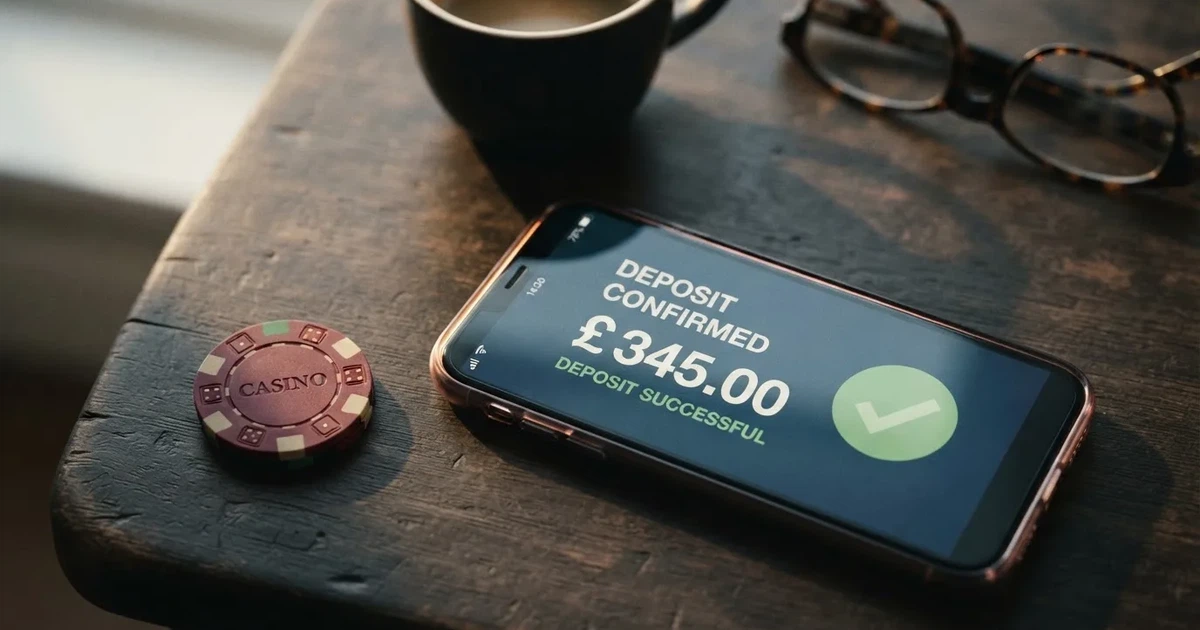
The route is simple enough at the till: a deposit confirmed on the phone screen, the casino balance updated, and the amount lands later on the monthly bill or disappears from pay-as-you-go credit. What sits behind that single tap is a chain of payment intermediaries, a regulator that has spent two decades tightening the frame around it, and a set of safer-gambling rules that turn the choice of casino into something more than a choice of games. This page walks that chain from end to end, then sets ten UK-licensed operators side by side so the choice between them has a shape.
Table of Contents
- The shape of the choice and where each route leads
- Responsible gaming around phone-credit deposits
- Payments and how fast the money actually moves
- The ten operators side by side
- The licensing frame that makes the choice possible
- Stakes, speeds and the wagering cap in plain numbers
- The wider payments picture and where phone credit sits
- What to check before claiming any offer on any of the ten
- The route that does not exist
- Reading the register and what it tells a player
- The choice and who it suits
- Frequently asked questions
The shape of the choice and where each route leads
A player who wants to deposit by phone credit at a UK casino is choosing along three axes at once. The first is the payment route itself — Payforit, Boku, or one of the carrier-billing arrangements a casino sets up behind the scenes — and how much each one costs in fees and in friction. The second is the casino, where the variable is not the welcome offer but the licence that backs it, the deposit ceiling the operator sets, and the speed at which withdrawals clear once identity checks are done. The third is the safer-gambling frame around all of it, from the GAMSTOP enrolment every licensee has to honour to the financial vulnerability check that triggers once net deposits reach £150 within 30 days.

Each axis points to a different reader. The player who wants the deposit confirmed in under a minute cares mostly about the first. The player who plans to cash out cares mostly about the second. The player who has decided in advance how much they can afford to lose is served by the third, whether or not the casino they land on has thought much about it. Treating the three as the same axis — as if paying by phone credit were a stand-in for a “good” or “bad” casino — is the mistake the rest of this page is built to avoid.
Responsible gaming around phone-credit deposits
Paying by phone credit makes a deposit feel small. The screen shows a single amount, the confirmation is one tap, and the cash leaves the bank account a few weeks later, when the bill arrives or when pay-as-you-go credit runs out. That delay is the very thing the safer-gambling frame around it is built to counteract.

The deposit ceiling every licensee must offer
Since 31 October 2025 every UK-licensed operator must prompt a customer to set a financial limit before the first deposit. The ceiling is not state-set; the operator offers it and the customer chooses whether to accept, raise or refuse. The wording of the prompt is prescribed, and the refusal has to be an active refusal rather than a skipped step. For a player paying by phone credit this matters more than it does for someone using a bank card, because the bill arrives later and the spend has already left the casino balance by the time the statement turns up.
ID checks, source-of-funds and the vulnerability trigger
Name, address and date of birth are verified before the first deposit or any play — that obligation has been in force since 7 May 2019. Financial vulnerability checks sit on top of it: from 28 February 2025 any operator must run one at £150 net deposits in a rolling 30 days, using public data only. The check is not a stop; it is a flag. A wider financial risk assessment has been announced but is not yet in force. Where the check fires, the operator is expected to ask questions the player may not have asked themselves, and to do so before the next deposit clears rather than after.
GAMSTOP and the national self-exclusion register
GAMSTOP, the national online self-exclusion scheme, is a mandatory condition of every online licence since 31 March 2020. Exclusions run for six months, one year or five years, and cannot be cancelled early. A player who has self-excluded is barred from every GB-licensed operator for the full period, not just the one they signed up with, and there is no opt-out for the casino to offer. For a player considering whether to deposit at all, this is the lever that costs nothing to pull and undoes nothing later.
The phone-bill delay as a feature, not a bug
Paying by phone credit stretches the time between committing a deposit and paying for it. That delay — a few hours on a pay-as-you-go top-up, up to a month on a contract bill — is often sold as a convenience. It is also the only deposit route where the money leaves the bank account after the player has already stopped playing, which is exactly the kind of friction the deposit-limit prompt and the GAMSTOP enrolment are designed to add. Read together, the rules turn the phone-bill delay from a marketing line into a built-in cooling-off period.
Payments and how fast the money actually moves
The route from a phone screen to a casino balance runs through more intermediaries than a card deposit, and each step has its own clock. The time-to-balance is shorter than the time-to-bank; both are shorter than the time-to-payout once a withdrawal is requested.
How the deposit settles
A pay-by-phone-credit deposit clears in one of three ways. Payforit, the UK mobile-billing scheme launched in 2007 and grown out of work started in 2005 by the UK founders of the SimPay consortium, charges the deposit to the customer’s phone bill or pay-as-you-go credit. Boku, the London-headquartered mobile-carrier-billing company founded in 2009, processes payments by billing transactions directly to a customer’s mobile phone account across more than 90 countries. A third route, used by some operators, runs through a direct carrier arrangement. In every case the casino balance updates almost immediately; the player sees the deposit on screen within seconds of confirmation.
The deposit ceiling on the route
Payforit and Boku both cap a single deposit well below the per-game stake ceiling. The figure is set by the payment intermediary and the carrier, not by the casino, and it is the reason a pay-by-phone deposit is rarely the way a high-stakes player funds an account. The cap exists alongside, not in place of, the deposit-limit prompt the operator must run before the first deposit, and a player who wants a higher ceiling has to act independently after that prompt.
Withdrawals and where the method stops
A withdrawal cannot be made back to a phone bill. Once a deposit has been made by phone credit, the operator offers a withdrawal route from its standard set — bank transfer, debit card, or an e-wallet — and the time-to-balance on the way in is no guide to the time-to-balance on the way out. ID checks, where they have not already been completed at deposit, run on the first withdrawal; the financial vulnerability check runs at the £150 trigger regardless of which route funded the account.
What “fast” actually means at a GB-licensed casino
A withdrawal at a licensed casino is gated by identity verification and source-of-funds checks, not by the payment method on the way in. Once those are cleared, the operator’s processing time is the binding constraint, and the regulator’s expectation is that the operator pays out “without delay” — a phrase that has been tested in complaints and arbitrations more than once. The deposit side is fast by design; the withdrawal side is fast by compliance.
The ten operators side by side
Every brand in the table below is taken from the Gambling Commission’s public register, which recorded 139 businesses holding an active remote casino operating licence on 18 September 2026. The register can be searched online and downloaded in full as CSV or Excel files, and the domain list it publishes records each website against the licence account that runs it, with a status of Active, Inactive or White Label — a white-label site trades under another company’s licence. On the same date the register’s domain list held 1,065 active and 361 white-label entries, which gives a sense of how thin any ten-brand snapshot is against the full market.
| Brand | Licence holder and remote casino licence | Domain status on the register | Pay-by-phone-credit support |
|---|---|---|---|
| bet365 | Hillside (UK Gaming) ENC · 055149-R-331499-004 | Active | — |
| Betfred | Petfre (Gibraltar) Limited · 039544-R-319290-010 | Active | — |
| PokerStars | Stars Interactive Limited · 039108-R-319334-026 | Active | — |
| 32Red | Platinum Gaming Limited · 045322-R-324275-019 | Active | — |
| Virgin Games | Gamesys Operations Limited · 038905-R-319430-022 | White Label | — |
| William Hill | WHG (International) Limited · 039225-R-319373-015 | Active | — |
| Midnite | Dribble Media Limited · 042647-R-321653-022 | Active | — |
| Grosvenor Casinos | Rank Interactive (Gibraltar) Limited · 057924-R-334666-005 | Active | — |
| 888casino | 888 UK Limited · 039028-R-319297-014 | Active | — |
| kwiff | Eaton Gate Gaming Limited · 044448-R-323408-017 | Active | — |
The “—” in the last column is honest rather than evasive. Pay-by-phone-credit support is not a field the Commission’s register records, and the research did not surface a figure for any of the ten brands above; listing each one as offering the route would assert what the inputs do not show. The decision any player makes about whether the route is available has to come from the casino’s own payments page, where the deposit methods are listed and the per-transaction ceiling is stated.
bet365
Bet365.com sits on the register as an active domain of account 55149, Hillside (UK Gaming) ENC, which holds remote casino operating licence 055149-R-331499-004. The operator is one of the larger GB-licensed brands by active customer count, and its payments page lists a wide range of deposit and withdrawal methods. For a player who prefers a single account for both casino and sports, the integration is a clear advantage.
Betfred
Betfred (Betfred.com) is listed as an active domain of account 39544, Petfre (Gibraltar) Limited, with remote casino operating licence 039544-R-319290-010. The brand sits inside a UK-facing group with a long high-street history, and its online product carries the same loyalty structure as the shops. A player who already has a Betfred account on the high street and wants the online side to feel familiar will find it does.
PokerStars
PokerStars (Pokerstars.uk) is listed as an active domain of account 39108, Stars Interactive Limited, licence 039108-R-319334-026. The brand is best known for poker, and its casino vertical runs alongside rather than on top of that core. For a player whose first love is the poker client and who wants a casino tab within the same wallet, the layout is the draw; for a player looking for a casino-first product, the emphasis sits elsewhere.
32Red
32Red (32red) is an active domain of account 45322, Platinum Gaming Limited, licence 045322-R-324275-019. The brand has held a GB remote licence for years and its casino product is the main event. A player who wants a casino-first account without a sportsbook bolted on will find the focus easier to navigate here than at the larger, multi-product brands.
Virgin Games
Virgin Games is listed as a white-label domain of account 38905, Gamesys Operations Limited, licence 038905-R-319430-022. A white-label site trades under another company’s licence, and the player account is held by Gamesys Operations Limited rather than by any Virgin entity; the Virgin name is a brand licence. For a player who values the Virgin branding, that is fine; for a player who wants to know which company holds their balance, the answer is on the register, not on the casino’s homepage.
William Hill
William Hill is an active domain of account 39225, WHG (International) Limited, licence 039225-R-319373-015. The brand sits inside a group with both high-street and online presence, and the online product carries the same broad-appeal structure as the shops. The choice is one of familiarity rather than specialisation.
Midnite
Midnite (Midnite.com) is an active domain of account 42647, Dribble Media Limited, licence 042647-R-321653-022. The brand is newer than most of the ten, and its product leans on a cleaner interface than the legacy operators. This design-led approach appeals to players who prefer a modern mobile experience.
Grosvenor Casinos
Grosvenor Casinos is an active domain of account 57924, Rank Interactive (Gibraltar) Limited, licence 057924-R-334666-005. The brand sits inside the Rank group, which also runs Mecca Bingo and several other UK-facing gambling names. A player who knows the Grosvenor rooms on the high street will find the online product tracks the same loyalty structure.
888casino
888casino (888casino) is an active domain of account 39028, 888 UK Limited, licence 039028-R-319297-014. The brand is one of the longer-established names in the GB-licensed online market, and its casino product carries the breadth that comes with that history. This brand’s layout suits players who want a single, focused casino experience rather than a sportsbook-heavy platform.
kwiff
kwiff (Kwiff.com) is an active domain of account 44448, Eaton Gate Gaming Limited, licence 044448-R-323408-017. The brand markets itself around “surprise” odds and boosted payouts, and its casino product runs alongside that hook. For a player who wants the casino product to feel like a break from the sportsbook rather than a quieter corner of it, the split is the point.
The licensing frame that makes the choice possible
Every brand in the table holds a remote casino operating licence issued by the Gambling Commission under the Gambling Act 2005, and every one of them sponsors itself to DCMS. The Act covers Great Britain — England, Scotland and Wales — not Northern Ireland, and since the Gambling (Licensing and Advertising) Act 2014 any operator taking customers in Great Britain needs a Commission licence wherever it is based. A Curaçao, Maltese or Gibraltar licence is not a substitute, even where the operator’s holding company is registered in one of those jurisdictions; what matters for a GB player is the licence the Commission has issued, not where the parent company sits.
A remote casino licence number on the register has the form account-R-number-suffix, where the leading six digits repeat the licence holder’s account number and the “R” marks a remote, that is online, licence. The number is not a marketing badge; it is the lookup key for the register entry that names the licensee, the trading names, the domains and the licence status. A player who wants to verify a brand does so by reading the licence number off the casino’s footer and typing it into the Commission’s register search, not by trusting the “licensed and regulated” line on the homepage.
What the licence obliges the operator to do
The licence is a package of conditions rather than a single permission. The social responsibility code and the Licence Conditions and Codes of Practice (LCCP) set the conduct rules: identity verification before the first deposit, the deposit-limit prompt, the GAMSTOP enrolment, the financial vulnerability check, the ban on credit-card gambling including credit-card-funded e-wallets. The Remote Technical Standards set the technical rules: minimum return-to-player disclosures, the random-number-generator testing regime, the segregation of player funds. Every GB-licensed operator is audited against both, and the Commission publishes the outcomes.
The player-side protections the licence buys
For the player, the licence is the reason any of the routes on this page are available in the first place. Credit cards are banned for gambling since 14 April 2020, including credit cards routed through e-wallets. Wagering requirements are capped at 10x since 19 December 2025, and mixed-product bonuses — bet on sport, get casino spins — are banned on the same date. Anonymous play is not possible at a licensed site: the ID check is the entry ticket, and there is no version of a GB-licensed casino that lets a player deposit, play and withdraw without one. Auto-play has been banned since 31 October 2021, a slot spin may not be faster than 2.5 seconds, and losses disguised as wins are banned.
What the licence does not buy
The licence does not set a state-level deposit or loss ceiling; it requires the operator to offer one and the player to choose. It does not insure player funds against operator insolvency, although the Commission requires segregation; the player reads the segregation terms on the casino’s website before relying on them. It does not tax winnings — players pay no tax on gambling winnings in the UK — and it does not aim penalties at the player who plays on an unlicensed site. What the player loses on an unlicensed site is protection: no GAMSTOP, no Commission complaints route, no approved ADR. The Commission’s response to illegal sites is to disrupt them — cease-and-desist notices, search-engine delisting, payment and hosting referrals — but it has no ISP-blocking power.
Stakes, speeds and the wagering cap in plain numbers
A few figures on this page carry the comparison better in numbers than in words. The maximum stake per game cycle for online slots is £5 for players aged 25 and over (from 9 April 2025) and £2 for 18-24-year-olds (from 21 May 2025). The financial vulnerability check fires at £150 net deposits in a rolling 30 days (from 28 February 2025). The wagering requirement cap is 10x (from 19 December 2025). The minimum age is 18, and the ID check runs before the first deposit or any play.
Remote Gaming Duty, the tax operators pay on gross gaming yield, is raised from 21% to 40% from 1 April 2026. That is the operator’s bill, not the player’s, and it sits behind any change to bonus generosity or to the fees on payment routes. Players pay no tax on winnings; the operator’s rate is a separate question handled with HMRC, not with the casino.
The 10x wagering cap and what it does to a bonus
The wagering requirement cap of 10x applies to the bonus amount a player receives, not to the deposit. A £100 bonus carries a required turnover of £1,000 before any winnings can be withdrawn. At a slot stake of £1 per spin that is 1,000 spins, or roughly 42 minutes of play at the 2.5-second minimum spin interval; at a £0.10 stake it is 10,000 spins, or around 7 hours. The cap is the ceiling; the actual requirement an offer carries is set by the operator, and it can be lower. Where the offer runs across both a deposit and a bonus, the wagering applies to the bonus portion only. The arithmetic matters because it is the one place a marketing line and a player cost meet on the same page, and the 10x cap is the regulator’s answer to offers that ran into the hundreds before it came in.
Premium-rate numbers and what they cost
UK premium-rate telephone numbers used for pay-by-phone services carry a two-part charge: an access charge set by the caller’s phone company and a service charge set by the receiving organisation, with service charges capped between 7p per minute on 084x numbers and £3.60 per minute on 09xx numbers. Premium-rate SMS shortcodes beginning with 72 are reserved in the UK specifically for society lotteries, which means they are not the route a casino deposit takes. Day-to-day regulation of UK premium-rate phone-paid services transferred from the Phone-paid Services Authority back to Ofcom from 1 February 2025, which closes a regulatory loop that had run through a separate body for several years.
The headline numbers, set out plainly
The stake ceiling is £5 for the 25-and-over bracket and £2 for the 18-24 bracket. The vulnerability trigger is £150 net deposits in 30 days. The wagering cap is 10x the bonus. The minimum age is 18. The ID check is before the first deposit or any play. The GAMSTOP exclusion runs six months, one year or five years. These figures are not adjustable by the operator; they are the frame the operator works inside, and a player who knows them can read any casino’s offer against them in a single pass.
The wider payments picture and where phone credit sits
Pay-by-phone credit is one route among several at a GB-licensed casino. Bank transfer, debit card and e-wallets each carry their own time-to-balance, their own per-transaction ceiling, and their own fee structure. Apple Pay, which launched on 20 October 2014 and began supporting UK-issued payment cards on 14 July 2015, protects card data through tokenization, replacing the actual card number with a device-specific tokenised Device Primary Account Number and generating a dynamic security code for each transaction; in-store payments use near-field communication (NFC) to communicate with contactless terminals, and authentication on an iPhone with Face ID is by double-clicking the side button. Apple Pay is not a phone-credit deposit; it is a card-funded route that happens to run through the phone.
AstroPay, founded in 2009 and headquartered in Uruguay, operates as a global digital wallet offering online payments, virtual and physical debit cards and peer-to-peer transfers, with a UK entity — Larstal Limited — authorised by the Financial Conduct Authority under the Electronic Money Regulations 2011, and an Isle of Man entity licensed by the Isle of Man Financial Services Authority. Boku, headquartered in London and serving clients including Google, Sony, Microsoft and Spotify, states it supports more than 200 local payment methods through a single API across more than 40 markets. None of these is a substitute for the question this page opens on: which of the ten GB-licensed operators in the table above takes a phone-credit deposit, and at what ceiling.
The trade-off in one paragraph
Pay-by-phone credit is fast on the way in, capped low per transaction, and not available on the way out. A bank transfer is slower on the way in and faster on the way out at most operators. A debit card splits the difference. The choice is not about which method is best; it is about which method matches the player’s plan for the account, the size of the deposits they intend to make, and the urgency of the first withdrawal. The phone-credit route suits a player who wants the deposit confirmed on the phone and is willing to set up a separate withdrawal route; it suits less well a player who wants one method for both directions or who plans to deposit at the higher end of any operator’s ceiling.
What to check before claiming any offer on any of the ten
The wagering requirement cap is 10x, but an offer can carry a lower figure, and the figure it carries is on the offer terms page rather than on the homepage. The deposit-limit prompt runs before the first deposit; a player who refuses the limit has refused it actively, and the refusal is recorded. The ID check runs before the first deposit or any play, and a player who cannot complete it cannot deposit. The financial vulnerability check fires at £150 net deposits in a rolling 30 days and is built on public data only. The GAMSTOP exclusion, where it applies, applies to every GB-licensed operator for the full chosen period.
The credit-card ban since 14 April 2020 includes credit cards routed through e-wallets, which closes the workaround of funding an e-wallet with a credit card and then depositing from the wallet. The mixed-product bonus ban since 19 December 2025 means a sportsbook free bet attached to a casino offer is not the structure a licensed operator can run; the offer terms page will say so where it matters. Auto-play has been banned since 31 October 2021, the minimum spin interval is 2.5 seconds, and losses disguised as wins are banned — all three are technical standards the operator is audited against rather than rules the player enforces.
The route that does not exist
There is no GB-licensed mobile casino that lets a player deposit anonymously, withdraw without an ID check, or fund an account with a credit card. The anonymous-play option is not on the menu; the credit-card route is closed at the regulator level; the no-ID-check option is closed at the operator level. A player who wants any of those three is looking at an unlicensed site, and an unlicensed site is one the Commission has no power over — the player loses access to GAMSTOP, to the Commission’s complaints route, and to the approved ADR. The choice the regulator has built is between licensed play with its constraints and unlicensed play without its protections. The phone-credit route runs through the licensed side.
Reading the register and what it tells a player
The Commission’s public register can be searched online and downloaded as CSV or Excel files. The domain list records each website against the licence account that runs it, with a status of Active, Inactive or White Label. On 18 September 2026 it listed 139 businesses holding an active remote casino operating licence and 1,065 active plus 361 white-label domain entries. A white-label domain trades under another company’s licence, which means the player account is held by the licensee rather than by the brand on the homepage; the brand on the homepage is a brand licence, not the operating company. Several brands can share one licensee — Ladbrokes, Coral and Gala Bingo all sit under LC International Limited — and presenting them as independent operators is a misreading of the register.
A register check takes a minute: read the licence number off the casino’s footer, type it into the Commission’s search, confirm the licence status is Active and the trading name matches the brand on the homepage. The check is not a guarantee of solvency or of generosity; it is a confirmation that the brand sits inside the frame the rest of this page describes.
The choice and who it suits
A player who wants to deposit by phone credit at a UK-licensed casino has three questions to answer, in this order. The first is whether the deposit route is available on the specific casino they have in mind, which the register does not record and which the casino’s payments page does. The second is whether the per-transaction ceiling the payment intermediary sets is high enough for the deposits they intend to make; for most players it is, and for a high-stakes player it is not. The third is whether they want a single account that handles casino and sports or a casino-first account without a sportsbook bolted on, because the ten operators in the table above split along that line.
The safer-gambling frame sits around all three questions. The deposit-limit prompt runs before the first deposit, the GAMSTOP enrolment is a condition of the licence, the financial vulnerability check fires at £150 net deposits in 30 days, and the ID check is the entry ticket. A player who treats the frame as friction to be minimised is a player who has stopped reading the page at the wrong paragraph; a player who treats it as the cost of playing inside a regulated market is reading it the way it is written.
Frequently asked questions
How does paying by phone credit work at a mobile casino?
A deposit is confirmed on the phone screen, the casino balance updates within seconds, and the amount is charged to the customer’s phone bill or taken from pay-as-you-go credit by the carrier or its billing partner. The deposit side is one tap; the money leaves the bank account later, when the bill arrives.
Is a pay-by-phone-credit deposit added straight to a phone bill?
Yes, for contract customers the amount is added to the next monthly bill. For pay-as-you-go customers it is deducted from the available credit at the time of the deposit. The casino balance updates in both cases within seconds of confirmation; the bank-side settlement runs on the carrier’s billing cycle.
Do UK-licensed casinos still run ID checks before a phone-credit deposit?
Yes. Name, address and date of birth are verified before the first deposit or any play, an obligation that has been in force since 7 May 2019. The ID check is not waived for phone-credit deposits; it is the entry ticket for the account regardless of the funding route.
Is there usually a limit on how much can be deposited by phone credit?
Yes. The per-transaction ceiling is set by the payment intermediary and the carrier rather than by the casino, and it sits well below the per-game stake ceiling of £5 for the 25-and-over bracket. A higher ceiling requires a different funding route.
How quickly does a phone-credit deposit reach a casino account?
Within seconds of confirmation. The deposit screen returns a success message and the casino balance updates almost immediately. The time-to-bank is longer — a few hours on a pay-as-you-go top-up, up to a month on a contract bill — because the carrier settles on its own cycle.
Can phone-credit deposits be reversed if made by mistake?
No. A confirmed deposit is final; the casino balance updates on confirmation and the carrier records the charge at the same moment. A player who has deposited by mistake is looking at the casino’s standard withdrawal process, not at a reversal of the phone-billing entry.
Created by the ”bankingcasinouk” editorial team.