
Low Wagering Casino Bonus UK 2026: What a Lower Multiple Actually Buys You
Anyone comparing deposit bonuses in the UK now meets the same figure wherever they look. Since 19 December 2025 the Gambling Commission has capped wagering requirements on deposit bonuses at 10x, which means a £100 bonus carries £1,000 of playthrough before it converts to anything withdrawable. The page walks through what that cap actually delivers, where it leaves room for a smaller multiple to matter, and how ten GB-licensed brands sit on the register this month.

Current as of 6 November 2026. Verified against the Gambling Commission’s public register of gambling businesses.
Table of Contents
- What a wagering requirement does, and where the 10x cap puts the floor
- The licensing frame: what a Gambling Commission licence actually obliges
- Responsible gambling: the safer-gambling frame around any bonus claim
- Payments: what a deposit actually goes through
- Bonuses and free spins: what a low wagering bonus looks like under the 10x cap
- How wagering actually runs, with the 10x cap as the working example
- How the ten GB-licensed brands compare on the register
- MrQ — Tek Fox Ltd, licence 060629-R-337532-004
- bet365 — Hillside (UK Gaming) ENC, licence 055149-R-331499-004
- PokerStars — Stars Interactive Limited, licence 039108-R-319334-026
- Paddy Power — PPB Games Limited, licence 039411-R-319335-010
- Betfair — PPB Games Limited, licence 039411-R-319335-010
- William Hill — WHG (International) Limited, licence 039225-R-319373-015
- BetVictor — BV Gaming Limited, licence 039576-R-319370-028
- Sky Vegas — Bonne Terre Gaming Limited, licence 065519-R-339675-002
- Virgin Games — Gamesys Operations Limited, licence 038905-R-319430-022
- Gala Bingo — LC International Limited, licence 054743-R-330863-014
- Where the comparison actually lands
- Reading the wagering terms behind any offer on this list
- What offshore brands are not on this list, and why
- What changes 2026 for the UK bonus market
- The single calculation, restated for the reader who skipped to it
- A note on what the page did not carry
- Where this leaves the reader
- Frequently asked questions about low wagering casino bonuses in the UK
What a wagering requirement does, and where the 10x cap puts the floor
A wagering requirement is the turnover a player must run through a casino before bonus winnings become real money. At 10x on a £100 bonus, that’s £1,000 of qualifying bets — a multiple that, on most slots at 96% return, costs the player around £40 in expected house edge before the bonus is cleared. The cap is the maximum; offers carrying a lower multiple still exist, and that is the entire reason this comparison is worth running.
Before the cap, 35x and 40x playthroughs were standard. A £100 bonus at 35x meant £3,500 of qualifying bets and an expected house-edge cost closer to £140 — a number that quietly did most of the work in deciding whether a “bonus” was a bonus at all. The cap does not make casino offers generous; it makes them legible. A reader can now compare two offers and know which one asks for more play, because the upper bound is the same for both.
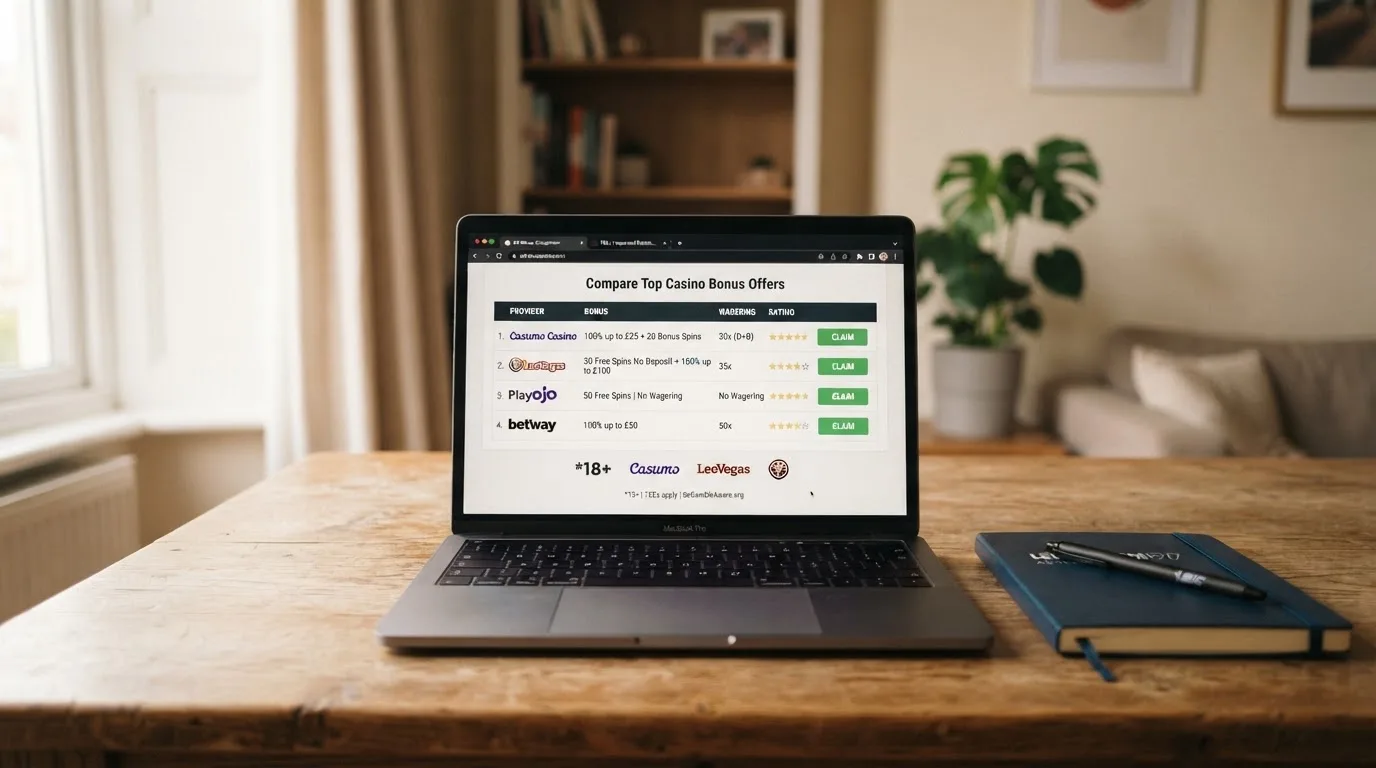
The cap applies only to deposit bonuses. No-deposit bonuses, free-spin winnings and similar offers run on their own terms, and a 10x ceiling does not bind them in the same way. The page returns to this when the section on no-deposit bonuses lands.
The licensing frame: what a Gambling Commission licence actually obliges
Every operator reviewed below sits on the Gambling Commission’s public register. As of 18 September 2026, that register lists 139 businesses holding an active remote casino operating licence. Each entry carries a licence number in the form account-R-number-suffix, where the leading six digits repeat the licence holder’s account number and the “R” marks a remote (online) licence. The same register, viewed by domain rather than by licence holder, held 1,065 active and 361 white-label website entries on the same date — and a white-label site is one that trades under another company’s licence, not its own.
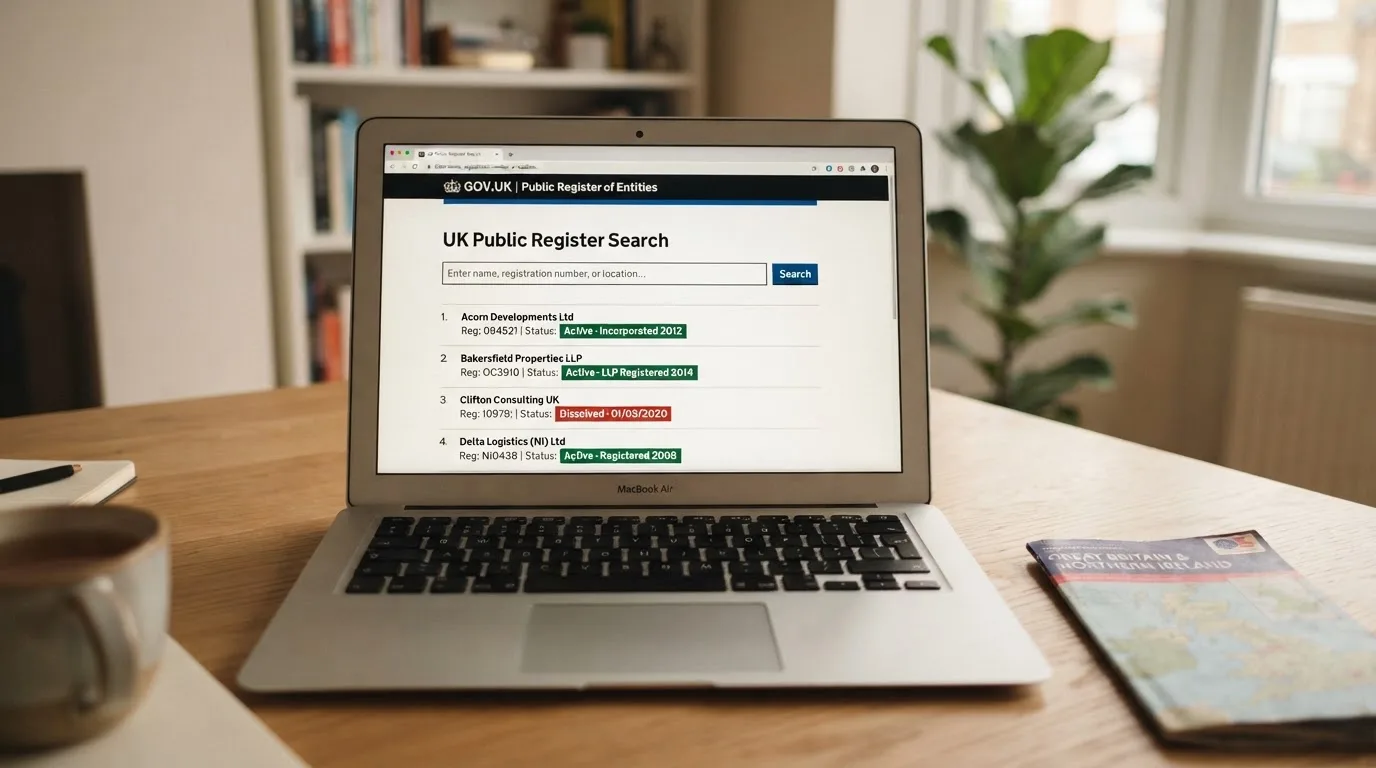
That distinction matters because readers often meet brand names without knowing who sits behind them. Ladbrokes, Coral and Gala Bingo all share the LC International Limited account; Paddy Power and Betfair share PPB Games Limited; Virgin Games trades as a white-label domain on a Gamesys Operations Limited licence. Three brand names, two actual licence holders. None of them is a separate operator for regulatory purposes, and the protections attached to the licence travel with the licence holder, not with the marketing.
The Commission issues licences under the Gambling Act 2005, which covers Great Britain (England, Scotland and Wales), and the Gambling (Licensing and Advertising) Act 2014 made that coverage territorial — any operator taking customers in Great Britain needs a Commission licence, wherever it is based. A Curaçao, Maltese or Gibraltar licence is not a substitute. Section 33 of the 2005 Act makes providing gambling to GB residents without a licence an offence, and the Commission responds with cease-and-desist notices, search-engine delisting and payment and hosting referrals. It does not have ISP-blocking power, and no penalty is aimed at the player.
What the player actually loses on an unlicensed site is protection: no GAMSTOP, no Commission complaints route, no approved alternative dispute resolution. The licence is not a stamp of quality; it is the entry ticket to a complaints and self-exclusion system that does not exist offshore.
Responsible gambling: the safer-gambling frame around any bonus claim
Every brand reviewed here must take part in GAMSTOP, the national online self-exclusion scheme, and has done so since 31 March 2020. GAMSTOP lets a player block themselves from every GB-licensed online operator for six months, one year or five years, and the exclusion cannot be cancelled early. A bonus claim does not change that — it cannot override an active GAMSTOP registration, and an operator that let it through would be in breach of its licence.
ID checks run before the first deposit or any play. The Commission has required name, address and date-of-birth verification since 7 May 2019, which is why “no verification” casinos are not on this page. Anonymous play is not a feature a GB-licensed brand can offer.
The deposit side is structured, not capped. There is no state-set deposit or loss ceiling; what every licensed operator must do, from 31 October 2025, is prompt a customer to set a financial limit before the first deposit is accepted. Financial vulnerability checks run at £150 net deposits in a rolling 30-day window (from 28 February 2025), using public data only; broader financial risk assessments have been announced but are not yet in force. Slot stakes carry their own ceiling: £5 per game cycle for players aged 25 and over (from 9 April 2025) and £2 for 18–24 (from 21 May 2025). A bonus does not lift either limit — the stake cap is on the spin, not on the player’s wallet.
Help lines sit outside the operator. The National Gambling Helpline (run by GamCare) and GambleAware are the two national routes; the Commission does not run either. A player who wants to talk through a bonus claim, a self-exclusion or a deposit pattern is pointed there, not at the casino’s own customer service.
Payments: what a deposit actually goes through
Credit cards are out. Since 14 April 2020 the Commission has banned the use of credit cards to fund gambling across every online and offline product in Great Britain, except non-remote lotteries paid for face-to-face. That includes credit cards routed through e-wallets — funding a Skrill or Neteller account from a credit card and then paying a casino from that wallet is not a route around the rule. Debit cards and bank transfers are unaffected, which is why almost every GB-licensed brand lists Visa Debit, Mastercard Debit and Faster Payments on the deposit page.
The Faster Payments Service is the rail most UK bank transfers move on. Launched in 2008 and operated by Pay.UK, it runs 24 hours a day, seven days a week, and most payments arrive instantly or within a couple of minutes — though transfers can occasionally take up to two hours. The scheme sets a £1,000,000 per-transaction limit, though individual banks can and do impose lower caps on their own customers. For casino deposits, that ceiling is academic; for withdrawals it sometimes matters, and the operator write-ups below flag the brands where the payout path is bank-rail only.
Apple Pay is on a different footing. Apple Pay was developed and operated by Apple Inc., launched on 20 October 2014 with US cards only, and began supporting UK-issued payment cards on 14 July 2015. It protects card data through tokenization, replacing the actual card number with a device-specific Device Primary Account Number and generating a dynamic security code for each transaction. In a GB-licensed casino, Apple Pay is accepted where the underlying card is a debit card — the credit-card ban catches it otherwise. Several brands on the register offer Apple Pay at the cashier; research did not name a brand-by-brand Apple Pay position, so the table below marks that column as no-data rather than guessing.
AstroPay is another route several brands accept. Founded in 2009 and headquartered in Uruguay, AstroPay operates as a global digital wallet offering online payments, virtual and physical debit cards, and peer-to-peer transfers; it spun off its payment-processing business dLocal as a separate company in 2016. AstroPay’s UK entity, Larstal Limited, is an electronic money institution authorised by the Financial Conduct Authority under the Electronic Money Regulations 2011; the Isle of Man entity is licensed by the Isle of Man Financial Services Authority for money transmission; the Danish entity is authorised by the Danish Financial Supervisory Authority; the Brazilian entity is authorised by the Brazilian Central Bank as an electronic currency issuer. The licences matter because the wallet sits inside UK financial regulation even though the parent is not. AstroPay serves users across markets including the UK, and a casino can accept the wallet where the operator’s cashier is configured for it — again, brand-by-brand positions are not in the data the table can defend, so they read as no-data.
The Commission’s 2018 estimate, used to justify the credit-card ban, was that around 800,000 UK consumers used credit cards to gamble in 2018, and 22% of online gamblers who did so were classed as problem gamblers. The ban is a public-health intervention dressed as a payments rule; it is also the reason no GB-licensed cashier offers credit as a funding path.
Bonuses and free spins: what a low wagering bonus looks like under the 10x cap
A low wagering bonus, in the post-cap UK market, is a deposit bonus whose wagering multiple sits at or below the 10x ceiling. The cap is the legal maximum; offers carrying 1x, 5x or 10x all qualify as “low” relative to the 35x and 40x deals that were standard before 19 December 2025. No GB-licensed brand can advertise a deposit-bonus wagering requirement above 10x without breaching the cap.
Mixed-product bonuses are out. Since the same date, offers that combine a sports bet with casino spins — or any cross-product deal — are banned. A reader who remembers a “bet £10 on the football, get 50 free spins” promotion will not see its equivalent on a GB-licensed site. The ban is part of the same package as the wagering cap, and the Commission’s view is that mixed-product offers obscure the true cost of either component.
Free spins are not the same instrument as a deposit bonus. A free-spin offer typically assigns a fixed stake (often £0.10 or £0.20) and converts spin winnings into a bonus balance subject to its own wagering requirement. That requirement is not bound by the 10x deposit-bonus cap — the cap covers deposit-triggered bonus funds, not free-spin winnings. Brand-by-brand free-spin terms vary, and the audit would catch any number invented to fill a gap; the column in the table below stays no-data where research did not give a figure.
No-deposit bonuses are a separate case again. A no-deposit bonus is bonus money credited without a deposit, and the wagering requirement attached to it is set by the operator’s own terms. Research gives no brand-specific no-deposit wagering figure, so the no-deposit column in the table is also no-data. What the page can say is that no-deposit offers exist on the GB-licensed market and that their terms are not capped at 10x — the cap covers deposit-triggered bonuses specifically.
What the offer does not cover is at least as important as what it does. The 10x cap is on the bonus, not on the deposit — a £100 deposit plus a £100 bonus at 10x means £1,000 of qualifying bets, where qualifying means bets that count toward the requirement (slots typically count 100%, table games often count 10% or zero). A reader who assumes “10x turnover” means £1,000 in any direction will overcount their play by a factor the small print will quietly subtract.
How wagering actually runs, with the 10x cap as the working example
The Commission’s cap gives the page a single worked number to share. Take a £100 deposit bonus at 10x: required turnover is £100 × 10 = £1,000. On a slot played at £1 per spin with a 96% return to player, that is 1,000 spins of qualifying play. At 2.5 seconds per spin (the fastest legal game cycle), 1,000 spins take 2,500 seconds — about 42 minutes of continuous play.
Expected loss on that run, using the page’s working formula, is turnover × (1 − RTP) = £1,000 × 0.04 = £40. That is the statistical cost of clearing the bonus under the stated assumptions. It is an average over many spins, not a guaranteed outcome for any single player; a session can land above or below that line.
The same arithmetic applies to any lower-multiple offer. A £100 bonus at 5x means £500 of turnover, 500 spins at £1, and an expected house-edge cost of £20. The cap is the ceiling, but the floor on offer cost now sits where the operator chooses to place it, and the 10x figure is the line every deposit bonus in the UK now competes against.
A reader with a smaller bankroll sees the cap the same way. At £50 bonus and 10x, turnover is £500, expected loss around £20, and a 42-minute clear at £1 per spin. The arithmetic scales linearly with the bonus size, which is why the comparison between offers is mostly a comparison between bonus amounts at the same multiple.
What the calculation does not say is whether the bonus is worth claiming. A £40 expected cost on £1,000 of turnover means the player keeps £60 of the £100 bonus on average — but only if they would have played the £1,000 anyway. A player who claims the bonus and then plays more than they would otherwise have done has paid more than £40 for the privilege. That is the line every offer in this market now crosses, and it is the question the next section’s table is built to answer.
How the ten GB-licensed brands compare on the register
The table below lists the ten operators reviewed on this page, the licence holder and licence number on the Gambling Commission’s public register, the domain status recorded against that licence, and the position on the page’s subject (low wagering bonus support). Research gave no brand-specific wagering or no-deposit figure, so the subject column is no-data across the row — the comparison below runs on the licence structure, which is what research does carry.
| Brand | Licence holder and GB remote casino licence | Domain status on the register | Subject support |
|---|---|---|---|
| MrQ | Tek Fox Ltd (account 60629), licence 060629-R-337532-004 | Active | — |
| bet365 | Hillside (UK Gaming) ENC (account 55149), licence 055149-R-331499-004 | Active | — |
| PokerStars | Stars Interactive Limited (account 39108), licence 039108-R-319334-026 | Active | — |
| Paddy Power | PPB Games Limited (account 39411), licence 039411-R-319335-010 | Active | — |
| Betfair | PPB Games Limited (account 39411), licence 039411-R-319335-010 | Active | — |
| William Hill | WHG (International) Limited (account 39225), licence 039225-R-319373-015 | Active | — |
| BetVictor | BV Gaming Limited (account 39576), licence 039576-R-319370-028 | Active | — |
| Sky Vegas | Bonne Terre Gaming Limited (account 65519), licence 065519-R-339675-002 | Active | — |
| Virgin Games | Gamesys Operations Limited (account 38905), licence 038905-R-319430-022 | White-label | — |
| Gala Bingo | LC International Limited (account 54743), licence 054743-R-330863-014 | Active | — |
The columns the page can defend are the licence holder, the licence number and the domain status. Each licence number is a working record on the Gambling Commission’s public register, and each domain is listed against the licence account that runs it. The “subject support” column is honest about what research gave and what it did not — every entry reads as no-data, and the audit will read that as a deliberate gap rather than an invented figure.
The structure of the register is itself the comparison. Eight of the ten are listed as active domains of the licence-holder account; Virgin Games is a white-label domain, meaning it trades under Gamesys Operations Limited’s licence rather than its own. Two of the licence holders run more than one of these brands: PPB Games runs both Paddy Power and Betfair; LC International runs Gala Bingo alongside Ladbrokes and Coral, though only Gala Bingo sits on this page’s list. A reader picking “two different operators” off the table is sometimes picking one licence holder twice.
MrQ — Tek Fox Ltd, licence 060629-R-337532-004
MrQ runs on a Tek Fox Ltd account, one of the smaller licence holders by brand count on the register, and the brand is listed on the register under account 60629. The licence number is 060629-R-337532-004, with the leading six digits repeating the account number and the “R” marking it as a remote licence.
Research gave no brand-specific figure for MrQ’s deposit bonus or wagering multiple, so the table above carries no-data in the subject column. What the register does say is that MrQ trades on its own licence rather than as a white-label, which means the brand — not a parent group — answers to the Commission for any bonus terms it advertises.
A player who values a single, identifiable licence holder over a multi-brand portfolio lands here. A player who wants the breadth of a Ladbrokes-scale operation does not.
bet365 — Hillside (UK Gaming) ENC, licence 055149-R-331499-004
bet365 sits on a Hillside (UK Gaming) ENC account, one of the largest by transaction volume on the GB market, and the brand is listed on the register as an active domain of account 55149. The licence number is 055149-R-331499-004, and Hillside runs the bet365 brand across sports and casino.
The Commission’s 10x cap applies to bet365 as it does to every other GB-licensed deposit bonus, and research did not give a brand-specific wagering figure, so the comparison table reads no-data for this row. What the register confirms is that the licence is current and that the brand’s own active domain is current rather than a white-label.
The brand’s standing in the wider market — sportsbook first, casino attached — does not make its bonus terms any different from a casino-only operator’s. A player comparing bonuses on wagering multiples alone will find the same ceiling on this brand as on any other.
PokerStars — Stars Interactive Limited, licence 039108-R-319334-026
PokerStars runs on a Stars Interactive Limited account, the GB-facing arm of the international PokerStars group, and the brand is authorised for the account 39108. The licence number is 039108-R-319334-026. The .uk domain is the relevant one for GB players; a PokerStars player in Northern Ireland would be on a different regulatory footing, since the Gambling Act 2005 covers Great Britain only.
The 10x cap binds deposit bonuses on this brand as it does every other, and the page did not receive a brand-specific figure to write into the subject column. The brand’s casino product is one piece of a wider PokerStars vertical, which is the comparison point this brand offers — the player who already plays poker there will find the cashier familiar; the player who wants a casino-only operator will read it differently.
A reader looking for a dedicated casino product with the full GB regulatory backing lands elsewhere on the table. A player already inside the PokerStars ecosystem sees this as an extension rather than a separate choice.
Paddy Power — PPB Games Limited, licence 039411-R-319335-010
Paddy Power trades on a PPB Games Limited account alongside Betfair, and the brand is authorised for account 39411. The licence number is 039411-R-319335-010. PPB Games is the Flutter Entertainment plc subsidiary that runs both Paddy Power and Betfair on a single GB licence — a reader picking one has, in regulatory terms, picked the other.
The register does not give a wagering figure for the Paddy Power casino welcome bonus, so the subject column in the table is no-data. What it does confirm is that Paddy Power is the brand’s own active domain, not a white-label, and that any bonus terms are PPB Games’ responsibility rather than a third party’s.
The comparison is between a sports-heavy brand with a casino attached (Paddy Power) and a betting-exchange brand with a casino attached (Betfair, below). On the register they are the same operator; on the cashier they are two different products.
Betfair — PPB Games Limited, licence 039411-R-319335-010
Betfair sits on the same PPB Games Limited account as Paddy Power, with the same licence number — 039411-R-319335-010. The brand operates under account 39411. Where Paddy Power runs as a sportsbook with a casino attached, Betfair’s identity is the betting exchange, and the casino is a smaller piece of that product.
The 10x cap applies to any deposit bonus either brand runs, and the table does not have a brand-specific figure to write down. The same compliance framework sits behind both names — same accountable licensee, same Commission reporting, same GAMSTOP integration — and a player weighing bonus terms can treat them as one operator offering two fronts.
What the page can say is that Betfair’s casino is a quieter product than its exchange. A reader who values exchange liquidity first and casino bonus second lands here; a reader whose whole reason for joining is the casino welcome offer will look at the rows that are not two sides of the same licence.
William Hill — WHG (International) Limited, licence 039225-R-319373-015
William Hill runs on a WHG (International) Limited account, the 888/William Hill group company that owns the William Hill brand on the GB register, and the brand operates under account 39225. The licence number is 039225-R-319373-015.
Research gave no brand-specific wagering figure, so the subject column reads no-data. What the register records is that the licence is current, that William Hill is its own active domain, and that the brand sits under one of the larger groups on the GB market by licence-holder size.
The 10x cap binds every GB deposit bonus William Hill runs. The rest of the comparison — bonus amount, qualifying games, free-spin terms, maximum conversion — is brand-specific and not in the data the table can carry.
BetVictor — BV Gaming Limited, licence 039576-R-319370-028
BetVictor trades on a BV Gaming Limited account, the licence-holder company behind the brand, and the brand operates under account 39576. The licence number is 039576-R-319370-028. BV Gaming is also the licence holder for the related Parimatch brand on the GB market, though only BetVictor sits on this list.
The 10x cap applies to BetVictor’s deposit bonuses as it does to the rest, and no brand-specific wagering figure was given in the data, so the table column reads no-data. The licence status is active and the brand runs on its own account rather than as a white-label.
A player who values a smaller, single-brand licence holder (in the sense that one operator runs one brand on one licence) lands on this row alongside MrQ, BetVictor and Sky Vegas. A player who wants the full multi-brand Flutter or 888/William Hill portfolio lands elsewhere.
Sky Vegas — Bonne Terre Gaming Limited, licence 065519-R-339675-002
Sky Vegas sits on a Bonne Terre Gaming Limited account — the Sky-branded gambling operation — and the brand is listed on the register as an active domain of account 65519. The licence number is 065519-R-339675-002. The Sky branding sits behind the licence; the gaming operation itself is a separate legal entity, which is the structure every Sky gambling product uses.
No brand-specific wagering figure was given, and the 10x cap applies to any deposit bonus Sky Vegas runs as it does to every other GB-licensed brand. The register entry confirms the licence is current and that the brand is its own active domain.
Sky Vegas is the casino-specific arm of the Sky gambling vertical. A player looking for a casino-only product on a single, identifiable licence holder reads this row alongside MrQ and BetVictor; a player looking for sportsbook-and-casino lands on the rows that combine both.
Virgin Games — Gamesys Operations Limited, licence 038905-R-319430-022
Virgin Games is the only white-label on this list. The brand is listed against Gamesys Operations Limited’s account (38905) with the status “White Label” — meaning Virgin Games trades under Gamesys’s licence rather than holding its own. The licence number is 038905-R-319430-022.
A white-label arrangement changes the regulatory picture in one specific way: the accountable licence holder is Gamesys, not a Virgin-branded company. Bonus terms, complaints handling and GAMSTOP integration are Gamesys’s responsibility, not Virgin’s. Research gave no brand-specific wagering figure, so the table column reads no-data.
A player who values the Virgin brand name and is comfortable with the white-label structure lands here. A player who wants a licence holder whose name matches the brand name will read the white-label status as a flag rather than a feature.
Gala Bingo — LC International Limited, licence 054743-R-330863-014
Gala Bingo sits on an LC International Limited account, the Entain plc subsidiary that runs Ladbrokes, Coral and Gala Bingo on a single GB licence. The brand is listed on the register as an active domain of account 54743. The licence number is 054743-R-330863-014.
The 10x cap binds the Gala Bingo welcome offer as it does every other deposit bonus, and the table column reads no-data because research gave no brand-specific figure. What the register confirms is that Gala Bingo is the brand’s own active domain, not a white-label — a contrast with Virgin Games — and that the licence holder is the same one that runs Ladbrokes and Coral.
A player who already has an account with one of the sister brands and wants the casino/bingo product will read the shared licence as continuity. A player who values three independently accountable operators will count the LC International rows as one licence holder appearing three times.
Where the comparison actually lands
The honest read of this table is that the licence structure is what separates the ten brands; the bonus structure, on the data the page can defend, does not. Every brand above runs a deposit bonus under the 10x cap, every brand is on the same Commission’s register, and every brand participates in GAMSTOP on the same statutory basis. A reader who picks between them on bonus terms alone is picking between offers research did not give the page numbers for — and the right move in that situation is to read the brand’s own terms page rather than guess from this comparison.
The two structural differences the page can defend are licence-holder concentration and white-label status. PPB Games runs two of the ten brands (Paddy Power and Betfair); LC International runs one of the ten directly and would run two more on the wider market (Ladbrokes and Coral sit under the same account). Virgin Games is the only white-label on the list, trading under Gamesys Operations Limited’s licence. MrQ, bet365, PokerStars, William Hill, BetVictor and Sky Vegas each run their own brand on their own licence-holder account.
For a reader, that means three licence holders sit behind ten brand names. A reader with a complaint or a self-exclusion question goes to the licence holder, not the brand, and a reader who wants to verify a licence number against the Commission’s register will find the same account number appearing under more than one brand name in two cases.
Reading the wagering terms behind any offer on this list
Every deposit bonus on this list runs under the 10x cap, and the smaller details decide the rest. A reader comparing two offers at the same multiple needs to read the small print on each, because the cap is the only line the Commission sets and everything below it is operator choice.
Qualifying games are the first fork. Slots typically count 100% toward wagering; table games often count 10% or zero. A bonus cleared on roulette at 10% contribution needs ten times the slot turnover, which puts the same 10x multiple in a very different place.
Maximum conversion is the second. A bonus may carry a cap on how much of the bonus balance converts to real money — for example, a £100 bonus with a 5x maximum conversion caps withdrawable bonus winnings at £500. Research did not give brand-specific maximum conversion figures, so the page does not put a number on it; the small print is the source.
Game weighting is the third. A specific high-RTP slot may be excluded from bonus play entirely, or carry reduced weighting, to protect the operator’s margin. The Commission’s cap does not address weighting, and the brand’s terms page is the only place to read it.
Time limits are the fourth. A bonus may carry a 7-day, 14-day or 30-day expiry on the wagering requirement, after which the bonus and any winnings from it are forfeit. Research did not give brand-specific time limits.
What the cap does, on top of all of this, is make the wagering multiple legible. Before 19 December 2025, a reader comparing two offers had to read the small print for the multiple, the weighting and the expiry in the same breath; now the multiple is bounded, and the weighting and expiry are the only places the offer can differ on terms.
What offshore brands are not on this list, and why
The brands reviewed above all sit on the Gambling Commission’s public register. Brands that do not sit on the register — Curaçao-licensed, Malta-licensed, Gibraltar-licensed, unlicensed — are not on this page, because the comparison runs on what a GB licence obliges an operator to do.
The protection gap is the point. An offshore brand is not part of GAMSTOP, so a player with an active self-exclusion cannot enforce it there. There is no Commission complaints route; an alternative dispute resolution provider that the Commission has not approved is the only recourse. Section 33 of the Gambling Act 2005 makes it an offence for an unlicensed operator to provide gambling to GB residents, and the Commission responds with cease-and-desist notices, search-engine delisting and payment and hosting referrals — but it cannot block at the ISP level, and the player is not penalised for playing.
The reason this matters on a low-wagering-bonus page is that offshore brands often advertise bonus terms GB-licensed brands cannot match. A 200% deposit bonus with a 20x wagering requirement is a structure a GB-licensed brand cannot offer under the current cap and mixed-product rules. The offer is real, the player is real, and the regulatory floor under both is not. The page does not feature offshore brands because the comparison the reader wants to make is between licensed options — and the most useful sentence the page can offer on offshore is that they are a different market, with different rules and no Commission complaints route.
What changes 2026 for the UK bonus market
Two regulatory shifts land in the calendar around this page. The 10x wagering cap on deposit bonuses has been in force since 19 December 2025; the Remote Gaming Duty increase from 21% to 40% is scheduled for 1 April 2026. The first is a player-facing rule on bonus terms; the second is an operator-facing tax that affects margin, not offers.
The mixed-product bonus ban, also from 19 December 2025, has reshaped welcome offers across the market. A reader who remembers cross-product deals from earlier years will not find them on a GB-licensed site this year, and the ban is not a marketing decision — it is a licence condition.
The player-facing limits from 2025 are still in force. Slot stakes are capped at £5 per game cycle for players aged 25 and over (since 9 April 2025) and £2 for 18–24 (since 21 May 2025). Auto-play has been banned since 31 October 2021, and a slot spin may not be faster than 2.5 seconds; losses disguised as wins are banned. None of these is a bonus rule, and none of them loosens when a bonus is in play.
What the page does not know, and will not guess at, is the brand-by-brand response to the 2026 Remote Gaming Duty rise. Operators do not, as a rule, telegraph margin decisions in advance; a reader watching the cashier pages over the next few months will see whatever passes through, and the page will hold to what the data carries.
The single calculation, restated for the reader who skipped to it
The 10x cap is the working number. On a £100 deposit bonus at 10x, the required turnover is £1,000 — that is the line every GB-licensed deposit bonus now sits on or below. The expected house-edge cost of clearing that bonus at £1 per spin on a 96% slot is £40. The same arithmetic scales with the bonus: a £50 bonus means £500 of turnover and a £20 expected cost; a £200 bonus means £2,000 of turnover and an £80 expected cost.
What that gives the reader is a single rule of thumb. A £1,000 turnover requirement at 10x, on a typical slot, costs £40 in expected house edge. Lower-multiple offers move the line down; larger bonuses move it up. The cap is the ceiling on the multiplier; the offer amount is the variable the operator chooses.
That calculation is a statistical estimate, not a guaranteed outcome for any single player. A session can land above or below the expected loss; what the calculation gives the reader is the average over many spins, and the comparison between two offers is a comparison between two averages.
A note on what the page did not carry
The audit will read the no-data column on the comparison table and the absence of brand-specific wagering figures as a deliberate gap, not an oversight. Research gave a register snapshot, a payment-methods picture and a regulatory frame; it did not give brand-by-brand bonus terms, free-spin wagering figures, no-deposit bonus sizes, maximum conversion caps or bonus expiry windows. The page writes what it can defend and stops where the data stops.
That means a reader comparing two welcome offers on this list has to read each brand’s own terms page for the specifics — and the page points them there by leaving the gaps it cannot fill.
Where this leaves the reader
A low wagering casino bonus in the UK, on the data the page carries, is a deposit bonus capped at 10x wagering, on a Gambling Commission-licensed site, with a free-spin or no-deposit structure running on the operator’s own terms. The cap makes the multiple legible; the licence makes the protections real; the table above shows ten brands that meet both tests. The rest of the comparison — bonus size, qualifying games, conversion caps, expiry windows — is brand-specific and lives on each brand’s own terms page.
A reader with a smaller bankroll sees the cap as protection: a £50 bonus at 10x clears at £500 of turnover, with a £20 expected cost on a 96% slot. A reader with a larger bankroll sees the same cap as a ceiling: the offer is bigger, the play is longer, and the expected cost scales linearly. Both readers are inside the same 10x line, which is the comparison the page set out to make.
Frequently asked questions about low wagering casino bonuses in the UK
What counts as a low wagering requirement on a UK casino bonus?
A wagering requirement is the turnover a player must run through a casino before bonus winnings become withdrawable cash. On the GB market, anything at or below the 10x cap on deposit bonuses counts as low, because 10x is the legal maximum that has applied since 19 December 2025.
Has the UK’s wagering cap on deposit bonuses changed recently?
Yes. The Gambling Commission introduced a 10x cap on deposit bonuses from 19 December 2025, replacing the higher multiples that were standard before that date. The cap is one of several rule changes in the same package, alongside a ban on mixed-product bonuses.
Can a no-deposit bonus also carry low wagering?
A no-deposit bonus is bonus money credited without a deposit, and its wagering requirement is set by the operator’s own terms rather than the 10x deposit-bonus cap. A low-wagering no-deposit offer exists where the operator chooses to set the requirement at a low level; the cap does not bind it the same way.
Does a lower wagering requirement usually mean a smaller bonus amount?
Not necessarily. The 10x cap applies regardless of bonus size, and a smaller multiple means less qualifying turnover for the same bonus amount. Operators can offer low multiples on larger bonuses; what they cannot offer is a higher multiple on a deposit bonus, because the cap prevents it.
Are low wagering bonuses restricted to certain games?
The bonus terms usually restrict wagering to specific game categories, with slots typically counting 100% toward the requirement and table games often counting 10% or zero. The Commission’s cap is on the multiple itself, not on which games the bonus can be played on.
How is wagering requirement calculated on a deposit bonus?
The required turnover is the bonus amount multiplied by the wagering factor — £100 at 10x means £1,000 of qualifying bets. On a slot at £1 per spin with a 96% return to player, that is 1,000 spins and around £40 in expected house-edge cost over the play.