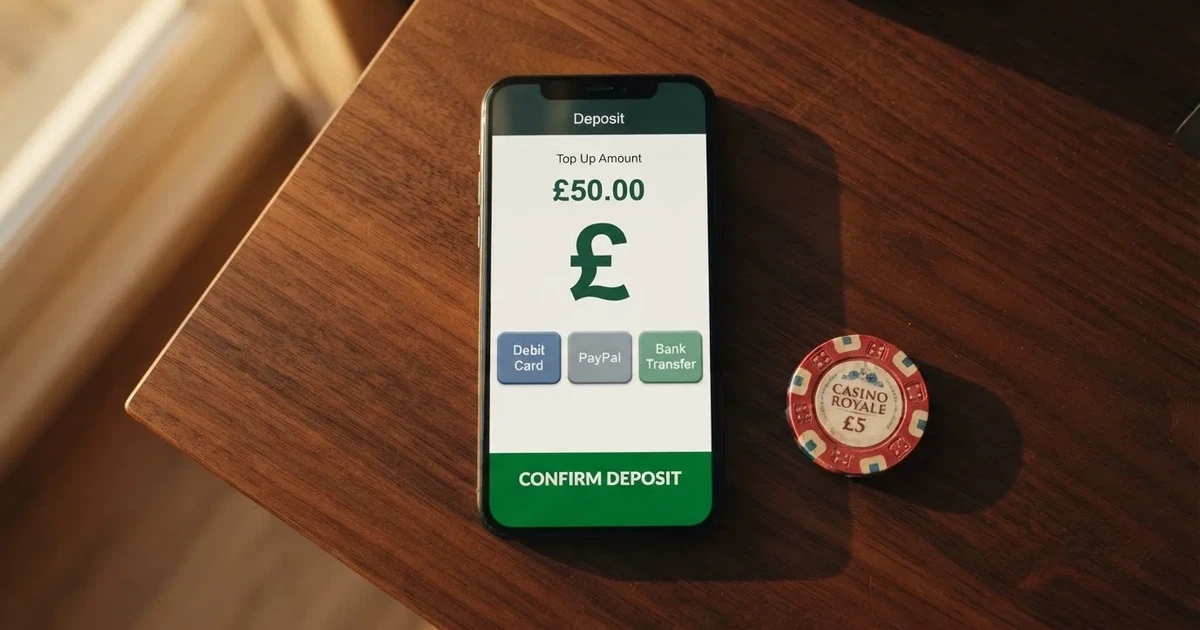
Casino sites that accept credit card in the UK: what a licensed brand actually lets you do in 2026
 Available in GB
Current as of 23 September 2026 against the Gambling Commission’s public register of gambling businesses.

Table of Contents
- Setting the scene: what “credit card casino” actually means in Britain
- Where the credit card option vanished: the 2020 ban and what replaced it
- What the registered landscape looks like
- How a credit card deposit would compare, and what replaced it
- Responsible gaming at a credit-card-free UK casino
- Reading the brand comparison
- What a 10x wagering cap means for a typical welcome offer
- Betfair — a sportsbook-rooted brand with a full casino behind it
- kwiff — a smaller independent with a sharper product focus
- 888casino — a casino-first specialist with a long licence history
- Grosvenor Casinos — the high-street name on the licence register
- Gala Bingo — a bingo-led operator with a casino bolted on
- Virgin Games — a white-label brand under a larger licence
- PokerStars — a poker-led brand with a casino product behind it
- 32Red — a casino-first brand with a long UK history
- bet365 — the largest UK bookmaker’s casino product
- MrQ — a smaller independent with a no-wagering heritage
- What changes if a player goes outside the licensed set
- How a UK player verifies any brand in two minutes
- What this comparison leaves to the reader
- Frequently asked questions about credit card use at UK casino sites
Setting the scene: what “credit card casino” actually means in Britain
A licensed British casino does not accept credit card deposits. It has not been able to do so since 14 April 2020, when the Gambling Commission’s ban on credit card gambling came into force across every form of remote gambling and non-remote betting. The phrase “credit card casino UK” still floats around search results because players type it from muscle memory, but inside the regulated market the answer is settled: no operator holding a Gambling Commission remote licence processes a credit card transaction, because doing so is a licence condition breach.
That leaves the practical question most of these searches are really asking. A player in Great Britain who wants to fund an online casino has a long menu of debit cards, bank transfers and e-wallets. The choice between them, the speed at which money moves in and out, and the identity checks that gate a first deposit are the things that actually differ from brand to brand. This page maps that landscape, names the ten licensed operators on the Gambling Commission register that anchor the comparison, and works through the cost of a typical welcome offer now that the 10x wagering cap has been in force since 19 December 2025.
Every brand named below is listed on the register as an active or white-label domain against a named account holder, with the remote casino operating licence number that the Commission’s record carries. The register itself is the test. What it cannot tell you is whether the offer sitting behind the registration page is worth taking — and that is what the rest of this page is for.
Where the credit card option vanished: the 2020 ban and what replaced it
The Commission announced the credit card ban in January 2020 and brought it in three months later, on 14 April 2020. The reasoning sat on the Commission’s own evidence base. A 2019 research file cited ahead of the ban found that 22% of online gamblers who used credit cards to gamble were classed as problem gamblers, and UK Finance data the Commission published alongside the announcement put the number of UK consumers who had used a UK-issued credit card to gamble in 2018 at around 800,000. A credit facility, by design, lets a player spend money they have not yet earned; for an activity the Commission was already tightening on other fronts, that gap between stake and settlement was the wrong shape to leave open.
Two carve-outs survived. Non-remote lotteries — paper tickets sold at a counter, the National Lottery itself — can still take credit card payment, because the ban covers remote and non-remote betting rather than lottery retail. And an e-wallet is not a way around the rule, unless the e-wallet provider can demonstrably block credit card funding of gambling transactions. Most cannot, which is why a PayPal or Skrill deposit at a UK casino has to be funded from a bank account or a debit card, not from a credit card linked to that wallet.
Players feel the consequence in two places. The first is at the cashier: the credit card option is simply not there, and the choices collapse to debit cards (Visa Debit, Mastercard Debit), bank transfer, and a handful of e-wallets whose funding source has been checked. The second is on the issuing bank side. HSBC declines credit card payments it identifies as gambling based on the merchant category assigned by Mastercard or Visa, and the restriction applies to all HSBC credit cards with no opt-out; the bank’s own terms note that it cannot guarantee every gambling transaction will be blocked and customers remain liable for any that get through. Monzo went the other direction in 2018, becoming the first UK bank to ship an in-app gambling block, with a customer-set cooldown between two days and one year during which the block cannot be switched off and over 275,000 Monzo customers have activated it. Either way, the issuer is part of the picture even when the merchant accepts only debit.
What this means for the comparison that follows: “credit card accepted” is not a column where a licensed brand can score. The columns that matter are the deposit methods that actually work in 2026 — Visa Debit, Mastercard Debit, bank transfer, PayPal, Apple Pay, AstroPay — and how a brand handles each one.
What the registered landscape looks like
The Commission’s public register, downloadable as CSV or Excel from gamblingcommission.gov.uk, listed 139 businesses holding an active remote casino operating licence on 18 September 2026. The register’s domain list, which sits alongside the licence list and records each website against the licence account that runs it, held 1065 active and 361 white-label domain entries on the same date. A white-label site trades under another company’s licence rather than holding its own, and the register tags it as such.
| Brand | Licence holder and GB remote casino licence | Domain status | Subject support |
|---|---|---|---|
| Betfair | PPB Games (39411) — 039411-R-319335-010 | Active | No data |
| kwiff | Eaton Gate Gaming (44448) — 044448-R-323408-017 | Active | No data |
| 888casino | 888 UK (39028) — 039028-R-319297-014 | Active | No data |
| Grosvenor | Rank Interactive (57924) — 057924-R-334666-005 | Active | No data |
| Gala Bingo | LC International (54743) — 054743-R-330863-014 | Active | No data |
| Virgin Games | Gamesys (38905) — 038905-R-319430-022 | White Label | No data |
| PokerStars | Stars Interactive (39108) — 039108-R-319334-026 | Active | No data |
| 32Red | Platinum Gaming (45322) — 045322-R-324275-019 | Active | No data |
| bet365 | Hillside (55149) — 055149-R-331499-004 | Active | No data |
| MrQ | Tek Fox (60629) — 060629-R-337532-004 | Active | No data |
The format of a remote licence number on the register is worth knowing if a player wants to verify a brand. It reads as account-R-number-suffix, where the leading six digits repeat the licence holder’s account number and the R marks a remote licence. A first-time check takes a minute: open the register, search the account number, confirm the licence status reads Active and the domain list contains the URL the player is about to type. The brands below all pass that check on the date the data is current as of.
How a credit card deposit would compare, and what replaced it
A casino that accepted credit cards credited them almost instantly, because the merchant category sat inside the card scheme’s authorisation window. The withdrawal back out to a credit card was slower, often three to five working days once anti-fraud and KYC checks had cleared, because the refund followed the same rails as the original purchase. None of that applies any longer in Great Britain, and the practical picture for the player is a deposit rail built around debit cards and bank transfer, with settlement times running from minutes (Visa Debit via Faster Payments) to a few hours (bank transfer at some operators) on the way in, and from under an hour to two working days on the way out depending on the operator’s release window.
A few distinctions matter when comparing two brands side by side. Apple Pay is a wallet rather than a card scheme, and a deposit through Apple Pay at a UK casino is funded from a debit card the customer has tokenised inside Apple Pay — the card data is replaced by a device-specific token and a dynamic security code generated per transaction — so the underlying funding source still has to be a debit card or a bank account. AstroPay, founded in 2009 and headquartered in Uruguay, runs as a digital wallet that can hold funds and issue a virtual or physical debit card; its UK entity, Larstal Limited, is an electronic money institution authorised by the Financial Conduct Authority under the Electronic Money Regulations 2011, which is the kind of detail a player checks when a brand offers AstroPay as a deposit method.
Responsible gaming at a credit-card-free UK casino
The credit card ban did not remove the responsible gaming structure that sits around a UK account. It just changed the rail that feeds it. A player who funds through Visa Debit triggers the same controls as one who funded through PayPal, because the controls live at the account level rather than at the payment method level.
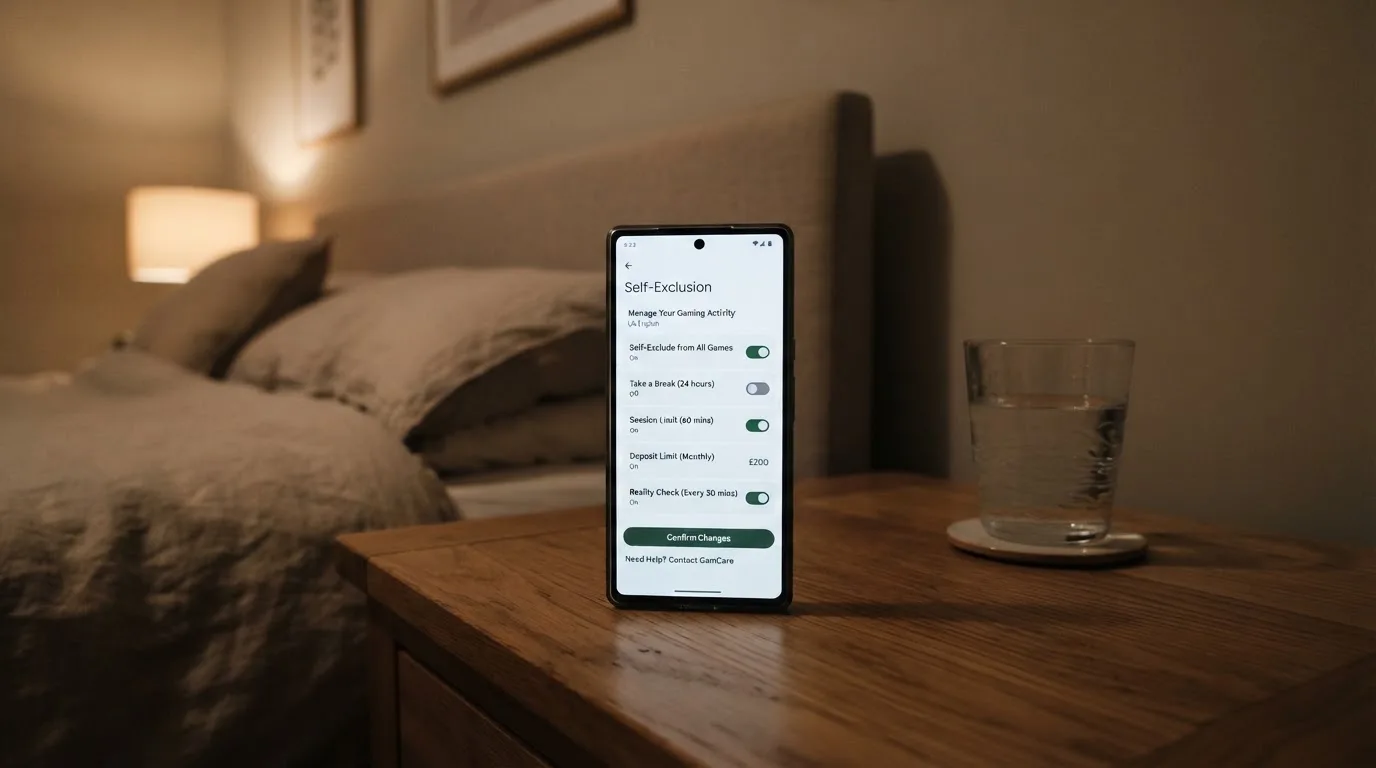
Deposit limits are now a precondition of play. Since 31 October 2025 operators must prompt a customer to set a financial limit before the first deposit, and that prompt cannot be skipped. GAMSTOP self-exclusion, in periods of six months, one year or five years, has been a mandatory condition of every online licence since 31 March 2020 and cannot be cancelled early — a player who has registered with GAMSTOP cannot deposit anywhere that holds a Commission licence, by any method, because the operator checks on registration and on each session thereafter. Reality checks at intervals are automatic, auto-play has been banned since 31 October 2021, a slot spin may not be faster than 2.5 seconds, and any loss displayed as a win is a Compliance breach. Financial vulnerability checks run once a player’s net deposits cross £150 in a rolling 30 days (from 28 February 2025), using public data only; the wider financial risk assessments the Commission has signalled are announced but not yet in force.
The “casinos not on GAMSTOP” results that appear around this search topic are worth naming for what they are. They are not licensed in Great Britain. A Curaçao, Malta or Gibraltar licence does not cover players based in Great Britain, and providing gambling to people in Great Britain without a Commission licence is an offence under section 33 of the Gambling Act 2005. The Commission disrupts illegal sites — cease-and-desist notices, search-engine delisting, payment and hosting referrals — but has no power to block them at ISP level. What a player loses by going to one is the whole protective layer above: no GAMSTOP, no approved ADR, no Commission complaints route, and the deposit itself goes through an operator with no UK accountability when something goes wrong. The Commission does not penalise the player, but the player pays for the absence in lost recourse.
Reading the brand comparison
The table below names ten brands, the account holder on the register, the licence number, the domain’s status on the register, and whether the brand’s own page confirms credit card support — the last column reads “no data” across the board, because every licence holder in the set is bound by the same 2020 ban. The columns are the ones a reader comparing these brands actually uses; the prose around the table is where the comparison earns its keep.
| Brand | Licence holder and GB remote casino licence | Domain status on the register | Subject support |
|---|---|---|---|
| Betfair | PPB Games Limited — 039411-R-319335-010 | Active | — |
| kwiff | Eaton Gate Gaming Limited — 044448-R-323408-017 | Active | — |
| 888casino | 888 UK Limited — 039028-R-319297-014 | Active | — |
| Grosvenor Casinos | Rank Interactive (Gibraltar) Limited — 057924-R-334666-005 | Active | — |
| Gala Bingo | LC International Limited — 054743-R-330863-014 | Active | — |
| Virgin Games | Gamesys Operations Limited — 038905-R-319430-022 | White Label | — |
| PokerStars | Stars Interactive Limited — 039108-R-319334-026 | Active | — |
| 32Red | Platinum Gaming Limited — 045322-R-324275-019 | Active | — |
| bet365 | Hillside (UK Gaming) ENC — 055149-R-331499-004 | Active | — |
| MrQ | Tek Fox Ltd — 060629-R-337532-004 | Active | — |
The subject-support column reads as a single dash down the table on purpose. A licensed UK brand confirming credit card support would be a breach of its licence conditions; the absence is the answer. The columns that carry weight are the licence holder (which is who is actually regulated) and the domain status (which tells a player whether the URL they typed is the brand’s own site or a white-label trade). Two of the ten domains above are licensed under the same account holder — Gala Bingo sits under LC International Limited, which is also the licence account behind Ladbrokes and Coral — so a player comparing across the group is comparing products that share a regulator-facing back office.
What this comparison cannot tell you, and what research hands no figure for, is which of these ten offers the welcome package most worth taking. That judgement belongs to the reader’s own stake size, game preference and appetite for wagering. What the rest of this page works through is the cost of any welcome offer now that the wagering requirement is capped at 10x and mixed-product bonuses are banned — both since 19 December 2025 — so the reader can read the small print of any offer with the right frame in place.
What a 10x wagering cap means for a typical welcome offer
The arithmetic behind a welcome offer used to be the place a brand hid its margin. A 35x wagering requirement on a £100 bonus asks the player to turn over £3,500 before any of the bonus becomes withdrawable; a 65x requirement asks for £6,500. The Commission closed that gap from 19 December 2025, capping wagering requirements at 10x and banning mixed-product bonuses, so a “bet on sport, get casino spins” structure is no longer licensable. The 10x cap is what any licensed UK welcome offer has to fit inside from 2026 onward, and the rest of this section works through what that means for a player.
The inputs that matter are the bonus amount, the wagering factor, and the stake per spin. Take a £100 bonus at 10x wagering: required turnover is £100 × 10 = £1,000. At a stake of £1 per spin (well under the £5 ceiling that applies to players aged 25 and over since 9 April 2025), that works out to 1,000 spins. A slot spin at a UK-licensed casino cannot be faster than 2.5 seconds, so 1,000 spins take a minimum of 2,500 seconds — about 42 minutes of continuous play. A £50 bonus at the same 10x cap drops the figures to £500 turnover, 500 spins and around 21 minutes of play. A £200 bonus doubles all three.
The band that matters is the one a player is actually offered. For a small-stake player claiming a £50 bonus at 10x, the time cost of clearing the bonus is short enough that the offer is a thin sweetener on the side of a normal session rather than the reason for it. For a higher-stake player claiming a £200 bonus at the same multiple, the time cost stretches toward an hour and three quarters, and the offer starts to look like a coupon that asks for a session in exchange. The mechanic is the same; the proportion of the session it consumes is not.
What this page does not do is name the bonus each of the ten brands is running this month, because the offer changes and the research carries no figure. What it does is give the reader the conversion: any welcome bonus, divided by 10, is the turnover the player has to put through the games before withdrawal. Anything that asks for more is, as of 19 December 2025, no longer licensable in Great Britain.
Betfair — a sportsbook-rooted brand with a full casino behind it
Betfair runs from account 39411, held by PPB Games Limited, with remote casino operating licence 039411-R-319335-010. The Betfair domain is listed as active on the register. As with every brand in this comparison, credit card deposits are not on the menu — the licensing condition that applies to all ten brands is the same one. What Betfair adds is the depth of a sportsbook-rooted operator: in-play markets that have run since the early 2000s, a casino that lives on the same account, and a customer base that expects the cashier to behave the same way across both products.
For a player who splits time between sports and casino, the integration matters. A single wallet covers both, so a withdrawal does not have to navigate product-by-product release windows, and the deposit limit set at registration covers the whole account. The trade is the kind of trade a sportsbook-casino hybrid always carries: a casino-only player pays for the breadth of the product range with a UI that puts sports markets first. Where Betfair reads as a casino, it reads as a strong one — but a player who wants a casino that does not also run a sportsbook will find the homepage leads with sport.
kwiff — a smaller independent with a sharper product focus
Kwiff sits at account 44448, held by Eaton Gate Gaming Limited, with remote casino operating licence 044448-R-323408-017. The kwiff domain is active. As an independent without a sportsbook parent, kwiff’s product set is narrower than Betfair’s and the comparison on game breadth lands in kwiff’s favour for the player who only wants casino.
Where kwiff earns its place in this set is the surprise-mechanic on stakes — “kwiffed” prices that can multiply a stake at random — applied to casino bonuses as well as sports bets. The mechanic is a product differentiator rather than a regulatory feature, and the question it answers is whether the player wants a casino that occasionally surprises them or one that pays out the offer terms as written. Either is licensable. The Commission cares about the offer terms; the brand decides how it dresses them.
The cost of going with a smaller operator is a thinner help library and a smaller active player base, which means progressive jackpot networks are smaller and live dealer tables have fewer seats at off-peak hours. For a player who plays at off-peak hours, that cost is real.
888casino — a casino-first specialist with a long licence history
888casino is held by 888 UK Limited under account 39028, with remote casino operating licence 039028-R-319297-014. The 888casino domain is active. The brand has been licensed in the UK since the early days of the regulated market, and that history shows in the game library — proprietary titles sit alongside the third-party studios, and the live dealer floor is wider than most of the comparison set.
For a player who came to online casino through 888’s own marketing, the brand is the obvious comparison point. The deposit and withdrawal rails are the standard licensed set, and the welcome offer has to fit inside the 10x cap, so the small print is the place to look rather than the headline. What the long licence history buys is breadth: more game variants, more live tables, more time operating under Commission oversight. The cost is the kind of cost a mature operator carries — a UI that has grown features over time rather than being redesigned from scratch — which is a taste question rather than a regulatory one.
Grosvenor Casinos — the high-street name on the licence register
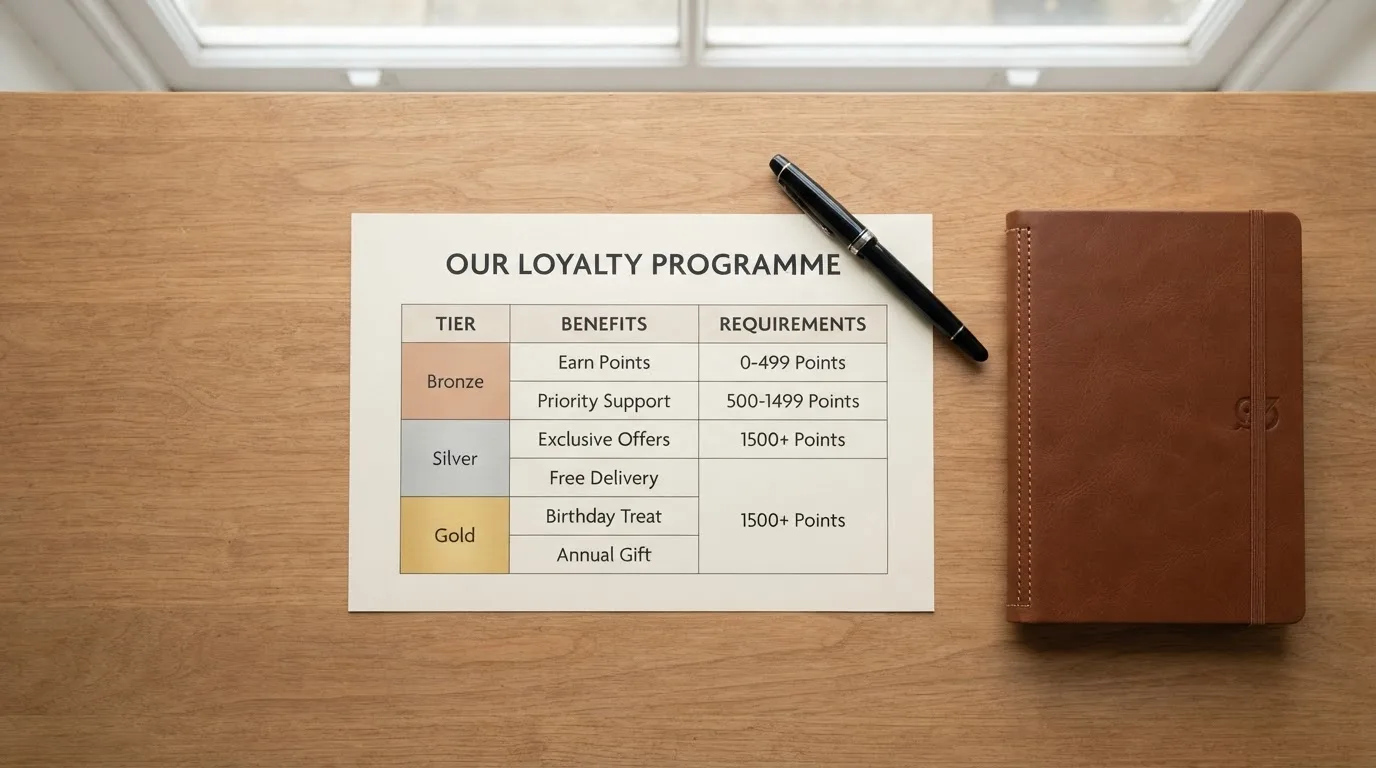
Grosvenor Casinos is the online arm of a UK high-street chain, run from account 57924 under Rank Interactive (Gibraltar) Limited, with remote casino operating licence 057924-R-334666-005. The Grosvenor Casinos domain is active. The product proposition is the link to the land-based estate — a loyalty account that earns and spends across both channels — and that is the differentiator a casino-only brand cannot replicate.
For a player who already visits a Grosvenor casino in person, the online account is the natural extension. For a player who has never set foot in one, the high-street hook is decoration. The casino product itself is competitive without standing out: standard slot library, standard live dealer floor, standard cashier. Where it earns its place in the comparison is on player protection — a multi-channel operator has the compliance infrastructure that a pure-play brand builds from scratch.
Gala Bingo — a bingo-led operator with a casino bolted on
Gala Bingo runs from account 54743, held by LC International Limited, with remote casino operating licence 054743-R-330863-014. The Gala Bingo domain is active. LC International Limited is also the licence account behind Ladbrokes and Coral, which is worth knowing if a reader compares Gala’s casino product to either of those — the regulator-facing back office is shared.
The product set leads with bingo, which is the heritage of the brand and the reason a player opens a Gala account in the first place. The casino sits on the side. For a player who wants a casino and not a bingo product, the comparison is unflattering: the slot library is thinner than a casino-first brand’s, the live dealer floor is a sub-floor of the LC International estate, and the welcome offer is structured around bingo tickets first. For a player who plays both, the integration is the point — a single wallet, a single loyalty tier, a single deposit limit.
Virgin Games — a white-label brand under a larger licence
Virgin Games is listed on the register as a white-label domain of account 38905, held by Gamesys Operations Limited, with remote casino operating licence 038905-R-319430-022. The “white label” tag on the register matters because it tells the player that Virgin Games does not hold its own licence — it trades under Gamesys’s. If Gamesys’s licence were suspended, Virgin Games would go with it. That is the trade a player accepts for the brand name.
The product set is built around slots and bingo, with a smaller live dealer presence than a casino-first brand carries. The brand recognition is the asset, and a player who values a Virgin-branded wallet over a casino-specialist’s wallet is the reader Virgin Games is for. For a player who has no attachment to the brand name, the underlying Gamesys product is the comparison point — and that comparison is better made against Gamesys’s own brands than against casino specialists.
PokerStars — a poker-led brand with a casino product behind it
PokerStars is held by Stars Interactive Limited under account 39108, with remote casino operating licence 039108-R-319334-026. The PokerStars domain is active. The casino sits behind the poker product, which has been the brand’s identity since the early 2000s, and a player who opens a PokerStars account for the casino is doing so against the grain of the site’s design.
The casino product is competent. The slot library carries the major studios, the live dealer floor is integrated with the poker client, and the cashier is the same Stars cashier a poker player already knows. Where it earns its place in the comparison is on the cross-product wallet: a casino player who also plays poker does not have to reconcile balances between two sites. The cost is the same one Betfair carries — a casino-first player pays for the poker product with a UI that puts poker first.
32Red — a casino-first brand with a long UK history
32Red is held by Platinum Gaming Limited under account 45322, with remote casino operating licence 045322-R-324275-019. The 32red domain is active. The brand has held a UK licence since the early days of the regulated market, and the casino product is the only product — there is no sportsbook, no poker client, no bingo floor.
For a casino-only player, 32Red is one of the cleaner comparisons in the set. The slot library is wide, the live dealer floor is competitive, and the welcome offer has to fit inside the 10x cap the same way every other brand’s does. The differentiator is focus: a casino-only brand spends its product budget on casino, and a player who wants a casino without a sportsbook attached gets exactly that.
bet365 — the largest UK bookmaker’s casino product
bet365 runs from account 55149, held by Hillside (UK Gaming) ENC, with remote casino operating licence 055149-R-331499-004. The bet365 domain is active. As with Betfair, the casino lives on the same account as the sportsbook, and the player base is a sportsbook player base that happens to use the casino.
The casino product is wide rather than deep: the slot library is the major studios, the live dealer floor is large, the cashier is the same one a sportsbook customer already knows. For a player who wants a casino that lives on a sportsbook account, bet365 is the largest version of that proposition in the UK market. For a casino-only player, the homepage leads with sport and the casino is a tab inside it — which is a taste question rather than a regulatory one.
MrQ — a smaller independent with a no-wagering heritage
MrQ is held by Tek Fox Ltd under account 60629, with remote casino operating licence 060629-R-337532-004. The MrQ domain is active. MrQ built its reputation on no-wagering bonuses — a position that fits comfortably inside the 10x cap because a 0x wagering requirement is below 10x by definition.
For a player who reads the small print, MrQ is the brand where the welcome offer is most likely to be the headline number rather than a figure that shrinks under turnover. The trade is the same trade every smaller operator carries: a thinner game library, fewer live tables, and a smaller player base. For a player who values the offer terms over the product breadth, that trade is worth making.
What changes if a player goes outside the licensed set
A search for “credit card casino UK” surfaces a list of offshore brands that accept credit cards, hold a Curaçao or Malta licence, and let a UK player open an account in minutes. The Gambling Act 2005 makes providing gambling to people in Great Britain without a Commission licence an offence, and the Commission responds with cease-and-desist notices, search-engine delisting, payment and hosting referrals. The player is not the target of those responses, but the player is the one who pays for the absence in lost protection: no GAMSTOP, no Commission complaints route, no approved ADR. A dispute over a withheld withdrawal at an offshore brand ends in the brand’s own jurisdiction, on the brand’s own terms.
The 10x wagering cap, the £5 and £2 stake ceilings, the auto-play ban, the 2.5-second spin rule, the GAMSTOP integration, the financial vulnerability checks — none of these apply at an offshore site. The credit card that an offshore site accepts is the credit card that the Commission banned at a UK site because it puts distance between the stake and the money that pays for it. Going outside the licensed set is a different product, with different rules, and a different set of people to call when something goes wrong.
How a UK player verifies any brand in two minutes
The Commission’s public register is open and free to search. Open gamblingcommission.gov.uk, find the public register, search by brand name or by domain. The result is a licence account with a remote casino operating licence number. Confirm the licence status reads Active and the domain list contains the URL the player is about to type. If the search returns no result, the brand is not licensed in Great Britain, and the comparison stops there.
The verification step is the one that protects everything the rest of this page relies on. A welcome offer inside a 10x cap, a deposit prompt before the first deposit, a GAMSTOP check on registration, a £5 stake ceiling on slots — none of these apply at a site that does not hold a Commission licence. The register is the test, and the test takes two minutes.
What this comparison leaves to the reader
This page has named ten licensed brands, walked through the 2020 credit card ban and what replaced it, mapped the registered landscape, explained the 10x wagering cap with worked examples, and given a short read on each operator. The judgement it has not made is the welcome offer most worth taking — because the offer changes, because research carries no figure, and because the offer a player should claim is the one that fits the player’s own stake size and session length rather than the one a comparison page picks.
What this page does conclude is the shape of the choice. A player who wants a casino with a sportsbook attached picks from Betfair, bet365 and the LC International brands; a player who wants a casino-only product picks from 888casino, 32Red and MrQ; a player who wants a multi-channel loyalty account picks Grosvenor; a player who wants a bingo-led product picks Gala or Virgin Games; a player who wants a poker-casino hybrid picks PokerStars. Every one of those choices runs inside the same regulatory frame — the 10x cap, the GAMSTOP check, the deposit prompt, the £5 stake ceiling — and the comparison between them is on product, not on the licence conditions those products share.
Frequently asked questions about credit card use at UK casino sites
Is it legal for a licensed UK casino to accept credit card deposits?
No. The Gambling Commission banned credit card gambling from 14 April 2020, and the ban covers every form of remote gambling plus non-remote betting. A licensed UK casino does not have a credit card option at the cashier, and offering one would be a licence condition breach.
Is there a minimum deposit when paying with credit card at a UK casino?
The question does not apply at a UK-licensed site, because credit cards are not accepted. At a licensed site the minimum deposit is set by the operator and is typically £5 or £10 across the standard payment methods — Visa Debit, Mastercard Debit, bank transfer, PayPal, Apple Pay.
How long does a deposit show up in my account at a UK casino?
At a licensed UK casino, a Visa Debit or Mastercard Debit deposit via Faster Payments usually shows within minutes. A bank transfer can take a few hours. Apple Pay and PayPal deposits credit almost instantly once the wallet confirms the funding source. The credit card rail is closed, so its previous near-instant settlement is not a comparison point any longer.
Do I need to verify my identity before depositing at a UK casino?
Yes. Since 7 May 2019 a licensed UK casino must verify name, address and date of birth before the first deposit or any play. The check runs against public data and against the documents the operator requests, and the deposit prompt cannot proceed until verification clears. There is no anonymous play at a licensed site.
Does GAMSTOP self-exclusion apply at every UK-licensed casino, regardless of how I fund the account?
Yes. GAMSTOP self-exclusion is a mandatory condition of every online licence since 31 March 2020, and the check runs at registration and at each session. A player who has registered with GAMSTOP cannot deposit anywhere that holds a Commission licence, by debit card, bank transfer, PayPal or Apple Pay. The funding method does not change the GAMSTOP result.
Created by the ”bankingcasinouk” editorial team.