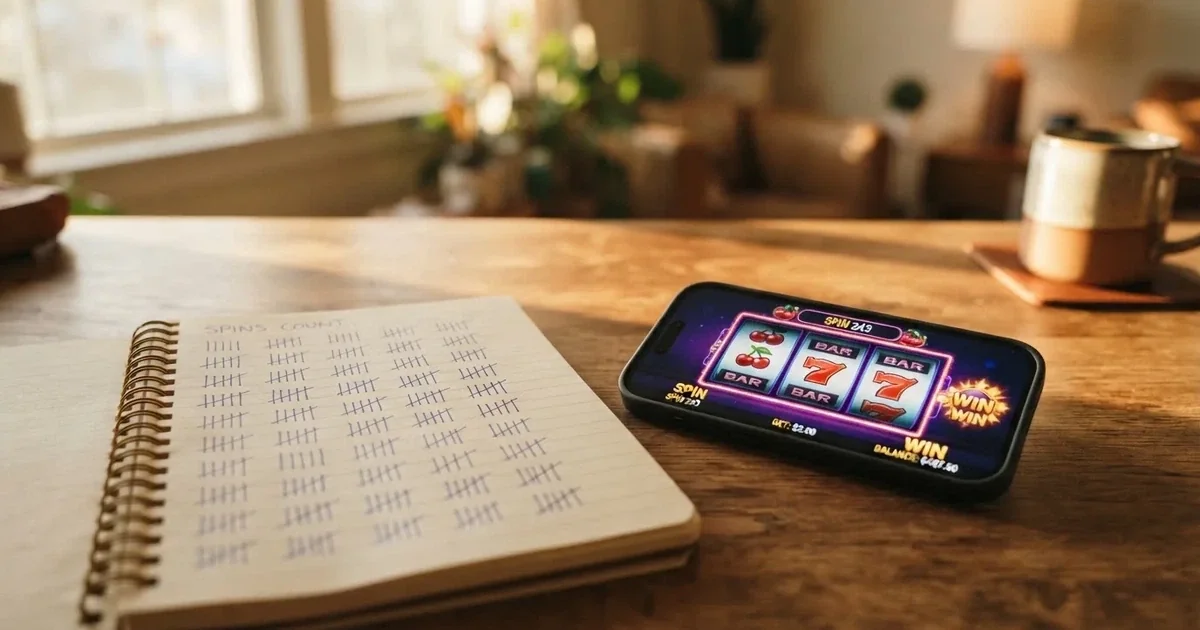
120 free spins no deposit UK 2026: how the Gambling Commission licence reshapes the offer
 Available in GB
A “120 free spins no deposit” headline looks like a freebie. In Great Britain it is not free in the way the word suggests. A player does not have to deposit to claim, true; but the spins sit inside a Gambling Commission licence, a 10x wagering cap on bonus funds, a stake-per-spin ceiling, GAMSTOP enrolment and identity verification that runs before the first game loads. The offer is real, and it is regulated to the point where the headline number is the least interesting thing about it. This page is about what the regulation does to that headline — and which UK-licensed operators currently sit on the public register under that frame.

Currency stamp: Data current as of 23 September 2026 and verified against the Gambling Commission’s public register of gambling businesses.
Table of Contents
- What a UK “no-deposit 120 free spins” offer actually is
- Legality and regulation of a no-deposit spins offer in Great Britain
- Responsible gambling: what sits over the offer
- Payments, payout speed and how winnings leave a UK site
- Bonuses, free spins and the 10x wagering cap
- How the operators compare
- The overview: what the offer is worth after regulation
- FAQ
What a UK “no-deposit 120 free spins” offer actually is
A no-deposit free-spins offer credits a set number of spins to a new account without requiring a deposit first. The spin value, the eligible slot, the expiry window and the wagering treatment of any winnings are set by the operator’s bonus terms, not by the regulator. The Gambling Commission controls the conditions around the offer (who can be invited in, how funds move, how complaints route), not the marketing arithmetic.

Two things make a UK offer different from the same headline elsewhere.
The first is the licence. Any operator taking customers in Great Britain needs a Commission operating licence under the Gambling Act 2005. The (Licensing and Advertising) Act 2014 closed the route that let offshore brands serve UK players from Malta, Curaçao or Gibraltar without a Commission licence. A UK-facing “no-deposit spins” page that names a brand not on the public register is naming an offer that, by construction, is not being given to UK players under Commission rules.
The second is the bonus framework. Since 19 December 2025 the Commission has capped wagering requirements at 10x the bonus amount for casino products. Mixed-product promotions (a sports bet that unlocks casino spins, casino play that unlocks bingo credit) are banned. A player looking at 120 free spins with no deposit is therefore looking at a regulated product line, not an offshore one.
The 120 in the headline is the count of spins; the cost of the offer is in the small print — the per-spin stake, the wagering multiple on winnings, the maximum cashout, the expiry and the eligible game.
The landscape the register describes
The Commission’s public register of gambling businesses lists every operator licensed to take remote bets in Great Britain. On 18 September 2026 it held 139 businesses with an active remote casino operating licence. The same register’s domain list records each website against the licence account that runs it; on the same date it held 1065 active domain entries and 361 white-label entries — a white-label site trading under another company’s licence.

A player who wants to verify a brand should look up the domain on the register, not the brand name in a search engine. The register lists the domain, the licence account, the licence holder’s legal name and the licence number. The number has a fixed shape: six digits, then -R-, then a six-digit number, then a two-digit suffix. The first six digits repeat the licence holder’s account number; the R marks a remote (online) licence. A line like 039544-R-319290-010 is Petfre (Gibraltar) Limited running Betfred, account 39544.
| Domain type | Count on register |
|---|---|
| Active domains | 1065 |
| White-label sites | 361 |
The size of the register matters because the headline “120 free spins no deposit” travels further than the licensed set. Search results will include offers that are not licensable to UK players. The Commission has no ISP-blocking power; its enforcement tools are cease-and-desist notices, payment and hosting referrals and search-engine delisting. A player comparing offers is doing the work the register exists to make unnecessary.
Legality and regulation of a no-deposit spins offer in Great Britain
The Gambling Commission is sponsored by the Department for Culture, Media and Sport and operates under the Gambling Act 2005, which covers England, Scotland and Wales. Northern Ireland runs a separate regime. Online casino is a licensable activity; the relevant permission is a remote operating licence covering casino games.
A Commission licence carries ongoing conditions, not a one-off permission. The Licence Conditions and Codes of Practice (LCCP) and the Remote Technical Standards set social responsibility rules, technical requirements and reporting duties that bind the operator for the life of the licence. A promotion of 120 free spins with no deposit is run inside that frame, not beside it.
What the licence does to a “no deposit” headline
The offer to a UK player is gated by three things the licence imposes.
Identity verification runs before the first deposit or any play. Since 7 May 2019 a Commission licensee must verify name, address and date of birth before the customer can deposit or stake. A “no deposit” offer does not exempt the brand from this. The verification step is what blocks anonymous play, which means a “sign up and spin” headline carries an ID check the reader has to clear before the first spin loads.
Financial limits prompt at first deposit. Operators must prompt a customer to set a financial limit before the first deposit — from 31 October 2025 — though the Commission does not set a default deposit or loss ceiling. The prompt is the licence’s way of putting a default in front of a player who would not otherwise set one.
Self-exclusion runs through GAMSTOP. GAMSTOP is a mandatory condition of every online licence; every GB-licensed online operator must take part. Self-exclusion periods run six months, one year or five years and cannot be cancelled early. A player on GAMSTOP cannot claim the offer any more than they can place a paid bet.
A “no deposit” label removes the funding step, not the regulatory step. The verification check, the financial-limit prompt and the GAMSTOP screen sit ahead of the first spin regardless.
Stake limits on the spin itself
A no-deposit spin is still a slot spin, and the stake-per-spin ceiling applies. The Commission sets a maximum stake per game cycle: £5 for players aged 25 and over (from 9 April 2025) and £2 for players aged 18 to 24 (from 21 May 2025). For a no-deposit offer the per-spin stake is set by the operator’s bonus terms, typically far below the ceiling, but the ceiling is the legal maximum and the regulator’s interest is in operators not exceeding it.
Auto-play has been banned on slots since 31 October 2021. A spin may not complete faster than 2.5 seconds. Losses disguised as wins — a slot result that flashes celebratory imagery for a net-loss outcome — are banned. These are mechanical conditions that change the feel of a session more than they change the offer’s headline; they are why a “120 free spins” claim at a UK site reads slower than the same number at an offshore site.
Financial vulnerability checks
From 28 February 2025 the Commission requires financial vulnerability checks at £150 net deposits in a rolling 30 days, run against public data only. Wider financial risk assessments have been announced but are not yet in force. A no-deposit offer does not generate a deposit, so the check does not fire on the spins themselves. It fires the first time the player deposits to withdraw winnings, which is the moment the offer converts from promotion into banking relationship.
The check is light-touch and uses public data. Its purpose is to flag customers whose financial position makes further gambling harmful; the operator’s response ranges from a softer reality check to a deposit refusal. For a player using a no-deposit offer as a one-off, the check will not engage; for a player returning to deposit, it is the next regulatory moment after the verification step.
What the Commission does not do
The Commission does not set a default deposit ceiling, does not set a maximum loss ceiling and does not set the value of a free spin. The headline “120 free spins” is a marketing figure that the Commission allows operators to use, subject to the bonus framework. The 10x wagering cap that took effect on 19 December 2025 is the first time the Commission has written a number into the bonus terms themselves. Before that date, wagering multiples varied by operator; after it, every casino bonus offered to a UK player carries the same cap.
The offshore comparison
A brand operating without a Commission licence — typically from Curaçao, Malta or Anjouan — can still advertise to UK players, and search results still surface those offers. Providing gambling to people in Great Britain without a licence is an offence under section 33 of the Gambling Act 2005, aimed at the operator rather than the player. The Commission’s enforcement tools are cease-and-desist notices, search-engine delisting and payment and hosting referrals; ISP-level blocking is not available.
A player on an offshore site keeps any winnings but loses the protection layer. There is no GAMSTOP screen, no Commission complaints route and no approved alternative dispute resolution (ADR) provider. The brand’s own terms apply, not the LCCP. For a player comparing a Commission-licensed “120 free spins no deposit” headline against an offshore equivalent, the headline number is the same and the operating context is not.
Responsible gambling: what sits over the offer
The Commission’s safer-gambling framework is not a section of the offer; it is the platform the offer runs on. Every GB-licensed operator must provide GAMSTOP enrolment, reality checks, time-outs, deposit limits and a route to the National Gambling Helpline. A player claiming a no-deposit offer steps into that framework before the first spin loads.
GAMSTOP
GAMSTOP is the national online self-exclusion scheme. Registration runs for six months, one year or five years and cannot be reversed. Every GB-licensed online operator must check GAMSTOP before opening an account; a registered customer cannot deposit, cannot stake and cannot claim a promotional offer. The check is mandatory and runs regardless of the offer’s headline.
The scheme is the single most important protection for a player who has decided to stop. A “no deposit” path past GAMSTOP does not exist at a licensed site. A self-excluded customer who finds an offer on a non-licensed site has bypassed the protection by leaving the licensed set, not by finding a gap in it.
Reality checks and time-outs
A reality check is an in-session prompt that tells the player how long they have been playing and how much they have won or lost. The Commission requires reality checks at intervals that vary by operator; some run every 20 minutes, others every hour. The check is the session-length mirror that the LCCP writes into every product.
A time-out is a short self-exclusion, typically 24 hours to six weeks, set inside the operator’s own responsible-gambling tools. Time-outs do not register with GAMSTOP; they apply to the operator account only. For a player who wants a break from a single brand without committing to a national exclusion, a time-out is the lighter-weight lever.
Deposit limits and the first-deposit prompt
Operators must offer deposit limits — daily, weekly or monthly caps the player sets themselves. Since 31 October 2025 the operator must prompt a customer to set a financial limit before the first deposit, which is the licence’s way of forcing the conversation. The prompt does not impose a default; a player who sets no limit deposits without one, having been asked.
The prompt does not fire on a no-deposit offer, because the offer does not require a deposit. It fires on the first deposit the player makes, which for most no-deposit customers is the withdrawal step — when the winnings need a payout rail. The first-deposit prompt is the moment the offer converts into a banking relationship and the financial framework attaches.
Help services
GamCare runs the National Gambling Helpline, a free 24-hour service. GambleAware funds research, treatment and education. Both are named in the Commission’s social responsibility code as the routes a player should be told about when self-excluding or showing signs of harm. The Commission’s LCCP requires operators to surface those names at the relevant points in the customer journey.
The problem-gambling signal
The Commission’s 2018 evidence, cited when it banned credit-card gambling, found that around 800,000 UK consumers used credit cards to gamble in 2018 and that 22 per cent of online gamblers who funded play with credit cards were classed as problem gamblers. The figure is now several years old, but it shaped the credit-card ban and remains the Commission’s reference point when it argues that promotion-led acquisition attracts a higher-risk cohort. The Commission’s intervention in the bonus framework — the 10x cap, the ban on mixed-product offers — reads as a continuation of that argument.
Payments, payout speed and how winnings leave a UK site
A no-deposit offer ends with a withdrawal, not a deposit. The withdrawal is the moment the offer’s value becomes real money, and the moment the Commission’s payment framework fully engages.
The credit-card ban
Since 14 April 2020 the Commission has banned credit cards for gambling across all online and offline products in Great Britain, except non-remote lotteries paid for face-to-face. The ban covers credit cards routed through e-wallets, so funding an e-wallet with a credit card and then paying a gambling site from the wallet is not a workaround. Debit cards and bank transfers are unaffected.
The ban is the reason every UK cashier lists debit cards, bank transfers and a short list of e-wallets as the funding options. A UK-facing page that names a credit-card-friendly brand as a no-deposit option is naming a non-licensed product.
Apple Pay
Apple Pay is developed and operated by Apple Inc., launched on 20 October 2014 initially supporting only US-issued cards, and began supporting UK-issued cards on 14 July 2015. It protects card data through tokenisation, replacing the actual card number with a device-specific tokenised Device Primary Account Number and generating a dynamic security code per transaction. In-store payments use near-field communication (NFC) to communicate with contactless terminals.
Apple states that a supported card from a participating card issuer is required, and that Apple Pay is not available in all markets. Authentication on an iPhone with Face ID is a double-click of the side button; on Touch ID models, a double-click of the Home button. The US Consumer Financial Protection Bureau finalised a rule in November 2024 bringing large nonbank digital wallet operators, including Apple Pay, under bank-like federal oversight. The European Commission opened a 2020 investigation into whether Apple abused control of iPhone NFC hardware to block rival payment apps.
For a UK player the relevant fact is simpler: Apple Pay is a debit-card-funded token, and the credit-card ban does not apply because the funding card is a debit card. Whether an operator accepts Apple Pay for deposits and withdrawals is a cashier-level decision; the Commission’s rules do not require or forbid it.
AstroPay
AstroPay was founded in 2009 and is headquartered in Uruguay. It operates as a global digital wallet offering online payments, virtual and physical debit cards and peer-to-peer transfers. The payment-processing business was spun off as dLocal in 2016.
AstroPay’s UK entity, Larstal Limited, is an electronic money institution authorised by the Financial Conduct Authority under the Electronic Money Regulations 2011. Its Isle of Man entity, AstroPay Global (IOM) Limited, is licensed by the Isle of Man Financial Services Authority for money transmission. Its Brazilian entity, Astro Instituição de Pagamento Ltda, is authorised by the Brazilian Central Bank as an electronic currency issuer; its Danish entity, Larstal Denmark ApS, is authorised as an electronic money institution by the Danish Financial Supervisory Authority. AstroPay serves users across markets including Argentina, Australia, Brazil, Canada, Colombia, Denmark, Spain, the United Kingdom, the United States and Uruguay.
For a UK player the relevant layer is the FCA-authorised UK entity, which is what gives the wallet its standing under UK anti-money-laundering rules. Whether an operator accepts AstroPay for deposits or withdrawals is again a cashier-level decision.
Bank transfers and Faster Payments
UK bank transfers typically move through the Faster Payments Service, launched in 2008 and operated by Pay.UK. The service runs 24 hours a day, seven days a week, and most payments arrive instantly or within a couple of minutes, though transfers can occasionally take up to two hours. The scheme sets a £1,000,000 per-transaction limit, though individual banks can and do impose lower limits. The Bank of England is not a direct participant but oversees the system’s safety and stability and provides final settlement.
For a withdrawal at a UK-licensed casino, Faster Payments is the rail most withdrawals arrive on. A player withdrawing £100 to a UK bank account typically sees funds in minutes; a player withdrawing £10,000 may see a hold while the operator’s fraud team reviews the transaction. Faster Payments is the system the cashier is implicitly relying on; the Commission’s role is to require operators to honour withdrawal requests within a stated timeframe, not to set the rail.
What the cashier looks like at a licensed site
A UK-licensed cashier typically lists Visa Debit, Mastercard Debit, Maestro, bank transfer (Faster Payments), PayPal, Apple Pay, Trustly, MuchBetter and a small set of e-wallets. Prepaid cards funded by credit cards are not allowed; credit cards are blocked at the cashier. Some operators exclude e-wallets from bonus eligibility — the small print will say so — so a player funding with Skrill or Neteller may find the offer is not active on that rail.
The withdrawal rail is usually the same as the deposit rail, by Commission convention, though an operator may allow a one-off change for AML reasons. A player who deposits by debit card and wins from a no-deposit offer typically withdraws back to the same debit card. The Commission’s AML framework makes the deposit-rail lock the default.
Bonuses, free spins and the 10x wagering cap
The 10x wagering cap that took effect on 19 December 2025 is the single most important change to UK bonus terms in years. A “120 free spins no deposit” offer sits inside it, and the cap changes what the offer is worth in cash.
How the offer is constructed
A no-deposit free-spins offer is built from four variables: the number of spins, the per-spin stake, the eligible slot or slots, and the treatment of winnings. The headline “120” fixes the count. The other three are in the small print and they decide what the player actually ends up with.
The per-spin stake is the multiplier the spin plays at. A 120-spin offer at 10p per spin plays 120 spins at a total stake of £12. At 20p per spin the total is £24; at 50p per spin, £60. The number of spins and the per-spin stake together set the notional turnover of the offer before wagering is applied.
The eligible slot is the game the spins play on. A no-deposit offer typically credits spins on a single named slot, sometimes a small set of named slots. The game’s return-to-player (RTP) sets the statistical house edge; a 96 per cent RTP slot returns £96 for every £100 staked over the long run. The game matters because the wagering multiple is applied to winnings, and winnings are a function of the game.
Winnings treatment is the rule that decides whether what the spins paid out converts to cash or to bonus funds. Three structures are common: winnings paid as cash with no wagering (rare and usually capped), winnings paid as bonus funds subject to a wagering multiple, or winnings paid as cash up to a cap and anything over the cap forfeited. The third is the commonest UK structure for no-deposit spins.
What the 10x cap changes
Before 19 December 2025 a 100x wagering multiple was common on no-deposit spins, with 40x and 65x as the gentler end. The 10x cap, applied to the bonus amount, changes the conversion arithmetic. A player who wins £20 from a no-deposit offer and faces a 40x wagering multiple has to turn £800 over before the £20 becomes withdrawable. At 10x the same win requires £200 of turnover.
The cap is on the bonus amount, not on the deposit plus bonus. For a no-deposit offer there is no deposit, so the bonus amount is the headline value — the notional turnover of the spins at the operator’s chosen stake. If the 120 spins play at 10p for a notional £12, the wagering requirement under the cap is £120 in turnover (10 × £12). If they play at 20p for £24, it is £240.
The 10x cap also sits alongside a ban on mixed-product bonuses: an offer that gives sports-bet credit in return for casino play, or vice versa, is no longer licensable. The aim is to stop bonus structures that move players between products without their noticing. A casino-only “120 free spins no deposit” offer is unaffected by the ban; a casino-and-sportsbook hybrid is.
The wagering-turnover band for a no-deposit spins offer
The core insight from a wagering calculation is the time it takes to clear a bonus, and the answer is a band rather than a single number because the per-spin stake varies.
A typical no-deposit spins offer at 10p per spin plays 120 spins at a stake of £0.10, generating £12 of notional turnover. Under the 10x cap the wagering requirement is £120 (10 × £12). At an average slot spin length of 2.5 seconds — the legal minimum — 120 spins take 300 seconds, or five minutes. Clearing £120 of wagering at the same stake and spin length takes 1,200 spins, which is 50 minutes of continuous play.
The same offer at 20p per spin doubles the notional turnover to £24, the wagering requirement to £240 and the clearing time to 100 minutes. At 50p per spin the notional turnover is £60, the wagering requirement £600 and the clearing time roughly 250 minutes (just over four hours).
The band, with the conditions the page is honest about: clearing the bonus on a 96 per cent RTP slot, with no maximum-cashout cap binding, requires between roughly 50 minutes and four hours of continuous play depending on the per-spin stake the operator sets. The spin count is fixed; the stake is the operator’s variable, and the time it costs to clear the bonus moves with it. A player who reads the offer’s small print for the stake is reading the only number that decides the time.
Max-cashout caps and the offer’s real ceiling
The maximum-cashout cap is the rule that converts the offer from a promotion into a fixed ceiling. A “120 free spins no deposit” offer that pays winnings as bonus funds subject to 10x wagering and caps withdrawals at £100 is, in cash terms, a £100 promotion. The wagering requirement is the path to the cap; the cap is the ceiling.
Some offers pay winnings as cash with no wagering but cap the conversion at a smaller figure. Others pay a mix — cash up to a cap, bonus funds beyond it, with the bonus funds subject to wagering. The structure varies by operator. The point is that the wagering requirement is not the only cost: the cap is the second cost, and the player who does not read it overestimates the offer by the gap between the cap and what the spins would pay in cash without a cap.
Expiry and the offer’s shelf life
A no-deposit offer typically carries an expiry of 24 to 72 hours on the spins themselves and 7 to 30 days on any bonus funds generated. Spins unused inside the window are removed; bonus funds not wagered inside the window are removed. A player who claims the offer and returns two days later finds the spins gone.
The expiry is the offer’s clock. The wagering band above assumes continuous play to clear; a player who claims the offer and returns at the end of the working day may not have the time to clear the bonus inside the expiry window, and may lose the bonus funds to the clock. The Commission’s rules do not set a minimum expiry; the operator does.
The eligible-slot question
The eligible slot is the variable the player has the least control over. A no-deposit offer credits spins on a single named slot, and the slot’s RTP and variance decide what the player wins. A 96 per cent RTP slot with low variance pays out small amounts often; a 96 per cent RTP slot with high variance pays out rarely and large. The two slots return the same amount over the long run and pay very differently inside 120 spins.
The Commission does not set a minimum RTP for slots and does not require the operator to publish the RTP of the bonus slot. A player who wants the RTP can find it on the game provider’s site or in the game’s information panel inside the slot client.
How the operators compare
The comparison below uses the public register. Every brand sits on the register as an active domain against a remote casino operating licence. The order is the order of the register, not a ranking. Several brands share a single licensee and are not independent operators for the purposes of the framework the page is about.
The table has four columns. The licence-holder column names the legal entity that holds the licence. The remote casino licence column gives the licence number. The domain-status column records what the register says about the brand’s website. The subject-support column records what the register and the research say about a no-deposit 120 free-spins offer at the brand.
| Brand | Licence holder and GB remote casino licence | Domain status on the register | Subject support |
|---|---|---|---|
| PokerStars | Stars Interactive Limited, licence 039108-R-319334-026 | Active | — |
| Betfred | Petfre (Gibraltar) Limited, licence 039544-R-319290-010 | Active | — |
| Betfair | PPB Games Limited, licence 039411-R-319335-010 | Active | — |
| bet365 | Hillside (UK Gaming) ENC, licence 055149-R-331499-004 | Active | — |
| Unibet | Platinum Gaming Limited, licence 045322-R-324275-019 | Active | — |
| Coral | LC International Limited, licence 054743-R-330863-014 | Active | — |
| Casumo | Recro Limited, licence 061549-R-336718-002 | Active | — |
| 888casino | 888 UK Limited, licence 039028-R-319297-014 | Active | — |
| kwiff | Eaton Gate Gaming Limited, licence 044448-R-323408-017 | Active | — |
| Midnite | Dribble Media Limited, licence 042647-R-321653-022 | Active | — |
The em-dash in the subject-support column is deliberate. The research inputs do not pin a “120 free spins no deposit” offer to any one of these ten brands; the register records the licence and the domain, not the bonus catalogue. A brand that runs the offer this month can rotate it out next month, and a brand that does not run it now may run it next quarter. The column is empty because the comparison the page is making is about the licensing frame, not the marketing calendar.
The licence numbers tell their own story. Petfre (Gibraltar) Limited holds Betfred’s licence from a Gibraltar-incorporated entity, which is permitted under the (Licensing and Advertising) Act 2014 — a Commission licence is required, but the holder does not have to be UK-incorporated. LC International Limited holds the licence for Coral; the same entity also holds Ladbrokes and Gala Bingo, which is why those brands are not separate operators in the framework sense. The Commission’s register records the legal holder, not the brand family, and a player who reads the licence number can tell which brands sit under one roof.
The domain-status column is the public-register answer to “is this brand allowed to take UK players today”. An active domain entry is the test. A brand whose domain is listed as inactive is not accepting registrations; a brand whose domain is listed as a white-label entry is trading under someone else’s licence. None of the ten brands above sits in either state on the date the register was read.
The overview: what the offer is worth after regulation
The headline number is 120. The regulated value is something else.
A no-deposit free-spins offer at a UK-licensed casino, under the 10x wagering cap, with a per-spin stake set by the operator, on an eligible slot whose volatility the operator does not always disclose, with a max-cashout cap the small print carries, with an expiry the small print carries and inside the GAMSTOP, identity-verification and financial-limit framework is a tightly-bounded product. The boundary is the protection: a player who claims the offer cannot overspend on it, cannot claim it under a false identity, cannot claim it on a GAMSTOP-excluded account and cannot withdraw without the operator honouring the cashier rules.
The cost the player pays is the wagering requirement on winnings, the cap on what converts to cash, the expiry that limits how long the bonus funds live and the variance of the eligible slot. The cost the player does not pay is the credit-card funding the offer would have enabled before April 2020, the 100x wagering the offer would have carried before December 2025 and the offshore route the offer would have taken if the brand were not on the register.
For a player weighing whether to claim, the comparison to make is not between two “120 free spins” headlines. It is between the regulated UK offer and the offshore equivalent. The headline number is the same. The protection on the UK side is the difference. The cost on the UK side is the wagering band, the max-cashout cap and the expiry; the cost on the offshore side is the absence of any of those rules and the absence of the Commission complaints route if the operator does not pay.
Which path for which reader
A reader who wants a quick trial of a slot without depositing and is comfortable with the verification step and the GAMSTOP screen will find the UK offer the cleaner path. The bonus terms are predictable, the cashier is regulated and the complaints route runs through the operator’s ADR provider and, ultimately, the Commission.
A reader who wants the highest possible headline number of free spins and is willing to fund an offshore account to get it will find longer spin counts offshore, but at the cost of the protection layer. The winnings may still pay out, and the slot’s RTP still applies, but the wagering terms, the max-cashout and the complaints route are whatever the brand chooses to publish.
A reader who has self-excluded through GAMSTOP and is looking for a path past it has chosen the wrong tool. The self-exclusion cannot be cancelled early; an offer that does not check GAMSTOP is an offer outside the licensed set, and the cost of taking it is the cost of leaving the regulated market.
FAQ
What does 120 free spins with no deposit actually mean?
It is a promotional offer that credits 120 slot spins to a new account without requiring a deposit first. The per-spin stake, the eligible slot, the wagering treatment of any winnings, the maximum cashout and the expiry are set by the operator’s bonus terms, not by the regulator. The offer sits inside the Gambling Commission’s licence framework, which means identity verification, GAMSTOP screening and the 10x wagering cap all apply regardless of the no-deposit label.
Are there wagering requirements on winnings from 120 free spins?
Almost always. Since 19 December 2025 the Gambling Commission has capped wagering requirements at 10x the bonus amount for casino products. For a no-deposit offer the bonus amount is the notional turnover of the spins at the operator’s stake. A 120-spin offer at 10p per spin has a £12 bonus amount and a £120 wagering requirement at the cap; at 20p the requirement doubles. Some offers pay winnings as cash with no wagering but apply a smaller max-cashout cap; the small print carries the structure.
Is there a maximum win cap on 120 no-deposit free spins?
Yes, in most cases. The commonest UK structure pays winnings as bonus funds subject to wagering and caps withdrawals at a stated figure, often £100. A few offers pay a small amount as cash and the rest as bonus funds. The cap is the offer’s ceiling and is in the bonus terms alongside the wagering multiple and the expiry. The Commission’s rules do not set the cap; the operator does.
Does GAMSTOP self-exclusion cover a 120 free spins offer?
Yes. GAMSTOP is a mandatory condition of every GB online licence and applies to every product the operator offers, including no-deposit promotions. A self-excluded customer cannot claim the offer, deposit, or place a bet at any GB-licensed operator. Self-exclusion runs for six months, one year or five years and cannot be reversed. The protection is not bypassable through a no-deposit route at a licensed site; bypassing it means leaving the licensed set.
How long do 120 no-deposit free spins stay valid once credited?
Typically 24 to 72 hours for the spins themselves and 7 to 30 days for any bonus funds generated. Spins unused inside the window are removed; bonus funds not wagered inside the window are forfeited. The Commission does not set a minimum expiry; the operator does. A player who claims the offer and returns two days later may find the spins gone.
Must a casino be licensed by the Gambling Commission to offer 120 free spins with no deposit to UK players?
Yes. Under the Gambling Act 2005 and the Gambling (Licensing and Advertising) Act 2014, any operator taking customers in Great Britain needs a Commission operating licence wherever it is based. The licence is verifiable on the public register by domain. A brand offering the promotion to UK players without a Commission licence is committing an offence under section 33 of the Act; the player keeps any winnings but loses the Commission’s protection layer, including the complaints route and the AML safeguards.
Created by the ”bankingcasinouk” editorial team.