
How a 500% casino bonus stacks up in the UK, and which path fits which player
A 500% match bonus looks like a windfall on paper: deposit £10, the casino adds £50, and the playable balance jumps to £60. Deposit £100 and it becomes £600. The promise is generous. The arithmetic underneath it is rarely generous, and the regulator has tightened that arithmetic into law. The 19 December 2025 rule caps wagering requirements at 10x for any UK-licensed bonus, which means a £50 bonus on a £10 deposit now has to clear on £500 of betting rather than the thousands that used to be standard. The shape of the offer has changed more in the last year than in the decade before it.

This page is for a player choosing between those offers — not choosing a casino from a list, but choosing a path: a low deposit and a short clear, a big balance and a longer clear, a paysafecard route that never touches a bank card, a crypto-funded alternative that the regulator does not authorise, or the licensed mainstream that all of these sit beside. Each path has a different cost per minute of play, and the same headline number hides very different numbers underneath it.
The data here is current as of 12 November 2026, verified against the Gambling Commission’s public register of gambling businesses.
Table of Contents
- The licensing frame every UK 500% offer sits inside
- Responsibility and the rules the bonus inherits
- Payment rails, payout speed, and how the bonus clears them
- How a 500% match actually works, and what it costs in real play
- The 10 brands on the register, and where each one fits
- The full landscape, in one frame
- Choosing the path: low deposit, big balance, paysafecard, crypto
- Offshore, and what a player gives up
- The wagering cap in practice: a worked band
- The offer set, recapped
- Frequently Asked Questions
The licensing frame every UK 500% offer sits inside
Every online casino taking money from British players must hold a remote operating licence from the Gambling Commission. The Commission’s public register listed 139 businesses holding an active remote casino operating licence on 18 September 2026, and a separate domain register held 1065 active domain entries alongside 361 white-label entries — sites trading under another company’s licence. The licence number on the register has the form account-R-number-suffix, the R marks a remote (online) licence, and the leading six digits repeat the licence holder’s account number. That string is the only test a player needs to verify a site is licensed, because the register is searchable online and downloadable as CSV or Excel.
A Curaçao or Malta registration is not a substitute. The Gambling (Licensing and Advertising) Act 2014 closed that route: any operator taking customers in Great Britain needs a Commission licence wherever it is based. The minimum age is 18, and since 7 May 2019 the operator has to verify name, address and date of birth before the first deposit or any play. Anonymous play is not possible at a licensed site. There is no British equivalent of “register and start playing”; the identity check happens at the door.
Two consequences matter for any 500% offer specifically. First, the bonus sits inside the Commission’s social responsibility code, which since 19 December 2025 caps wagering requirements at 10x and bans mixed-product bonuses (the kind that give casino spins in return for a sports bet). The era of a 35x or 50x wagering multiple is over for licensed brands. Second, the bonus is conditioned on GAMSTOP, the national online self-exclusion scheme, mandatory on every online licence since 31 March 2020 — a player self-excluded through GAMSTOP cannot claim it. These are not editorial preferences; they are conditions of holding the licence.
A player comparing offers therefore does two things at once. They compare bonus caps and minimum deposits, and they check that the brand is on the register — because the unregistered brand is operating outside British law, and what the player loses on it is the protections the Commission enforces: GAMSTOP, the complaints route, ADR, and the slot stake limits the Commission sets.
Responsibility and the rules the bonus inherits
A 500% match is a marketing word dressed up as a number. The number has weight — sextupling a £10 deposit to £60 is real money — but the marketing word is what sells the offer, and the rules that govern what a player can actually do with that money are written by the regulator, not by the operator.

The relevant rules, for any licensed offer, run as follows. Online slots carry a maximum stake per game cycle of £5 for players aged 25 and over (from 9 April 2025) and £2 for 18-24 (from 21 May 2025). A game cycle is one spin from bet to result, and the stake limit applies to the cycle as a whole, not to a per-line stake. There is no state-set deposit or loss ceiling; instead, since 31 October 2025 the operator must prompt the customer to set a financial limit before the first deposit. That prompt is a condition of holding the licence, and the bonus offer triggers it. A player who sets no limit is steered to do so at the moment of claiming the bonus — and skipping the prompt is not an option the licensed site offers.
Auto-play is banned on slots since 31 October 2021, and no spin may resolve faster than 2.5 seconds. Losses disguised as wins — a slot celebration that plays for a net loss — are banned. The practical effect on a 500% bonus: clearing it requires pressing spin manually, at a human pace, and the celebration on a near-miss cannot be sold as a win. For a bonus that asks for hundreds of pounds of turnover, that pace is part of the cost.
Financial vulnerability checks are triggered at £150 net deposits within a 30-day rolling window, using public data only. Wider financial risk assessments are announced but not yet in force. The National Gambling Helpline (GamCare) and GambleAware sit behind every licensed site. Players claiming a 500% bonus sit inside this framework.
For a paysafecard-funded offer specifically, the rule is straightforward: a paysafecard deposit is still the player’s money, and the deposit still counts towards that player’s own spending limit. The prepaid voucher is a payment rail, not a permission slip. The bonus amount sits on top, and the limit the player set at the prompt applies to the whole balance, not just to the cash component. Setting that limit in advance — before the deposit, not at the moment the bonus appears — is the move a player cannot undo.
Payment rails, payout speed, and how the bonus clears them
The payment method a player uses decides whether the 500% offer triggers, how fast winnings reach a bank account, and whether the deposit counts towards the financial vulnerability check.
Bank transfers within the UK typically run through the Faster Payments Service, launched in 2008 and operated by Pay.UK. The service runs 24 hours a day, seven days a week, and most payments arrive instantly or within a couple of minutes — transfers can occasionally take up to two hours. The scheme itself sets a £1,000,000 per-transaction limit, though individual banks can and do impose lower caps on their customers. The Bank of England is not a direct participant in Faster Payments but is responsible for overseeing the system’s safety and stability and providing final settlement. For withdrawals, Faster Payments is the rail most licensed casinos settle on, and “instant” or “within two hours” is what a player should expect before any operator-side review.
Credit cards have been banned for gambling across all online and offline products in Great Britain since 14 April 2020, except for non-remote lotteries paid for face-to-face; debit card and bank transfer deposits were unaffected. The ban extends to credit cards routed through e-wallets, so a deposit funded from a credit-balance PayPal wallet will be declined at a licensed site. The Commission estimated that around 800,000 UK consumers used credit cards to gamble in 2018, and found that 22% of online gamblers who used credit cards to gamble were classed as problem gamblers. The ban is the regulator’s response to that finding, and the bonus offer inherits it: a credit card cannot trigger a 500% match at any licensed brand.
Apple Pay is developed and operated by Apple Inc. and launched on 20 October 2014, initially supporting only US-issued payment cards; UK-issued card support followed on 14 July 2015. Apple Pay protects card data through tokenization, replacing the actual card number with a device-specific tokenised Device Primary Account Number and generating a dynamic security code for each transaction, and in-store payments use near-field communication to communicate wirelessly with contactless payment terminals. Apple states that a supported card from a participating card issuer is required and that Apple Pay is not available in all markets. The two-click authentication — the side button on Face ID iPhones, the Home button on Touch ID models — is the player-visible side of that tokenization. For the casino deposit, what matters is the underlying card: if the card backing Apple Pay is a debit card, the deposit clears; if it is a credit card, it is declined under the Gambling Commission’s ban. A US Consumer Financial Protection Bureau rule finalised in November 2024 brought large nonbank digital wallet operators, including Apple Pay, under bank-like federal oversight, and the European Commission opened an investigation in 2020 into whether Apple abused its control of iPhone NFC hardware to block rival payment apps’ access to contactless payments — both are background context that does not change the deposit rule.
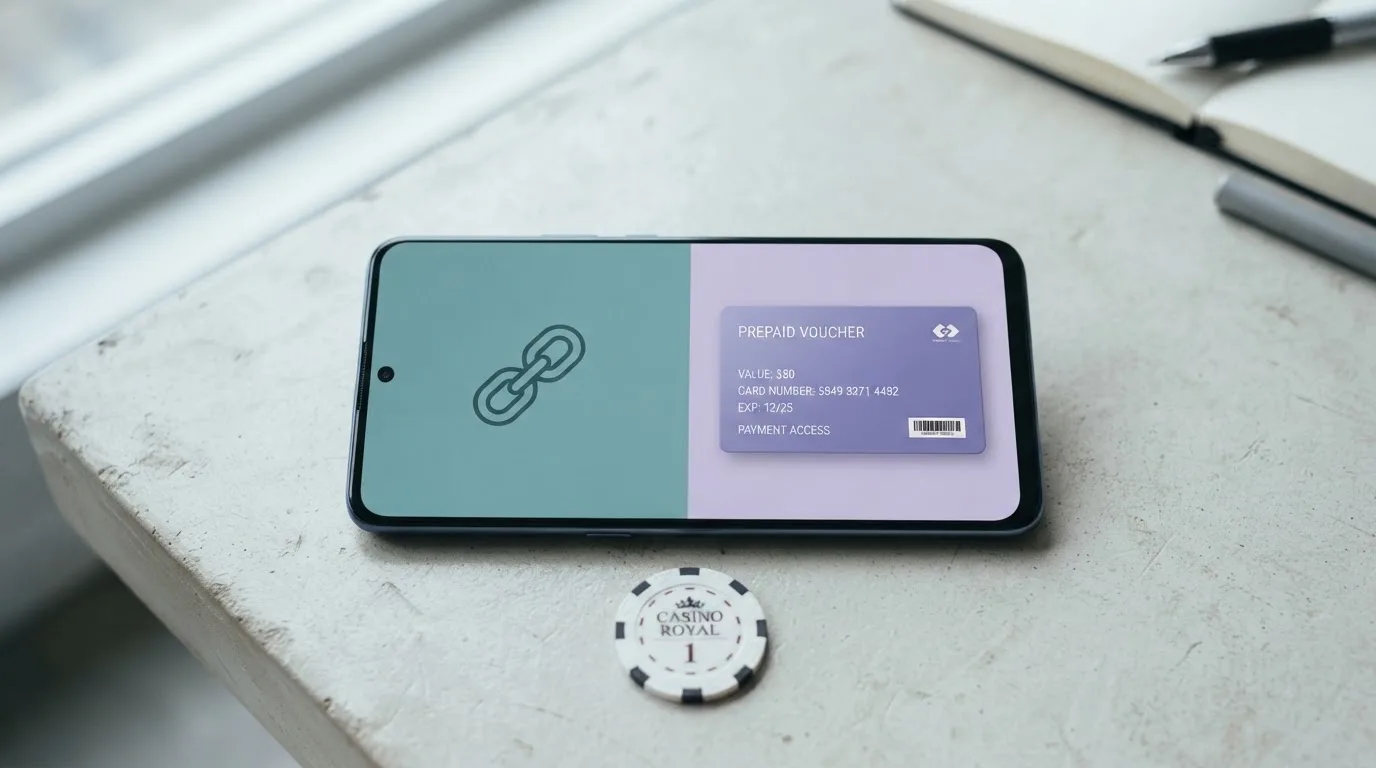
Paysafecard is the prepaid voucher route. The voucher is sold at retail and redeemed by a 16-digit code, so no bank card is involved at the moment of deposit. The minimum deposit to trigger a 500% match is typically low at paysafecard-accepting sites — the rail suits small deposits well. The catch is withdrawal: paysafecard is one-way for deposits, and the operator settles the withdrawal through a different rail, usually bank transfer through Faster Payments. A player depositing by paysafecard and withdrawing to a bank account should expect a verification step on first withdrawal, since the deposit rail does not prove the bank account. The bonus amount is paid in cash or in bonus funds depending on the operator’s terms; what matters here is that the payout rail is the bank, not the voucher.
AstroPay was founded in 2009 and is headquartered in Uruguay, and operates as a global digital wallet offering online payments, virtual and physical debit cards, and peer-to-peer transfers. AstroPay spun off its payment-processing business dLocal as a separate company in 2016. AstroPay’s UK entity, Larstal Limited, is an electronic money institution authorised by the Financial Conduct Authority under the Electronic Money Regulations 2011; its Isle of Man entity is licensed by the Isle of Man Financial Services Authority; its Brazilian entity is authorised by the Brazilian Central Bank as an electronic currency issuer; and its Danish entity is authorised by the Danish Financial Supervisory Authority. AstroPay serves users across markets including Argentina, Australia, Brazil, Canada, Colombia, Denmark, Spain, the United Kingdom, the United States and Uruguay. As a digital wallet at a UK-licensed casino, AstroPay behaves like an e-wallet: the deposit is funded from a balance the player has loaded into the wallet, and the wallet balance must come from a non-credit source — a debit card, a bank transfer, or another non-credit rail — to clear the Commission’s ban.
Crypto deposits sit outside this frame. The Gambling Commission does not authorise crypto-funded play at a licensed site: an operator accepting bitcoin or ether from a British player without a Commission licence is operating outside the law, and the protections that come with the licence — GAMSTOP, the complaints route, ADR, the slot stake limits — are absent. Section 33 of the Gambling Act 2005 makes providing gambling to people in Great Britain without a licence an offence. The Commission disrupts illegal sites through cease-and-desist notices, search-engine delisting and payment and hosting referrals, but has no ISP-blocking power, and no penalty is aimed at the player. What a player loses on an unlicensed site is the framework, not the winnings. A crypto-funded 500% offer is, by the regulator’s definition, an offer outside the frame.
For payout speed, the practical ranking runs: Faster Payments or e-wallet, near-instant after operator review; debit card, one to three working days; paysafecard voucher redemption, not applicable for withdrawal. The 500% bonus does not change the rail — it changes the volume. A bonus that triples the playable balance triples the withdrawals a player is likely to make, which puts more weight on the payout rail than the deposit did.
How a 500% match actually works, and what it costs in real play
A 500% match means the casino adds five times the deposited amount, so a £10 deposit produces a £50 bonus and a £60 playable balance; a £100 deposit produces a £500 bonus and a £600 balance. The cap on the bonus is set by the operator and varies; the minimum deposit to trigger the offer is set by the operator and is typically low (£10 is common). The wagering requirement is the multiplier applied to the bonus before it converts to withdrawable cash, and under the 19 December 2025 rule that multiplier is capped at 10x for any UK-licensed offer.
The arithmetic of clearing a 500% bonus runs as follows. The required turnover is the bonus amount multiplied by the wagering factor — for the maximum permissible 10x factor, a £50 bonus requires £500 of qualifying bets, a £500 bonus requires £5,000. With a £2 stake per spin (the limit for 18-24 players, or a self-imposed limit for older players clearing a bonus carefully), the £500 turnover requires 250 spins; at one spin every 2.5 seconds — the fastest permitted by the Commission’s auto-play ban — those 250 spins run to 625 seconds, just over ten minutes. With a £5 stake (the limit for players aged 25 and over), the same £500 turnover requires 100 spins, taking 250 seconds at the minimum interval. A £5,000 turnover at £5 per spin runs to 1,000 spins and 2,500 seconds, roughly 42 minutes of continuous play. None of these times accounts for the spin-to-spin pace of a human player, the breaks a slot game takes for animations, or the reality check prompts the operator is obliged to surface.
The expected loss is the second number a player should look at. Slots return a percentage of stake to the player over the long run, expressed as RTP, and the remainder is the house edge. A typical slot RTP sits around 96%, leaving a 4% house edge. On a £500 turnover, the expected loss is £20; on a £5,000 turnover, it is £200. Those are averages over many spins, not outcomes for any single session — a player can win or lose far more in a short session, and the long-run average is what the bonus costs in expectation. The bonus does not change the RTP of the slot; it changes how long the player plays at that RTP, and the cost scales with the volume.
This is where the 10x cap earns its name. Before 19 December 2025, a 35x wagering factor on a £500 bonus required £17,500 of turnover; at £5 per spin, that is 3,500 spins, around 145 minutes of play, and an expected loss around £700. The cap cuts that volume by more than two-thirds, and with it the expected cost. The 500% headline is unchanged — the casino still adds five times the deposit — but the clearing burden has moved from a multi-hour grind to a session a player can finish in one sitting.
A wagering requirement below 10x is rare in the UK market; the cap is the ceiling, not the floor. A bonus advertised as “10x wagering” is at the maximum the regulator allows, and a bonus with a lower multiple is the better offer in real terms, even if the headline percentage is identical. The 500% number describes the match size; the wagering factor describes the cost of clearing it; the two together determine how long the bonus takes to convert to cash, and how much of it the house keeps in expectation.
Mixed-product bonuses — the kind that give casino spins in return for a sports bet — are banned under the same 19 December 2025 rule. A player who sees a “deposit and get 50 casino spins” headline at a licensed UK site is looking at a non-compliant bonus, and the licensed operator does not run it. This narrows the offer set rather than broadening it: the typical 500% match at a licensed UK brand is a casino-only match, with the wagering factor attached to the bonus amount and the spin winnings treated as bonus funds.
A wagering cap also changes the geography of bonuses that exceed it. A 500% match at an unlicensed offshore brand may advertise a 35x or 50x wagering factor because the regulator does not bind it; the same headline at a licensed UK brand has to fit inside 10x. The two are not comparable offers. The offshore version is, by construction, a heavier grind with a higher expected cost, and it sits outside the protections the licensed version carries.
The 10 brands on the register, and where each one fits
Every brand below is taken from the Gambling Commission’s public register: the domain is listed against the licence account that runs it, with the remote casino operating licence number. Several brands share one licensee — Ladbrokes, Coral and Gala Bingo all sit under LC International Limited — and they are not independent operators for that reason. Every GB-licensed online operator must take part in GAMSTOP. The register, not the operator, is the test of whether a brand is licensed.
| Brand | Licence Holder | Licence | Status |
|---|---|---|---|
| MrQ | Tek Fox Ltd (60629) | 060629-R-337532-004 | Active |
| Gala Bingo | LC International (54743) | 054743-R-330863-014 | Active |
| Paddy Power | PPB Games (39411) | 039411-R-319335-010 | Active |
| Casumo | Recro Limited (61549) | 061549-R-336718-002 | Active |
| Sky Vegas | Bonne Terre (65519) | 065519-R-339675-002 | Active |
| BetVictor | BV Gaming (39576) | 039576-R-319370-028 | Active |
| Coral | LC International (54743) | 054743-R-330863-014 | Active |
| Betfred | Petfre (39544) | 039544-R-319290-010 | Active |
| bet365 | Hillside (55149) | 055149-R-331499-004 | Active |
| Ladbrokes | LC International (54743) | 054743-R-330863-014 | Active |
A 500% bonus is not a registered fact. The Commission’s public register lists licence holders and their domains; it does not list promotional terms. The “subject support” column for every brand here is empty by design: the register is the licensing fact, and the bonus terms are an operator-published fact, and the two are different documents. A player who wants a 500% match offer must read the operator’s own promotional terms, and must do so knowing the operator can change them between the moment the player registers and the moment the player claims.
The current year is 2026, and the register snapshot is 18 September 2026.
MrQ — a low-deposit independent
MrQ trades on a single-operator licence held by Tek Fox Ltd (account 60629), with Mrq.com listed as an active domain under the remote casino operating licence 060629-R-337532-004. As one of the smaller independents on the list, this brand suits players valuing a direct single-operator relationship.
For a 500% match specifically, MrQ sits in the “modest-deposit, modest-bonus” cluster — the kind of brand a player with a small bankroll uses to test the shape of a 500% offer without committing to a large balance. The 10x wagering cap applies, so any bonus advertised sits within that ceiling. The brand’s appeal is its simplicity: one licence, one operator, one GAMSTOP record. A player who self-excludes against Tek Fox Ltd has no other brand to worry about under that account.
The drawback is selection. An independent operator runs a smaller game library than the multi-brand groups. For a player who wants the bonus cleared on a specific title, checking the available catalogue first is essential.
Gala Bingo — LC International’s bingo-vertical brand under licence 054743
Gala Bingo sits under LC International Limited, account 54743, the same licensee as Ladbrokes and Coral, and Gala Bingo is listed as an active domain on the Commission’s register under remote casino operating licence 054743-R-330863-014. The brand carries a bingo-first identity, and its casino vertical sits beside that core rather than replacing it.
For a 500% match, the question is whether the offer is casino-only or shared with the bingo vertical — and the answer varies by promotion. A casino-only 500% match clears against slots at the 10x ceiling; a mixed bonus would, under the 19 December 2025 rule, be banned at a licensed UK site. The licensed operator does not run the mixed version. The GAMSTOP record is shared with Ladbrokes and Coral: self-excluding against LC International excludes the player across all three brands at once. For a player comparing offers across the LC International trio, the choice is between verticals (bingo-first, sportsbook-led, casino-led) rather than between competing operators.
Paddy Power — PPB Games Limited’s brand on a long-standing licence
Paddy Power trades on PPB Games Limited’s licence (account 39411); the site, Paddy Power, maintains active status under the remote casino operating licence 039411-R-319335-010. The licence is one of the older ones on the register, and the brand carries a sportsbook identity with a casino vertical running beside it.
For a 500% match, the relevant test is whether the offer is casino-only or shared with the sportsbook — and again, under the 19 December 2025 rule, mixed bonuses are banned at licensed UK sites. A licensed Paddy Power 500% casino match is a casino-only offer. The brand’s appeal is reach: a sportsbook customer base that crosses into the casino vertical during a major sporting event, and a 500% offer timed to capture that crossover. A player who wants the casino bonus without engaging the sportsbook can do so; the offer does not require a sports bet.
The drawback is the same as for any sportsbook-led brand: the casino vertical is one product among several, and the promotional calendar may weight sports ahead of casino in any given week.
Casumo — Recro Limited’s single-brand independent
Casumo trades on Recro Limited’s licence (account 61549); Casumo.com is listed on the register as active under the remote casino operating licence 061549-R-336718-002. The brand is a single-operator independent, similar in structure to MrQ but with a longer market history and a larger game library.
For a 500% match, Casumo sits in the mid-cluster. It is neither the smallest independent nor the largest multi-brand group, offering a casino-first identity that suits a slots-focused bonus. The 10x wagering cap applies, and the GAMSTOP record is single-operator, simplifying the self-exclusion process for players.
Sky Vegas — Bonne Terre Gaming Limited’s single-brand
Sky Vegas trades on Bonne Terre Gaming Limited’s licence (account 65519); Sky Vegas is maintained as active under the remote casino operating licence 065519-R-339675-002. The brand carries the Sky media identity, which is a customer-base fact rather than a licensing fact: the licence is held by Bonne Terre Gaming, and Sky’s brand sits on top of that.
For a 500% match, Sky Vegas runs as a casino-only brand, with no sportsbook or bingo vertical competing for the same promotional calendar. A player who wants a focused slots experience with no cross-vertical distractions fits here. The 10x wagering cap binds the offer as it does for every licensed UK brand.
BetVictor — BV Gaming Limited’s multi-product independent
BetVictor trades on BV Gaming Limited’s licence (account 39576); the site, Betvictor.com, is an active domain on the remote casino operating licence 039576-R-319370-028. The brand runs a sportsbook alongside a casino vertical, similar in structure to Paddy Power but under a different licensee.
For a 500% match, the same mixed-bonus question applies, and the same answer: a licensed 500% match is casino-only, with no sportsbook bet required. The brand’s appeal is its long-running reputation as a sportsbook, which carries into a casino vertical that benefits from the existing customer base. A player who already holds a BetVictor sportsbook account and wants to clear a casino bonus against the same brand fits here.
Coral — LC International’s casino-vertical brand
Coral sits under LC International Limited, account 54743, the same licensee as Ladbrokes and Gala Bingo, with coral.co.uk listed as an active domain on the Commission’s register under remote casino operating licence 054743-R-330863-014. The brand carries a casino-and-sportsbook identity, with a higher casino weighting than Gala Bingo.
For a 500% match, Coral offers a casino-led version of the LC International trio. The same shared-GAMSTOP caveat applies: a self-exclusion against LC International excludes the player across Coral, Ladbrokes and Gala Bingo. This brand is the logical choice for players who want the casino offer and have no other LC International relationship.
Betfred — Petfre (Gibraltar) Limited’s high-street brand
Betfred trades on Petfre (Gibraltar) Limited’s licence (account 39544); the site, Betfred.com, is an active domain on the remote casino operating licence 039544-R-319290-010. The brand is a UK high-street name that runs a casino vertical beside its core sportsbook.
For a 500% match, the same mixed-bonus caveat applies, and the answer is the same: licensed 500% matches are casino-only. A player who already has a Betfred shop relationship and wants a casino bonus that connects to that brand fits here. The Petfre (Gibraltar) parent is a licensing-structure fact — the licence is British, and Gibraltar is the parent company’s seat, not the regulator.
bet365 — Hillside (UK Gaming) ENC’s flagship brand
bet365 trades on Hillside (UK Gaming) ENC’s licence (account 55149); the site, Bet365.com, is an active domain on the remote casino operating licence 055149-R-331499-004. The brand is the largest in the UK online market by reach, and the casino vertical sits beside a dominant sportsbook.
For a 500% match, bet365 runs casino-only offers under the 10x cap. The brand’s appeal is its scale: a customer base that crosses into the casino vertical during major events, and a game library that runs deeper than the independents. A player who already holds a bet365 sportsbook account and wants the casino bonus on the same platform fits here; a player who wants a focused casino-only experience may find the sportsbook weighting a distraction.
Ladbrokes — LC International’s flagship brand
Ladbrokes sits under LC International Limited, account 54743. The Ladbrokes.com site is an active domain under remote casino operating licence 054743-R-330863-014. It operates as the flagship for the group, running a casino vertical alongside a long-standing sportsbook.
For a 500% match, the same licensing-structure facts apply as for Coral and Gala Bingo: shared GAMSTOP record, same ADR, same licensee. The verticals are the differentiator. A player who wants the LC International flagship experience and has no other LC International relationship fits here.
The full landscape, in one frame
The ten brands above divide by structure. Four sit under LC International Limited: Ladbrokes, Coral, Gala Bingo — and reading them as four competing offers would misread the register. Three run as single-licensee independents: MrQ, Casumo, Sky Vegas. Three run as multi-product operators with a sportsbook alongside a casino: Paddy Power (PPB Games), BetVictor (BV Gaming), Betfred (Petfre Gibraltar). One — bet365 — runs as a flagship of its own large licensee (Hillside UK Gaming).
For a player choosing between them, the structure matters more than the brand name. The four LC International brands share one GAMSTOP record and one ADR; a self-exclusion against any one excludes the player from all four. The single-licensee independents offer a cleaner break: one brand, one GAMSTOP record, no shared fate with a sportsbook or bingo vertical. The multi-product operators offer a familiar name and a deep game library, at the cost of a casino vertical that sits beside, rather than replaces, the sportsbook.
The 500% bonus offer does not change any of this. It is a promotional fact, layered on top of a licensing fact, and the licensing fact is the one the regulator enforces. A player who claims a 500% match at any of these ten brands sits inside the same framework: the 10x wagering cap, the £5 or £2 slot stake limit depending on age, the 2.5-second minimum spin interval, the GAMSTOP record, and the financial vulnerability check at £150 net deposits in a rolling 30 days. The bonus is the variation; the frame is the constant.
A player who wants the lowest minimum deposit and the shortest clear fits one of the independents. A player who already holds an account at a multi-product brand fits that brand’s casino vertical. A player who wants a paysafecard route fits a brand that accepts the voucher, regardless of vertical. A player who wants a crypto-funded offer sits outside the licensed frame entirely, and the choice there is between a higher-volume grind at an offshore brand and no offer at all.
The “current as of” snapshot — the register, the 10x cap, the slot stake limits — is fixed by the regulator. The promotional terms are not. A 500% bonus advertised today may not be advertised next month, and the wagering factor may move within the 10x ceiling between one promotion and the next. The licence number does not move.
Choosing the path: low deposit, big balance, paysafecard, crypto
Four paths run through the licensed UK frame, and each one resolves to a different player situation.
The low-deposit path is for a player with a small bankroll who wants to test a 500% match without committing to a large balance. A £10 deposit produces a £50 bonus and a £60 playable balance; the 10x wagering cap means the bonus clears on £500 of bets. At £2 per spin (the 18-24 limit, or a self-imposed limit for older players), that is 250 spins, taking around ten minutes at the 2.5-second minimum interval. The expected loss on £500 turnover at a 96% RTP is £20. This is the cheapest 500% match to clear in both time and expectation, and it is the path that suits a player who wants the bonus as a feature, not as the centre of the session.
The big-balance path is for a player who can fund a larger deposit and wants a proportionally larger bonus. A £100 deposit produces a £500 bonus and a £600 balance; a £200 deposit produces a £1,000 bonus. The 10x cap still binds, so the bonus clears on £5,000 of bets at the £500 level, or £10,000 at the £1,000 level. At £5 per spin (the 25-and-over limit), the £5,000 turnover runs to 1,000 spins and roughly 42 minutes at the minimum interval; the £10,000 turnover doubles that. The expected loss at a 96% RTP is £200 or £400 respectively. This path suits a player with the bankroll to absorb a 4% house edge on a much larger volume, and the patience to clear the bonus in a longer session. It is also the path that activates the financial vulnerability check most quickly — £150 net deposits in a rolling 30 days is the trigger — though the check fires on net deposits, not on turnover.
The paysafecard path is for a player who wants to keep the deposit off a bank card entirely. The voucher is sold at retail, redeemed by a 16-digit code, and never touches a card at the moment of deposit. The bonus triggers as it does for any other payment method, and the wagering terms are unchanged. The catch is the withdrawal: paysafecard is one-way for deposits, and the operator settles winnings through a bank transfer, usually via Faster Payments. A first withdrawal will trigger an identity verification step, since the deposit rail does not prove the bank account. The bonus amount is paid according to the operator’s terms, and the cash component withdraws through the bank rail like any other withdrawal. This path suits a player who wants the prepaid discipline on the deposit side, with the knowledge that the payout side runs through a different rail.
The crypto path is the only one that runs outside the licensed UK frame. The Gambling Commission does not authorise crypto-funded play at a licensed site; an operator accepting bitcoin or ether from a British player without a Commission licence is operating outside the law. The protections the licence enforces — GAMSTOP, the complaints route, ADR, the slot stake limits — are absent. Section 33 of the Gambling Act 2005 makes the provision of gambling to people in Great Britain without a licence an offence. The Commission disrupts illegal sites through cease-and-desist notices, search-engine delisting and payment and hosting referrals, but has no ISP-blocking power, and no penalty is aimed at the player. What a player loses on an unlicensed site is the framework, not the winnings. The crypto-funded 500% offer is, by construction, the highest-volume grind of the four paths — there is no 10x cap to limit the wagering factor — and it is the path that offers the least protection per pound staked.
A player comparing the four paths is comparing four very different costs per minute of play. The licensed paths carry the 10x cap and the slot stake limits, which bound the cost; the unlicensed path does not. The paysafecard path carries the verification step at withdrawal, which adds time but not cost. The big-balance path carries the longest expected play time, and the highest expected loss in absolute terms, while keeping the same house edge as the small-deposit path.
Offshore, and what a player gives up
The licensed frame has edges. An offshore brand — Curaçao, Malta, Gibraltar — can advertise a 500% match with a 35x or 50x wagering factor because no UK regulator binds it. The headline number is the same, and the clearing burden is several times heavier. The expected loss scales with turnover, and the higher wagering factor multiplies the volume through which the house edge applies.
A player who chooses the offshore path chooses it knowingly. The Commission cannot block the site at the ISP level; it can issue cease-and-desist notices, request search-engine delisting, and refer payment and hosting providers. The disruption is real but partial. The player who reaches the site reaches it through a route the regulator has not closed.
What the player gives up is the framework. No GAMSTOP — a self-excluded player can still reach the site. No Commission complaints route — a dispute with the operator goes to the operator’s own ADR, which may or may not be approved in another jurisdiction. No slot stake limits — a player can spin at any stake the operator accepts. No financial vulnerability check at £150 net deposits — the prompt that licensed sites surface does not appear. No identity verification before play — the licensed requirement since 7 May 2019 is absent, because the operator is not licensed. The 19 December 2025 10x wagering cap does not apply, and the mixed-bonus ban does not apply, and the credit card ban does not apply.
For a player who is not self-excluded, who has no complaint history, and who reads the bonus terms carefully, the offshore path is a higher-cost version of the licensed path with fewer safety nets. For a player who is self-excluded through GAMSTOP, the offshore path is the route the exclusion does not cover, and it is the route a regulator-designated vulnerable player is most at risk of taking. The Commission’s own estimate, before the credit card ban, was that 22% of online gamblers who used credit cards were classed as problem gamblers — a figure the regulator cited to justify the ban, and a figure that frames what an offshore 500% match offers to that population.
No penalty is aimed at the player. The offence, under section 33 of the Gambling Act 2005, is committed by the operator providing the gambling without a licence. A British player on an offshore site is not prosecuted; what they lose is the protection. That is the trade-off, and it is the trade-off a player comparing a licensed 500% match to an offshore one is making.
The wagering cap in practice: a worked band
The 19 December 2025 rule caps wagering requirements at 10x. That is the maximum the regulator permits; offers below the cap are rare but possible. The band a player sees on a 500% match runs from roughly 10x (the ceiling) down to whatever the operator chooses, and the choice is the operator’s within the ceiling.
For a £10 deposit producing a £50 bonus at the 10x ceiling, the required turnover is £500. With a £2 stake per spin, 250 spins are required; at a 2.5-second minimum interval, these spins take approximately 10.4 minutes. The expected loss at a 96% RTP is £20. At a 5x wagering factor, the turnover required is £250, involving 125 spins that take roughly 5.2 minutes, with an expected loss of £10.
For a £100 deposit producing a £500 bonus at the 10x ceiling, the required turnover is £5,000. At £5 per spin, that is 1,000 spins and around 42 minutes of play at the minimum interval. The expected loss at a 96% RTP is £200. At a 5x factor, the turnover halves to £2,500, the spins to 500, the time to around 21 minutes, and the expected loss to £100.
The band runs from these 10x figures down to whatever the operator offers within the ceiling. The 500% match headline is unchanged across the band; the cost to the player is not. A 5x wagering factor halves the volume of bets through which the house edge applies, and with it the expected loss. The 10x ceiling is the worst case the regulator permits, and it is the case a player should assume until the operator’s terms say otherwise.
The minimum deposit to trigger the band is typically £10. Some operators set it at £20 or higher, and that minimum moves the band upward — a £20 minimum deposit doubles the bonus at the same 500% match, and with it the volume of clearing. The cap on the bonus is operator-set and varies; a cap of £100 on the bonus means a £20 deposit produces a £100 bonus (the cap binds), while a £40 deposit would produce £200 but be capped at £100. A player aiming for the maximum bonus at the minimum clearing volume should match the minimum deposit to the cap — deposit the smallest amount that produces the cap, and clear the cap on the smallest turnover possible.
The offer set, recapped
A 500% casino bonus in the UK sits inside a frame the regulator writes: a 10x wagering cap, slot stake limits by age, a 2.5-second minimum spin interval, GAMSTOP screening, a financial vulnerability check at £150 net deposits in a rolling 30 days, and identity verification before the first deposit. The brand is licensed or it is not, and the register is the test. The bonus size is the operator’s choice within the ceiling; the clearing burden is the wagering factor multiplied by the bonus; the expected cost is the clearing burden multiplied by the house edge.
| Payment Method | Key Feature | Withdrawal Rail |
|---|---|---|
| Bank Transfer | Instant/Fast settlement | Faster Payments |
| Debit Card | Standard deposit | Bank Transfer |
| Paysafecard | Prepaid security | Bank Transfer |
| Digital Wallet | Instant loading | E-wallet/Transfer |
The licensed UK market offers the 500% match at the 10x ceiling, with the slot stake limits binding the stake, the GAMSTOP record binding the player, and the operator’s own terms binding the clearing burden. The offshore market offers the 500% match at higher wagering factors, with no slot stake limits and no GAMSTOP record, and a correspondingly higher expected cost per pound of bonus.
A player choosing between these is choosing between a bounded cost with full protection and an unbounded cost with partial protection. The 500% number does not change between the two; the cost underneath it does.
Frequently Asked Questions
How does a 500% casino bonus actually work?
A 500% match bonus means the casino adds five times the deposited amount to the player’s balance, so a £10 deposit produces a £50 bonus and a £60 playable total. The bonus typically carries a wagering requirement — a multiple applied to the bonus before it converts to withdrawable cash — and under UK rules that multiple is capped at 10x since 19 December 2025. The bonus clears when the wagering volume is reached; any remainder stays as bonus funds until cleared or until it lapses.
What deposit amount usually unlocks a 500% match?
The minimum deposit at most UK-licensed sites offering a 500% match is £10, though some operators set it at £20 or higher. The maximum bonus is operator-set and varies; it caps the bonus at a fixed amount regardless of how large the deposit is. A player aiming to maximise the bonus at the lowest clearing cost should deposit the smallest amount that hits the cap.
Can a paysafecard deposit trigger a 500% bonus?
Yes, at operators that accept paysafecard as a deposit method. The voucher is a payment rail, not a restriction on bonus eligibility, and the bonus triggers as it does for any other payment method. The catch is on the withdrawal side: paysafecard is one-way for deposits, so winnings settle through a bank transfer, usually via the UK’s Faster Payments Service. A first withdrawal triggers identity verification, since the deposit rail does not prove the bank account.
What wagering requirement applies to a 500% match under current UK rules?
Since 19 December 2025, the Gambling Commission has capped wagering requirements at 10x for any UK-licensed bonus. A £50 bonus therefore requires £500 of qualifying bets to clear; a £500 bonus requires £5,000. Mixed-product bonuses — the kind that give casino spins in return for a sports bet — are banned under the same rule. A licensed UK operator does not advertise a wagering factor above 10x.
Do crypto deposits count towards a 500% welcome bonus?
Not at a UK-licensed site. The Gambling Commission does not authorise crypto-funded play at a licensed operator, and a brand accepting bitcoin or ether from a British player without a Commission licence is operating outside the law. Crypto-funded 500% offers exist, but they sit outside the licensed frame, with no GAMSTOP coverage, no Commission complaints route, no slot stake limits, and no 10x wagering cap. A player choosing the crypto path trades the protections of the licensed frame for an offer the regulator does not bind.
How long does a player have to clear a 500% bonus?
The expiry window is set by the operator in the bonus terms, and it varies. Common windows run from 7 to 30 days from the date the bonus is credited, with some operators offering longer. A bonus that is not cleared within the window lapses, and any remaining bonus funds are forfeited. The wagering factor and the stake-per-spin determine how long the clearing takes in practice — at the 10x ceiling with a £5 stake, a £500 bonus takes around 42 minutes of play at the minimum 2.5-second spin interval.