
Foreign casino sites for UK players: a register-driven look at the landscape in 2026
 Available in GB
Current as of 23 September 2026 · verified against the Gambling Commission’s public register of gambling businesses
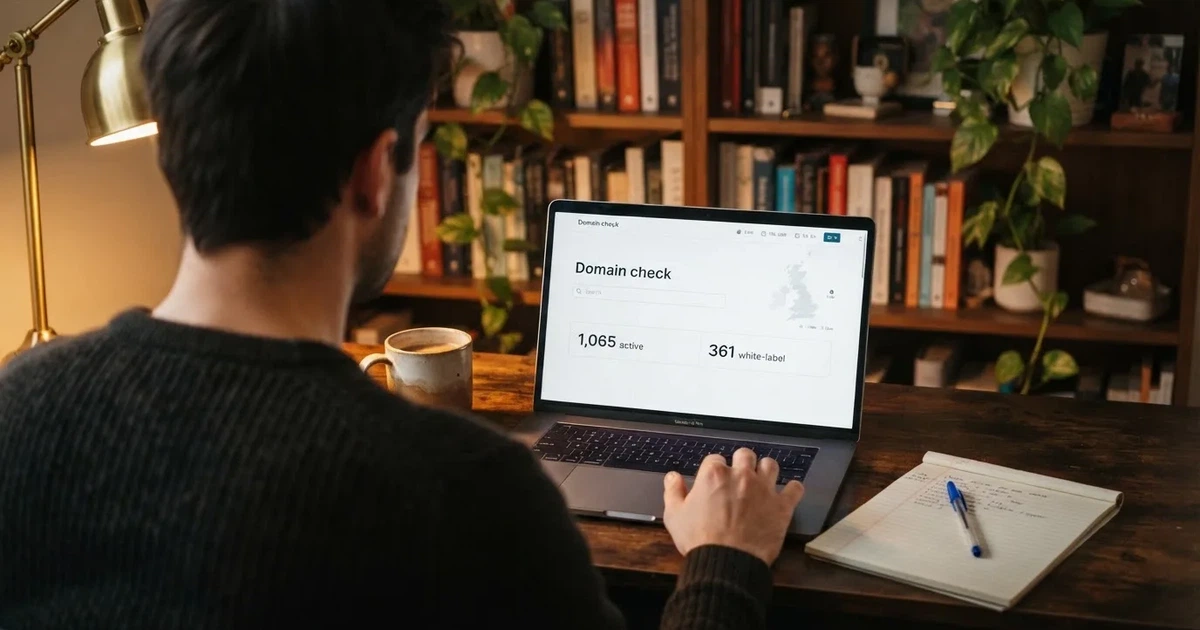
The phrase “foreign casino for UK players” sounds like a category. It is not quite one. A site taking deposits in pounds from a person in Manchester may be licensed in Malta, registered in Gibraltar, hosted in Curaçao and operated from London — and it is the licence, not the corporate geography, that decides whether it is allowed to do so. This page works from that distinction. It treats “foreign casino” as a marketing word and reads what is on the register instead, then spells out what changes for a player the moment the Gambling Commission’s licence is not there to lean on.
Table of Contents
- The UK-licensed cluster: ten names on the register, one regulatory frame
- What a UK Gambling Commission licence actually requires
- The 10x cap and what a bonus actually takes to clear
- What a player gives up by leaving the licence frame
- The licence map: where “foreign” licences come from
- Comparing the ten licensed options
- The cluster read: where the ten agree and where they diverge
- Responsible gambling on a UK-licensed site vs an offshore site
- Reading the public register
- Where the offshore pitch leads
- What “foreign” actually means in the UK frame
- Frequently asked questions
The UK-licensed cluster: ten names on the register, one regulatory frame
A side-by-side reading of the brands that show up when a UK player searches for an “online casino” makes the point. The table below covers the ten operators reviewed on this page. Every one of them holds an active remote casino operating licence from the Gambling Commission. Every one runs an “.com” or “.co.uk” domain that resolves into the Commission’s domain list — the public list that maps every web address to the licence account that operates it. The point is not that they are similar; it is that the licensing frame is identical, and the frame is what an offshore alternative will not have.
| Brand | Licence holder and GB remote casino licence | Domain status on the register |
|---|---|---|
| Unibet | Platinum Gaming Limited · 045322-R-324275-019 | Active |
| Betfair | PPB Games Limited · 039411-R-319335-010 | Active |
| Sky Vegas | Bonne Terre Gaming Limited · 065519-R-339675-002 | Active |
| MrQ | Tek Fox Ltd · 060629-R-337532-004 | Active |
| Betway | Betway Limited · 039372-R-319367-029 | Active |
| PokerStars | Stars Interactive Limited · 039108-R-319334-026 | Active |
| Paddy Power | PPB Games Limited · 039411-R-319335-010 | Active |
| Ladbrokes | LC International Limited · 054743-R-330863-014 | Active |
| BetVictor | BV Gaming Limited · 039576-R-319370-028 | Active |
| Betfred | Petfre (Gibraltar) Limited · 039544-R-319290-010 | Active |
A licence number of the form account-R-number-suffix is not a marketing line. The leading six digits repeat the licence holder’s account number, the “R” flags a remote (online) licence, and the suffix is the version of that licence on the register. A player can search that number on the Gambling Commission’s public register and read back who actually runs the domain — useful because Betfair and Paddy Power share an account holder (PPB Games Limited) but trade as different brands, and because the licence holder’s name on a Gibraltar or Curaçao register is a different register with a different test.
What the table does not show is what the licence buys the player. That is the subject of the next section, and it is the substance a “foreign casino” pitch cannot match without the licence.
What a UK Gambling Commission licence actually requires
The Commission’s licence is not a badge. It is a bundle of conduct obligations that took shape across the Gambling Act 2005 and the Gambling (Licensing and Advertising) Act 2014, and that have been tightened year on year since. Five obligations matter when comparing a UK-licensed site against an unlicensed one, and they are what disappears the moment a player steps onto an offshore platform.

Age and identity. A licensed operator verifies the customer’s name, address and date of birth before the first deposit and before any play. The rule has been in force since 7 May 2019, and it is the reason an account cannot be opened in under a minute on a licensed site — the operator has to check, not just ask. Anonymous play is not possible on a UK-licensed site; on an offshore site it often is.
Stake limits on online slots. Since 9 April 2025 the maximum stake per game cycle is £5 for players aged 25 and over, and since 21 May 2025 it is £2 for 18-to-24-year-olds. A game cycle is one spin end to end — the operator cannot slice a stake across cycles to dodge the cap. These are statutory numbers, set by the Commission under the Gambling Act, not house rules an operator can raise with a marketing email. Offshore sites keep their own stake ceilings, and they sit well above £5.
Wagering requirement cap. Since 19 December 2025 a bonus’s wagering requirement is capped at 10x. A mixed-product bonus — bet on a sport and receive casino free spins — is no longer permitted. The 10x cap is what makes a UK bonus legible: the turnover is the bonus multiplied by ten, and nothing else. The full calculation sits in the section below.
Payments. Credit cards have been banned for gambling since 14 April 2020, including credit cards funded through an e-wallet. Debit cards and bank transfers are unaffected. The ban was driven by Commission research that estimated around 800,000 UK consumers were gambling on credit cards in 2018, and that found 22% of online gamblers using credit cards were classed as problem gamblers. Licensed operators apply the rule at the cashier; offshore operators usually do not.
Self-exclusion and financial checks. Every online licence holder has been part of GAMSTOP, the national self-exclusion scheme, since 31 March 2020, with periods of six months, one year or five years that cannot be ended early. Since 28 February 2025 the operator has run a light-touch financial vulnerability check at £150 net deposits in a rolling 30-day window, using public data only. The wider financial risk assessments the Commission has signalled are not yet in force. Offshore operators run their own self-exclusion — usually a per-brand toggle in the responsible-gaming menu — but there is no national scheme a player can hand their name to and have it stick across every site.
Ten brands, one licence frame, ten different rooms inside it
The ten operators above sit inside the same regulatory room, but they are not the same product. Two pairs share an account holder, which matters more than it sounds: Betfair and Paddy Power both sit under PPB Games Limited on the same licence, and what changes between them is product mix, brand history and house terms, not the regulator or the recourse a player has if something goes wrong. Ladbrokes is the third name on LC International Limited’s licence account; Coral and Gala Bingo share it too, though this page reviews only Ladbrokes. Calling two names that share a licensee “different casinos” is fine at the cashier and misleading at the regulatory level.
The UK-licensed cluster is also where the wagering cap bites. The next section does the arithmetic.
The 10x cap and what a bonus actually takes to clear
The 19 December 2025 wagering requirement cap sits at 10x. For a player, that means the required turnover on a bonus of £B is £B × 10 — and that is the headline number to weigh. A £50 bonus carries a £500 turnover target. A £100 bonus carries a £1,000 turnover target. The rule covers any wagering requirement that runs against a deposit, a bonus or winnings tied to one, and it applies before withdrawal.
It is worth saying what the 10x figure does not do. It does not set a minimum deposit, a maximum cashout, a game-weighting table or a time limit. Those remain at the operator’s discretion. The cap narrows the worst offenders, but a 10x turnover on a £200 bonus is still £2,000 of slot play — a target that is reachable on a single slot at £2 per spin only if the player chooses the £2 stake tier, and is reachable at any stake only if the player is willing to grind. Where the bonus carries a max-cashout cap or a game-weighting rule that excludes most of the lobby, the rule below the cap is where the real cost hides.
The harder question is what 10x wagering does to a player’s time. A £100 bonus requires £1,000 of turnover. At a £5 max stake for a 25+ player, that is 200 spins; at £2, 500 spins. A spin takes a minimum of 2.5 seconds under the Commission’s Remote Technical Standards, which gives roughly 8 minutes 20 seconds of play at the £5 stake and 20 minutes 50 seconds at the £2 stake, before any lost spin runs longer than that floor. That is the cost on the clock for clearing the requirement mechanically — it does not include the time a player will spend on game selection, cashier verification, or on the real possibility that the bankroll is gone before the turnover is.
The other side is what the player keeps. A slot’s return-to-player is the share of wagered money the game pays back over the long run; on a typical UK slot it sits between 94% and 96%. The expected loss across the £1,000 turnover target is the turnover multiplied by one minus the RTP. At 96%, the expected loss is £40. At 94%, it is £60. That is the statistical cost of clearing the requirement on a single slot under ideal assumptions — not a prediction of what one player will actually lose, which depends on the game’s variance, the bet sizing and the order in which outcomes land.
The bonus’s value depends on its cash value, its cap and its RTP context. A £100 bonus with no cap and a 96% RTP carries an expected cost to the player around £40; a £50 bonus on a 94% slot carries an expected cost around £30. These are statistical estimates over many spins, not a promise of an outcome, and they assume only the bonus amount is being wagered rather than the deposit on top. The 10x cap means the multiplier stays at 10 across the cluster, which is why the wagering multiple no longer separates one UK-licensed brand from another — but the cash value, the max-cashout rule and the eligible games still do.
What a player gives up by leaving the licence frame
Stepping off a UK-licensed platform is not a like-for-like move. The site’s website will load, the games will look the same, the cashier will accept most of the same cards. The change is what is not visible — the ones the player did not have to ask about on a licensed platform, and now has to check one by one.
Identity checks and anonymity
An offshore site may let an account be opened with an email and a deposit. That is the convenience, and it is the risk. The same platform is under no UK obligation to verify the player’s age, identity or source of funds. If a dispute over a payout goes to the site’s regulator in Malta, Curaçao or Gibraltar, the operator’s own records are usually the only record. A player who never verified cannot prove what was deposited; an operator that never verified has fewer records to surrender. The licensed frame forces verification before the first deposit, and that earlier verification is the evidence a player leans on later.
Self-exclusion reach
GAMSTOP is the national self-exclusion scheme: one registration covers every UK-licensed online operator. A player who signs up cannot reopen an account at any Commission-licensed brand for six months, one year or five years, and the period cannot be cancelled. An offshore site is not in GAMSTOP; a self-exclusion request has to be made to each operator individually, and a brand that never had the player’s name has nothing to exclude. The licensed frame makes self-exclusion a single act; the unlicensed frame makes it a job.
The £5 and £2 stake ceilings
These are statutory numbers under the Commission’s social responsibility code. They apply to every slot game cycle on every licensed UK site, and they apply to every player, not to under-25s only. On an offshore slot the stake ceiling is the operator’s choice — sometimes £10, sometimes £25, sometimes uncapped. The higher stake ceiling speeds up the game, raises the per-spin loss and makes the wagering requirement easier to reach at the cost of raising the variance. A player who has chosen the £2 or £5 ceiling for a reason will find that choice is gone on an offshore site.
The 10x wagering cap
Since 19 December 2025 the multiplier is 10 across UK-licensed bonuses, and mixed-product offers are out. Offshore bonuses frequently carry 30x, 40x or higher wagering multipliers, and the bonus-versus-deposit structure (a 100% match up to a high figure with a heavy multiplier) is still the norm. The £100-bonus £1,000-turnover calculation above turns into a £3,000 or £4,000 turnover calculation offshore, with the same RTP, the same game cycle time and a much longer run. The cap is the cleanest single illustration of what protection a UK licence provides and what leaving it costs.
Complaints and recourse
A licensed site sits inside the Commission’s complaints route. A player who cannot resolve a dispute with the operator can take it to an approved alternative dispute resolution (ADR) body, and ultimately to the Commission. An offshore site sits inside its home regulator’s process — which may be thorough and may be slow, and which usually does not allow a UK-resident complaint to be escalated through UK channels. A player who feels wronged has lost the UK route the moment they took the first deposit offshore.
Payment friction
An offshore site cannot legally accept a UK credit card for gambling (the Commission’s ban on credit-card gambling applies wherever the operator targets GB customers), and most UK banks block gambling transactions to known offshore merchant codes anyway. That often means the player is funnelled towards e-wallets, crypto, or vouchers — each with its own fee, its own FX mark-up and its own withdrawal timeline. The licensed site’s cashier accepts a debit card or a Faster Payments bank transfer with a £1,000,000 per-transaction scheme ceiling, and most payments arrive in seconds through Pay.UK’s Faster Payments Service.
The licence map: where “foreign” licences come from
The phrases “MGA licence” and “Curaçao licence” appear next to “UK players welcome” on a great many sites. They are licences in their own right. They are not licences to take UK customers, and the distinction is not a technical one. Since the Gambling (Licensing and Advertising) Act 2014 any operator taking customers in Great Britain needs a Commission licence, wherever it is based. A Malta Gaming Authority licence permits a site to operate from Malta. A Curaçao gaming licence permits a site to operate from Curaçao. Neither permits a site to take deposits from a person in London, Manchester or Cardiff without a separate UK licence.
What the foreign licences are for is the operator’s home market, plus any other market the foreign regulator has agreed to let the operator serve. The UK is rarely one of them. A site that holds both a Curaçao licence and a Commission licence is a UK-licensed site; a site that holds only a Curaçao licence is an offshore site targeting the UK from outside the Commission’s reach, and the Commission treats providing gambling to GB customers without a licence as an offence under section 33 of the Gambling Act 2005. The Commission’s enforcement toolkit runs to cease-and-desist notices, search-engine delisting, payment and hosting referrals — it does not include ISP-level blocking, so the site can remain reachable to a UK IP even while the Commission is taking action.
The point is that “licensed in Malta” and “licensed in the UK” are not competing options for a UK player. They are different things serving different purposes. A UK player who wants to play on a Commission-licensed site picks a brand from the register. A UK player who goes to an MGA-only site is choosing to leave the UK regulatory frame, and accepting what leaving it costs — which is the subject of the section above.
Comparing the ten licensed options
The table earlier listed every reviewed operator against the same three columns: licence holder and remote casino licence number, and the domain’s status on the register. What the table does not do is rank the brands, because the register does not rank them either. What follows is a closer read of each, with the licence details and a verdict that says who the brand fits. Verdicts differ; the licence frame does not.
Unibet (unibet.co.uk)
Platinum Gaming Limited holds the active remote casino operating licence 045322-R-324275-019, and unibet.co.uk appears on the public register as an active domain. Unibet is one of the longer-established European gaming brands in the cluster — the Kindred Group, formerly Unibet Group, has run a UK-facing product since the early 2010s. The product mix is wider than a pure casino: sportsbook, poker and bingo sit beside the casino, which matters for a player whose interest in slots is one of several.
A player who wants a casino plus a sportsbook under one login will find the layout sensible. The casino alone, against brands that have spent years tuning it, looks thinner by comparison. The 10x wagering cap applies here as it does to every UK-licensed brand, and the £5 / £2 stake ceiling is the same. Unibet’s value is breadth.
Betfair
PPB Games Limited holds the active remote casino operating licence 039411-R-319335-010, and Betfair.com is a registered active domain. Betfair started as a betting exchange — that history is still in the product — and the casino sits beside it. A player who arrived at Betfair through the exchange will recognise the interface; a player who arrives at the casino first may find the sports side distracting. The casino itself is a standard Playtech-driven product with a familiar game library.
Paddy Power runs on the same licence account, which is worth knowing: same regulator, same recourse route, same compliance team behind both brands. The brands compete on product, not on licence.
Sky Vegas
Bonne Terre Gaming Limited holds the active remote casino operating licence 065519-R-339675-002, and Sky Vegas is a domain currently active on the register. Sky Vegas’s customer base is built on the Sky subscription — the casino runs as an add-on to a media brand rather than a standalone product. The game library is the typical UK mix of Pragmatic Play, Blueprint, Playtech and NetEnt titles. The free-spins welcome offer, when one is running, is the most common entry point for new accounts.
A player who already has Sky TV will find the single-login model convenient. A player who does not is buying into a casino that does not differ structurally from any other licensed brand, except in branding.
MrQ
Tek Fox Ltd holds the active remote casino operating licence 060629-R-337532-004, and Mrq.com is a domain confirmed as active. MrQ is the newer name on this list — the brand launched in the UK in 2018 and has spent the years since sharpening a no-wagering welcome offer around free spins. That choice is unusual among UK-licensed brands, where the 10x cap is the rule: MrQ’s structure removes the wagering requirement on its sign-up spins entirely, which is what makes the brand stand out against the rest of the cluster.
The trade-off is range. MrQ’s game library is narrower than the legacy brands, and there is no sportsbook. A player who values a no-wagering welcome above a deep library will find MrQ’s pitch the cleanest in the cluster.
Betway
Betway Limited holds the active remote casino operating licence 039372-R-319367-029, and Betway.com is a domain featured on the register as active. Betway has been on the UK market since 2006; the casino is one of several products alongside a long-standing sportsbook. The casino’s slot catalogue leans on Microgaming and its successors, with a live casino product that runs on Evolution’s tables.
A player who likes a brand with a long UK history and a recognisable sportsbook will find Betway the predictable choice. There is nothing on the operator’s profile that would unseat it for a player who has already decided on a brand — and nothing that pulls in a player who is still shopping.
PokerStars
Stars Interactive Limited holds the active remote casino operating licence 039108-R-319334-026, and the Pokerstars.uk domain is confirmed as active on the register. PokerStars is the poker brand first, and the casino is the side product — a player who came for poker will stay for it, and a player who came for the casino will have noticed by the lobby that the order is the other way round. The casino uses Stars’ own internal games alongside third-party slots, and the wagering terms sit inside the same 10x frame as the rest.
A poker player who wants a casino on the same account will find this the most natural pairing in the cluster. A pure-casino player is overpaying for the brand.
Paddy Power
PPB Games Limited holds the active remote casino operating licence 039411-R-319335-010, and Paddy Power is verified as an active domain. Paddy Power shares its licence account with Betfair, which matters for compliance and dispute handling but not for product: the casino and sportsbook are Paddy Power-branded, with their own promotional calendar and their own game weighting. Paddy Power’s UK heritage is the Irish bookmaker’s marketing voice and its high-street presence — neither of which changes what the casino offers.
A player who likes Paddy Power’s tone of voice — the irreverent promotions, the money-back specials on sport — will find the casino matches the brand. A player who only cares about the casino will not gain from the brand.
Ladbrokes
LC International Limited holds the active remote casino operating licence 054743-R-330863-014, and Ladbrokes.com is identified as an active domain. Ladbrokes is one of the older names in British betting; the casino sits in a product family that also includes Coral and Gala Bingo under the same licence account. The casino’s catalogue is broad, the live casino is mainstream, and the wagering terms track the cluster’s 10x frame.
A player who has had a Ladbrokes shop account will recognise the brand’s retail roots in the online product. A player who has not is looking at a standard UK-licensed casino with a long history but no differentiator beyond it.
BetVictor
BV Gaming Limited holds the active remote casino operating licence 039576-R-319370-028, and Betvictor.com is listed on the public register as an active domain. BetVictor started as a sportsbook under Victor Chandler and built a casino alongside it. The product is one of the cleaner UK-licensed casino experiences in terms of layout, and the responsible-gaming tooling is prominent in the account menu.
A player who values a tidy lobby over a busy one will find BetVictor’s casino more navigable than most. A player who is shopping on bonus value alone will not.
Betfred
Petfre (Gibraltar) Limited holds the active remote casino operating licence 039544-R-319290-010, and Betfred.com is listed on the public register as an active domain. Betfred is the last of the high-street-rooted names in this list — the shops are a recognisable UK fixture, and the online casino sits in the same group. The casino’s catalogue and the wagering terms track the rest of the cluster.
A player with a Betfred shop habit will transfer naturally to the online casino. A player without one is choosing a UK-licensed brand on its own merits, which is what every operator on this list is.
The cluster read: where the ten agree and where they diverge
Ten operators in one licence frame produces a similar product at the cashier, the self-exclusion menu, the stake ceiling and the wagering cap. The differences live in the brand, the game catalogue, the welcome offer and the cross-sell to sportsbook and poker. That is what a UK-licensed comparison is actually comparing — the wrapper, not the regulator — and the regulator is what the player is paying for with the choice.
The wrapper differences are real. MrQ removes the wagering requirement on its welcome spins, which is the strongest single differentiator in the cluster and the easiest one to put a number on. Sky Vegas bundles into a Sky account; PokerStars bundles into a poker account; Betfair, Paddy Power and Ladbrokes each bundle into a sportsbook that has its own product history. Unibet, Betway, BetVictor and Betfred sit in the middle, where the casino is the centre of gravity and the sportsbook is the side product.
The licence differences do not exist. Every operator on the list sits inside the same Commission regime, the same GAMSTOP frame, the same 10x cap and the same £5 / £2 stake ceiling. A player moving between them is moving rooms in the same building, and the building is what the next section describes.
Responsible gambling on a UK-licensed site vs an offshore site
The Commission has built a stack of player-protection measures into the licence conditions, and the stack does not exist on the same terms offshore. Three layers carry most of the work.
GAMSTOP and self-exclusion
GAMSTOP is the national self-exclusion scheme. Registration takes a name, an address and a date of birth, and the period is six months, one year or five years; it cannot be cancelled early. Every UK-licensed online operator is part of GAMSTOP, so one registration covers every brand on this list and every other Commission-licensed brand a player might try. The Commission’s rules around self-exclusion are social responsibility code provisions under the Licence Conditions and Codes of Practice (LCCP), and operators are tested for compliance.
An offshore site is not part of GAMSTOP. A player who wants to self-exclude has to ask each operator to do it, which is a different kind of conversation at a different moment, and a brand that does not recognise the request has no obligation to comply. The single-registration model is the protection; the per-operator request is a workaround.
Financial vulnerability checks
The light-touch financial vulnerability check runs at £150 net deposits in a rolling 30-day window, using public data only, and has been in force since 28 February 2025. The check is a flag, not a block — a player who trips the check is asked to confirm they can afford to play. The Commission has signalled wider financial risk assessments, but those are not yet in force. An offshore site runs no equivalent check by default, and may not run one at all.
Time, stake and reality-check limits
A slot spin on a UK-licensed site cannot be faster than 2.5 seconds, auto-play is banned, and “losses disguised as wins” — slot celebrations that play sound and animation for a payout smaller than the stake — are not permitted. These are Remote Technical Standards, not house rules, and they apply to every licensed operator. The cumulative effect is that a slot session on a UK-licensed site is slower, more visible and less continuous than the same slot on an offshore platform, where auto-play is usually available and the spin interval is the operator’s choice. A player who is choosing a slower game on purpose will find the licensed frame enforces that choice. A player who is choosing an offshore platform for its tempo will notice the difference immediately.
Where to get help
The National Gambling Helpline (run by GamCare) and GambleAware are the public routes; both are free, confidential and reachable from anywhere in the UK. They are independent of any operator, licensed or otherwise. A player who has self-excluded through GAMSTOP and needs to talk through what comes next can reach the helpline directly. A player on an offshore site who is outside the UK frame has the same helpline, but the site will not be enforcing a self-exclusion on their behalf.
Reading the public register
The Gambling Commission’s public register is the test of whether a brand holds a licence. It is downloadable as CSV or Excel, and it is searchable online. A player who wants to check a brand before depositing should look at two things: the licence number on the operator’s footer or terms page, and the licence account on the register that the number resolves to. The two should agree.
What to look for on the register:
- The account holder’s name. The licence belongs to a company, not a brand. A player who reads “Platinum Gaming Limited” on the register and “Unibet” on the site is looking at the same operator with two names.
- The status of the licence. Active is what a player wants to see. Inactive is not a license holder.
- The status of the domain. A domain is Active when the operator runs it directly, Inactive when the operator has stopped, and White Label when another brand runs the site under the licence holder’s umbrella. A white-label site trades under another company’s licence, which is information about the recourse route, not a red flag on its own.
- The licence number. A remote casino licence has the form account-R-number-suffix. The leading six digits are the account number; the “R” marks a remote licence; the suffix is the version of that licence.
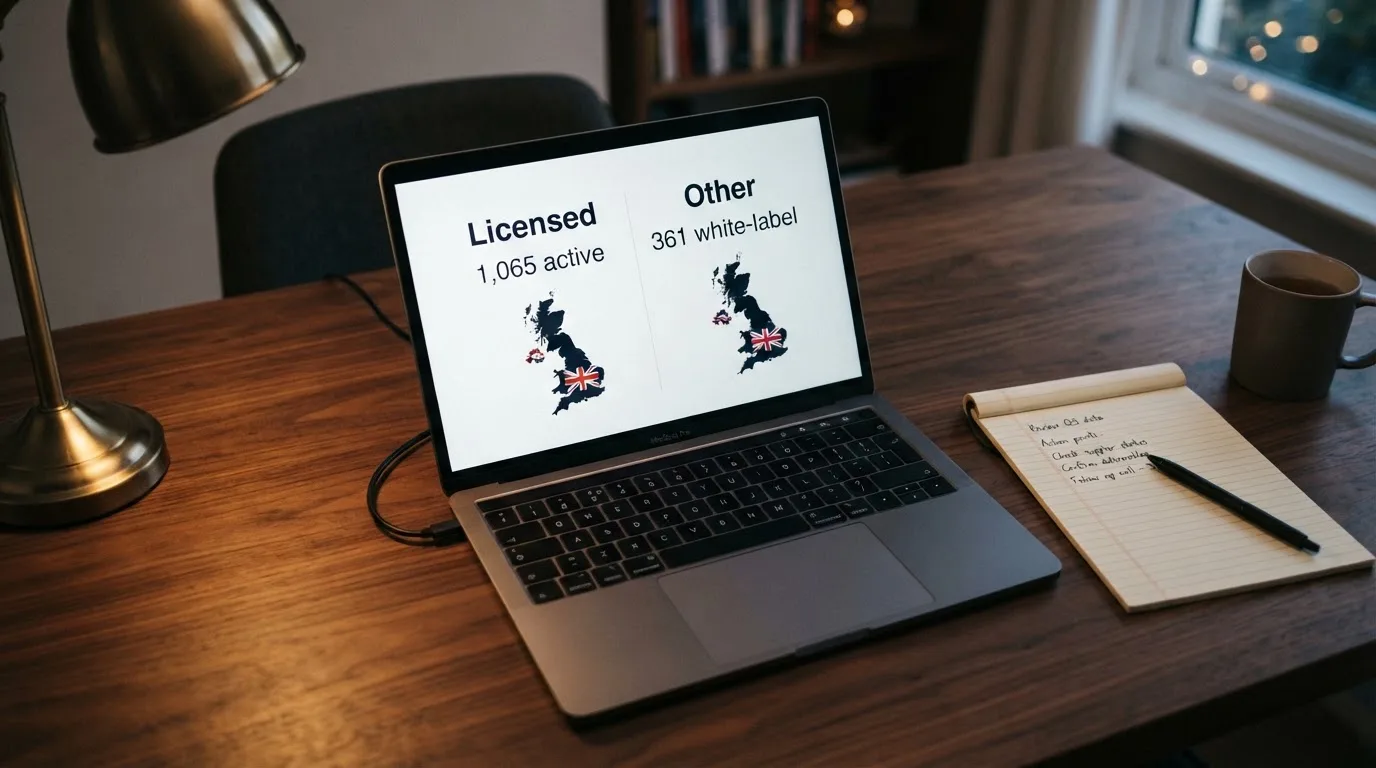
On 18 September 2026 the register held 139 businesses with an active remote casino operating licence, and the domain list held 1,065 active and 361 white-label entries. The register moves: licences are issued, surrendered, lapse. A brand that was licensed last year may not be licensed this one, which is why the check before the first deposit is worth the minute it takes.
Where the offshore pitch leads
The “foreign casino for UK players” pitch is built from a few recognisable parts: a Malta or Curaçao licence displayed prominently in the footer, a GBP currency option at the cashier, a welcome bonus that is heavier than the UK-licensed equivalent, and a game library with providers the licensed brands do not always carry. The pitch is real, and the things it offers are real — but the things it does not offer are what the player is trading for them.
The trade is the substance of the choice. A UK player who picks an offshore site is choosing a heavier bonus, a wider stake range and a less rigorous verification process, and giving up GAMSTOP, the 10x cap, the £5 / £2 stake ceiling and the Commission’s complaints route. The arithmetic in the section above is what the trade costs; the responsible-gaming stack is what the trade loses; the register is the test of whether the brand on the screen is what the marketing says.
What “foreign” actually means in the UK frame
After working through the licences, the stake caps, the bonus rules and the self-exclusion frame, the word “foreign” does less work than it used to. A UK player sitting in front of a Commission-licensed site is using a site that may be registered abroad — Gibraltar, in the case of Betfred’s licence holder Petfre (Gibraltar) Limited; Malta for several parent companies — and that is a different “foreign” from a site licensed in Curaçao with no UK footprint. The first is licensed in the UK; the second is not. The licensing question is the question, and the register is where it is answered.
That is why this page reads the register rather than the marketing. The register is the test. A brand’s status on it is what determines whether a UK player is playing inside the UK regulatory frame or outside it, and the frame is what determines every other question a player will meet at the cashier, on the slot, on the bonus and on the day a player wants to stop.
Frequently asked questions
What does it mean for a casino site to be based outside the UK?
“Based outside the UK” can mean two different things and the difference matters. It can mean the licence holder is incorporated in another jurisdiction — Gibraltar, Malta, the Isle of Man — while still holding a Gambling Commission licence to operate in Great Britain. It can also mean the site holds only a non-UK licence, in Curaçao or Malta, and targets UK customers from outside the Commission’s reach. Only the first kind sits inside the UK regulatory frame; the second does not. The Commission’s public register is the test of which kind a brand actually is.
Do foreign casino sites accepting UK players hold a Gambling Commission licence?
Some do and some do not. The brands reviewed on this page all hold an active remote casino operating licence from the Commission and are listed on the public register. Sites that market themselves as “accepting UK players” without a Commission licence are operating outside the UK frame, and providing gambling to people in Great Britain without a Commission licence is an offence under section 33 of the Gambling Act 2005. The Commission’s enforcement powers do not include ISP-level blocking, so unlicensed sites can remain reachable while action is being taken.
What protections does a UK player lose by using a foreign casino site?
The list is concrete: GAMSTOP national self-exclusion does not apply; the £5 / £2 stake cap on online slots does not apply; the 10x wagering requirement cap does not apply; mixed-product bonuses are not restricted in the same way; credit-card gambling is not enforced at the cashier in the same way; financial vulnerability checks at £150 net deposits are not run by default; and the Commission’s complaints route and approved ADR are unavailable. The site itself may still be licensed and well-run under its home regulator — what the player loses is the UK-specific stack of protections layered on top.
Is a Malta or Curaçao licence the same as a UK Gambling Commission licence?
No. A Malta Gaming Authority licence is a licence to operate from Malta under MGA rules. A Curaçao gaming licence is a licence to operate from Curaçao under Curaçao rules. Since the Gambling (Licensing and Advertising) Act 2014, any operator taking customers in Great Britain needs a Commission licence regardless of where it is based. A UK player on an MGA- or Curaçao-only site is not protected by UK rules, even if the site is well-capitalised and reputable under its home regulator. The two licences cover different jurisdictions; they do not substitute for each other.
Can a UK player self-exclude through GAMSTOP on a foreign casino site?
Not in the way GAMSTOP is designed to work. GAMSTOP covers every UK-licensed online operator; one registration excludes a player from all of them for six months, one year or five years. An offshore site is not part of GAMSTOP, so a player has to ask each operator to self-exclude individually, and an offshore site has no UK obligation to honour the request. The National Gambling Helpline (GamCare) and GambleAware are reachable from the UK regardless of which platform a player has been using, and can advise on next steps.
Why would a foreign casino site still market itself to UK players?
The market is large and the marketing reach is global. A Curaçao-licensed site can take GBP, run UK-friendly promotions and accept UK payment methods without a UK licence, and the Commission’s enforcement powers are limited to cease-and-desist notices, search-engine delisting, payment and hosting referrals — not ISP-level blocking. The pitch is heavier bonuses, wider stake ceilings and easier sign-up. The cost is the protections covered in the answers above. A player who recognises both sides of that trade is making an informed choice; a player who recognises only the marketing side is not.
Created by the ”bankingcasinouk” editorial team.