
Welcome bonus at a UK-licensed casino in 2026: what changes once the wagering cap lands
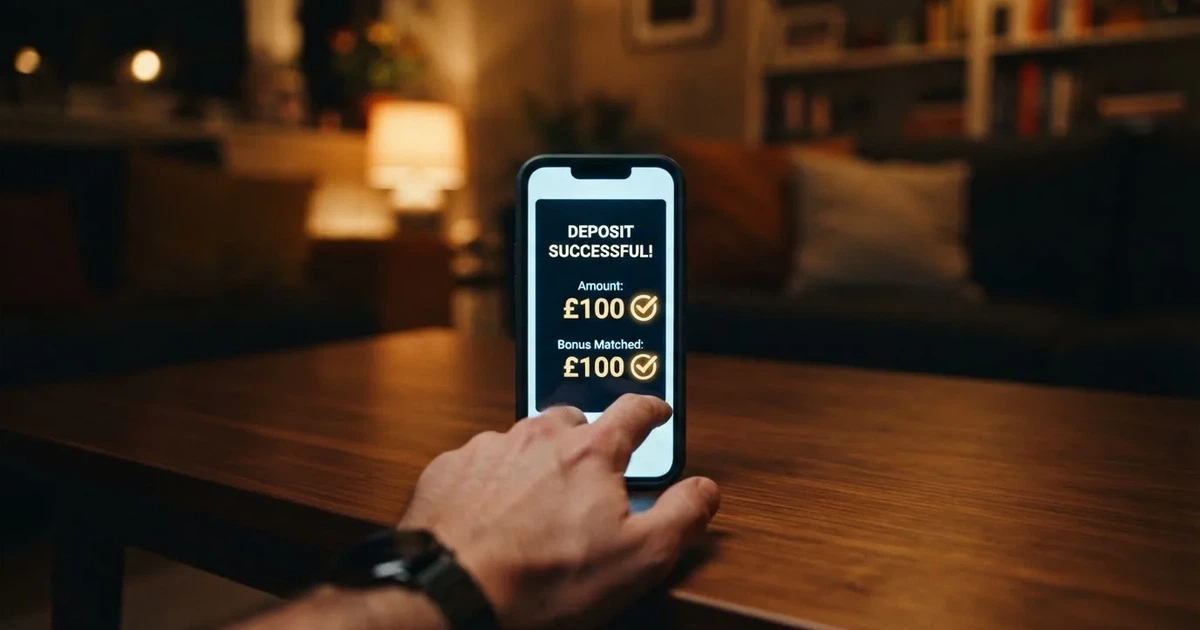
A welcome bonus is the small bribe a casino pays a player to move their money in. The bribe sits inside a rulebook — and the rulebook tightened on 19 December 2025, when the Gambling Commission capped wagering requirements on bonuses at ten times the bonus amount. That cap redrew what a “good” welcome package looks like for British players. This page walks through what a welcome offer is, what the regulator does and does not control about it, what a crypto- or no-deposit variant actually changes, and which of the ten Gambling Commission-licensed brands on the featured list make more sense for different kinds of bankroll.
Data is current as of 22 November 2026, checked against the Gambling Commission’s public register of gambling businesses.
Table of Contents
- How a welcome bonus is built, and where the rulebook bites
- The licence that keeps a welcome offer honest
- Responsible gambling and the welcome bonus
- Crypto-funded welcome bonuses in the UK
- Payments and how they shape the welcome bonus
- The shape of a current welcome offer
- The ten brands on the featured list, and what they each offer
- Choosing between the ten
- What a no-deposit welcome bonus changes
- The wagering-turnover band a player should expect
- The choice, for different kinds of player
- The frame that stays the same
- Frequently asked questions
How a welcome bonus is built, and where the rulebook bites
A casino welcome package has three parts the marketing copy usually blurs together: a headline amount, a wagering multiple, and a list of games that count at full weight toward clearing it. The first deposit gets matched — typically 100%, sometimes lower — up to a cap, in pounds. That matched money is bonus balance, not cash. To turn it into withdrawable cash the player has to wager it a set number of times, on eligible games, at eligible stakes. The wagering multiple is where the cost lives, and the cost is why the regulator stepped in.

The 10x cap that took effect on 19 December 2025 is on the bonus amount, not on the deposit. A £100 bonus at 10x means £1,000 of qualifying wagers before withdrawal; a £250 bonus at the same cap means £2,500. The cap also removed the mixed-product bonus — the old “bet £10 on the football, get 50 casino spins” construction. What survives is a single-product, single-promotion offer that the player can read on one page. That readability is the point: a bonus the player cannot predict the cost of is a bonus the player should not claim.
Underneath the cap sits a deeper stack of rules. Online slots carry a maximum stake per game cycle — £5 for players aged 25 and over since 9 April 2025, £2 for 18-24 since 21 May 2025. A slot spin cannot run faster than 2.5 seconds, auto-play is banned, and losses dressed as wins (a fanfare for a net loss) are banned. These are not bonus rules; they are game-cycle rules. They determine how fast a player can put £1,000 of wagers through a bonus and so how long the clearing takes. With a 2.5-second minimum spin and a £2 stake ceiling for under-25s, a £1,000 turnover takes a minimum of roughly 21 minutes of slot play if the player hits max stake every spin; in practice, with ordinary stake choices and the odd non-counting round, it runs to several hours.
The other pieces of the rulebook matter at the moment of claim, not during play. Credit cards have been banned for gambling in Great Britain since 14 April 2020, including cards routed through e-wallets. The Commission estimated around 800,000 UK consumers used credit cards to gamble in 2018, and 22% of online gamblers who used credit cards to gamble were classed as problem gamblers — the figures the Commission published when it announced the ban. Debit cards and bank transfers were not affected. Anonymous play is not possible at a licensed site: name, address and date of birth are verified before the first deposit or any play, a rule in force since 7 May 2019. GAMSTOP, the national self-exclusion scheme, is a mandatory condition of every online licence since 31 March 2020. Players can self-exclude for six months, one year or five years, and the exclusion cannot be cancelled early.
What the 10x cap does to a typical offer
Before the cap, multiples of 30x, 40x and 50x on the bonus amount were ordinary in the UK market. At 35x a £100 bonus becomes £3,500 of qualifying wagers, and at 50x it becomes £5,000 — sums that took a typical evening of slot play to clear and that put most of the bonus at the mercy of variance. At 10x the same £100 bonus is £1,000 of wagers. The arithmetic clears in a fraction of the time, and the bonus is, mechanically, worth more of its face value because fewer wagers means less expected loss to the house edge. The cap also flattens the gap between brands: a 50x offer and a 35x offer are now both illegal, so the differentiation shifts to the maximum bonus amount, the eligible games list, the maximum cashout on bonus-derived winnings, and the time window.

What the player actually keeps
A bonus at 10x wagering with a 96% return-to-player slot costs the player, in expectation, 10 × (1 − 0.96) = 0.4 times the bonus amount — 40p on the pound for a £100 bonus, or £40 of expected loss to clear it. A bonus at the older 35x on the same slot would have cost 35 × (1 − 0.96) = 1.4 times the bonus, or £140 on the same £100. The cap is the single biggest thing that has changed about welcome bonuses for British players since the credit-card ban. It is not the whole story — a £250 bonus at 10x still costs £100 in expectation, and the game-cycle stake ceiling constrains how fast that £2,500 turnover can be put through — but it is the line a player should hold in mind when comparing offers.
The licence that keeps a welcome offer honest
A welcome bonus that pays out as advertised, where the player has a route to complain if it does not, runs on a Gambling Commission licence. The Commission’s public register is the whole test. Anything else — a Curaçao licence, a Malta licence, a Gibraltar licence — does not authorise a site to take customers in Great Britain, and providing gambling to people in Great Britain without a Commission licence is an offence under section 33 of the Gambling Act 2005.
The register is searchable online and downloadable as CSV or Excel files. On 18 September 2026 it listed 139 businesses holding an active remote casino operating licence. A licence number on the register has a fixed form: six-digit account number, then “-R-”, then a six-digit number, then a two-digit suffix — for example, 054743-R-330863-014. The leading six digits repeat the licence holder’s account number; the “R” marks a remote, that is, online, licence. A player who wants to verify a brand can match the domain listed on the register to the licence account that runs it.
The same register carries the domain list. Each website is recorded against the licence account that operates it, with a status of Active, Inactive or White Label. A white-label site trades under another company’s licence. On 18 September 2026 the register held 1,065 active and 361 white-label domain entries. “Active” means the domain is the operator’s own running site; “white label” means the operator runs the brand on someone else’s platform, usually on a software-licence deal. Either way, the licence account behind the domain is the entity the player takes the offer from and the entity the Commission holds accountable.
What a Commission licence does for the welcome bonus specifically
The licence is what makes the 10x cap enforceable. It is what makes GAMSTOP enrolment compulsory at sign-up. It is what gives the player a complaints route through an approved alternative dispute resolution (ADR) provider when a bonus term is misapplied. It is not, on its own, a guarantee that a particular welcome offer is generous — the Commission regulates the shape of the offer and the conduct of the operator, not the value of the deal. A player who treats the licence as a baseline filter rather than a quality mark reads the market correctly.
The bonus rules that flow from the licence — the 10x wagering cap, the no-mixed-product rule, the credit-card ban, the deposit-limit prompt before the first deposit, the financial vulnerability check at £150 net deposits in a rolling 30 days — apply to every operator on the register. They do not apply to operators licensed only outside Great Britain. An offshore brand is free to offer 50x wagering, mixed-product bonuses, and crypto-funded deposits with no identity check; the player trades the consumer protections for those features.
Responsible gambling and the welcome bonus
A welcome bonus is a commercial offer; it is also the first moment a player interacts with a site’s safer-gambling tools. The Commission has wired the two together. Before the first deposit, the operator must prompt the customer to set a financial limit — in force since 31 October 2025. The prompt is not optional and it is not a soft suggestion; the deposit cannot proceed without the player responding. A player who sets a £200 monthly deposit limit and then claims a 100% match up to £250 has, mechanically, claimed more than the monthly cap — and the site is supposed to refuse the second deposit within that month.
The other entry points to the safer-gambling stack do not sit on the bonus page but sit on the same account. GAMSTOP enrolment is checked at sign-up for every Commission-licensed site; a player with an active six-month, one-year or five-year exclusion cannot open an account. The financial vulnerability check at £150 net deposits in a rolling 30 days runs on public data only — that is the rule in force from 28 February 2025 — and is the first of a tiered set of checks the Commission has signposted. National Gambling Helpline (run by GamCare) and GambleAware are the named national support routes the operator must point a player to; both appear on every Commission-licensed site.
How a welcome bonus interacts with a budget
A bonus that costs the player 40p on the pound at 10x wagering on a 96% slot is cheap for what it is; the same bonus on a 91% slot costs 90p on the pound, more than twice as much. The player who has set a £200 deposit limit and is looking at a 100% match up to £250 has two honest options: claim the bonus and accept that the clearing puts £40 to £90 of expected loss through the £200 bankroll, or skip the bonus, deposit £200 as cash, and play with no wagering requirement at all. The second option is the right answer for a player whose session length is short or whose stake ceiling sits below the game’s optimum — the bonus pays back less than the bonus is worth when the player cannot put enough volume through it. The first option is the right answer for a player whose session is long enough to clear the bonus and whose stake sits at or near the per-game maximum. The market does not make this choice for the player. The bonus page makes the offer; the safer-gambling tools and the player’s own plan make the call.
Crypto-funded welcome bonuses in the UK
A welcome bonus paid in crypto, or funded by a crypto deposit, sits inside the same rulebook as a sterling bonus at a Commission-licensed site — and that rulebook makes most of what the offshore crypto-casino marketing pitch talks about unavailable. Anonymous play is not possible at a licensed site, because name, address and date of birth are verified before the first deposit or any play. A crypto-funded welcome bonus still requires full KYC. The 10x wagering cap still applies. The credit-card ban does not touch crypto, but the Commission’s general anti-money-laundering rules do.
What crypto changes at a licensed site is the deposit rail, not the bonus structure. A player can fund a first deposit in Bitcoin or another supported coin through a payment processor, the bonus is credited in sterling (or in a sterling-equivalent bonus balance), the wagering requirement runs in pounds, and the withdrawal is in pounds back to a bank account or, sometimes, in coin. The bonus is no better and no worse than the sterling version of the same offer. Where a player sees a “crypto welcome bonus” advertised at a Commission-licensed brand, the offer is usually a sterling bonus with a crypto deposit accepted as the funding method — not a separate, larger, more generous crypto-only package.
Where the offshore crypto offer diverges
A brand licensed only outside Great Britain is not bound by the 10x cap, the mixed-product ban, the credit-card ban, the GAMSTOP check, or the verification-before-deposit rule. The welcome package can be 200% up to a Bitcoin-denominated cap, at 40x wagering, with a small minimum deposit and no identity check. The price is everything the Commission licence buys: no ADR route, no Commission complaints channel, no GAMSTOP enrolment, no guarantee the operator pays out at all. The Commission’s disruption powers — cease-and-desist notices, search-engine delisting, payment and hosting referrals — reach offshore sites but do not include ISP blocking, and the player is not penalised for using one. The player is, however, unprotected when they do.
Payments and how they shape the welcome bonus
The welcome bonus sits on top of the deposit, not in place of it. The deposit method decides how the bonus is funded, how quickly the player can clear the wagering, and how the winnings come back.
Debit cards and bank transfers are the workhorses. A UK bank transfer typically moves through the Faster Payments Service, launched in 2008 and operated by Pay.UK. The service runs 24 hours a day, seven days a week, and most payments arrive instantly or within a couple of minutes, though transfers can occasionally take up to two hours. The Faster Payments scheme sets a £1,000,000 per-transaction limit, though individual banks impose lower limits on their customers. A deposit of £200 to fund a welcome bonus lands in seconds; a withdrawal of the cleared bonus balance goes back through the same rail, in the same time.
Apple Pay is developed and operated by Apple Inc. and launched on 20 October 2014, initially supporting only US-issued payment cards. Apple Pay began supporting UK-issued payment cards on 14 July 2015. The system protects card data through tokenization — replacing the actual card number with a device-specific tokenised Device Primary Account Number and generating a dynamic security code for each transaction. In-store payments use near-field communication (NFC) to communicate with contactless terminals. On an iPhone with Face ID, Apple Pay purchases are authenticated by double-clicking the side button; on Touch ID models, by double-clicking the Home button. Apple states that a supported card from a participating card issuer is required, and that Apple Pay is not available in all markets. For a UK welcome bonus, Apple Pay is one of the fastest deposit routes for a player on an iPhone, but it does not change the bonus terms; it changes the time-to-first-spin.
AstroPay is a separate route, founded in 2009 and headquartered in Uruguay. It operates as a global digital wallet offering online payments, virtual and physical debit cards, and peer-to-peer transfers. Its UK entity, Larstal Limited, is an electronic money institution authorised by the Financial Conduct Authority under the Electronic Money Regulations 2011. AstroPay spun off its payment-processing business, dLocal, as a separate company in 2016, and serves users across markets including Argentina, Australia, Brazil, Canada, Colombia, Denmark, Spain, the United Kingdom, the United States and Uruguay. For a UK player, AstroPay is one of several e-wallets that let a player fund a deposit without sharing card details directly with the casino — useful, but again, neutral on bonus value.
What the deposit method does to the bonus
A deposit that arrives instantly lets the player start the wagering clock immediately. A deposit that takes two hours — the upper edge of Faster Payments — delays the clock by the same amount, which is meaningful for a bonus with a short expiry window. A deposit by a method the operator treats as ineligible for the bonus — usually certain e-wallets, listed in the bonus terms — credits the cash but not the matched bonus. The player who deposits by Skrill or Neteller at a brand that excludes those wallets from the welcome offer is, in practice, depositing cash only and gets no matched bonus at all. The deposit method is a bonus term in everything but name, and reading it before depositing is the single highest-leverage habit a player can build.
The shape of a current welcome offer
A current welcome offer on a Commission-licensed site, after the 19 December 2025 rules, looks roughly like this. A first deposit is matched at 100%, sometimes 50%, up to a cap that ranges from £25 to £250 across the featured set. The matched amount carries a 10x wagering requirement on eligible slots, with table games and live casino usually weighted at 10% or 0%. A time window — 7 days, 14 days, 30 days — applies; unspent bonus balance expires at the end of it. A maximum cashout on bonus-derived winnings may apply, often at 5x the bonus amount; some brands have removed this cap, others have not.
The wagering clearing rate depends on the eligible-games list. Slots typically contribute 100%. Roulette and blackjack typically contribute 10% or 0%. Live casino games usually contribute 0% or 10% and, on some brands, are excluded entirely. A player who tries to clear a £100 bonus at 10x by playing £10 hands of blackjack at 10% weighting needs to wager £10,000 in blackjack — ten times the requirement — to clear the same £100 of bonus. That is the practical effect of the weighting, and it is why “play the slots to clear the bonus” is the standard advice.
What the time window does
A £100 bonus at 10x on a £2-per-spin slot at a 2.5-second-per-spin minimum takes, in continuous play, roughly 21 minutes per £1,000 of turnover — so £1,000 of turnover is just over 20 minutes of pure spin time, and £2,500 is roughly an hour. A 7-day window is plenty for any player who plays more than once. A player who deposits on a Friday, plans to play the following weekend, and lets the clock run unmonitored through the working week will discover on the following Friday that £100 of bonus balance has expired because the wagering was not done. Time windows matter most for casual players; high-volume players clear well inside any window the market sets.
The ten brands on the featured list, and what they each offer
The featured set is the ten remote casino operating licence holders whose domains are listed as active on the Gambling Commission register. Each is presented on its own licence and operating company. Where the licence holder and the brand name are different, both are stated, because several brands share a single licensee — Ladbrokes, Coral and Gala Bingo all sit under LC International Limited. None of the ten are reviewed as a recommendation. The register confirms each holds an active licence; the comparison is over which operator fits which kind of player.
| Brand | Licence holder | GB remote casino licence | Domain status on the register | Highbet bonus support |
|---|---|---|---|---|
| Ladbrokes | LC International Limited (account 54743) | 054743-R-330863-014 | Active (Ladbrokes.com) | — |
| PokerStars | Stars Interactive Limited (account 39108) | 039108-R-319334-026 | Active (Pokerstars.uk) | — |
| Betway | Betway Limited (account 39372) | 039372-R-319367-029 | Active (Betway.com) | — |
| Unibet | Platinum Gaming Limited (account 45322) | 045322-R-324275-019 | Active (unibet.co.uk) | — |
| MrQ | Tek Fox Ltd (account 60629) | 060629-R-337532-004 | Active (Mrq.com) | — |
| kwiff | Eaton Gate Gaming Limited (account 44448) | 044448-R-323408-017 | Active (Kwiff.com) | — |
| Sky Vegas | Bonne Terre Gaming Limited (account 65519) | 065519-R-339675-002 | Active (Sky Vegas) | — |
| 888casino | 888 UK Limited (account 39028) | 039028-R-319297-014 | Active (888casino) | — |
| BetVictor | BV Gaming Limited (account 39576) | 039576-R-319370-028 | Active (Betvictor.com) | — |
| William Hill | WHG (International) Limited (account 39225) | 039225-R-319373-015 | Active (William Hill) | — |
The register snapshot for the comparison table is dated 18 September 2026. The Highbet support column is the no-data marker across the set: research carries no specific welcome-bonus terms for any of the ten on the question of Highbet’s package. That absence is itself a finding — the brands in the table are listed because each holds a Commission licence, not because any of them is presented as carrying the Highbet welcome offer.
Ladbrokes — large multi-product operator under LC International
Ladbrokes (Ladbrokes.com) is an active domain for account 54743, LC International Limited, holder of remote casino operating licence 054743-R-330863-014. The same LC International account covers Coral and Gala Bingo; a player moving between those three sites is, in licensing terms, not moving at all. The brand is one of the longest-running UK high-street names adapted to online, and its welcome package sits inside a sportsbook, casino, and bingo product set on a single wallet. For a player who wants one account across multiple products and is comfortable with a familiar high-street name, Ladbrokes is one of the few set choices. It is worth noting that the 19 December 2025 rule changes mean the casino welcome offer now stands alone, separate from any sportsbook or bingo promotions.
PokerStars — casino bolted to a poker room
PokerStars (Pokerstars.uk) is an active domain for account 39108, Stars Interactive Limited, holder of remote casino operating licence 039108-R-319334-026. The brand’s identity is poker; the casino is an adjacent product rather than the centre of gravity, and the welcome package reflects that. A player who plays both poker and casino keeps the wallet shared; a player who only plays casino gets a thinner product set than at a casino-first operator. For a poker player who wants a casino welcome bonus alongside the poker lobby, this is a sensible single-wallet pick. For a casino-only player, a casino-first brand on the list is the better fit.
Betway — sportsbook-rooted brand with a casino product
Betway (Betway.com) is an active domain for account 39372, Betway Limited, holder of remote casino operating licence 039372-R-319367-029. Like Ladbrokes and William Hill, Betway is a sportsbook-rooted brand that grew into casino. The casino welcome is one product in a wider set, and the player who wants a casino-only wallet may prefer a casino-first operator. For a player who wants to mix sports and casino promotions in one account, Betway is a reasonable pick on the licence alone.
Unibet — multi-product operator on the Platinum Gaming account
Unibet (unibet.co.uk) is an active domain for account 45322, Platinum Gaming Limited, holder of remote casino operating licence 045322-R-324275-019. Platinum Gaming also operates other UK-facing brands. Since the casino bonus stands alone, players familiar with sister sites will recognise the verification and safer-gambling processes.
MrQ — casino-first, small operator on a single licence account
MrQ (Mrq.com) is an active domain for account 60629, Tek Fox Ltd, holder of remote casino operating licence 060629-R-337532-004. MrQ is a casino-first brand without a sportsbook or poker room, and the welcome package is the main acquisition offer. For a casino-only player who does not want a sportsbook lobby, MrQ is one of the cleanest fits on the list. The experience is streamlined, though as a single-product operator, it carries fewer game providers and promotional variants than a multi-product competitor.
kwiff — single-licence operator with a distinctive product angle
kwiff (Kwiff.com) is an active domain for account 44448, Eaton Gate Gaming Limited, holder of remote casino operating licence 044448-R-323408-017. Kwiff’s product is built around “surprise” stake enhancements on sports and a casino product that wraps the same mechanic. A player who values the unpredictability of the brand’s product angle has a reason to pick it that does not apply to the rest of the list. A player who wants a conventional casino welcome offer with predictable terms should read the small print before depositing — the surprise mechanic can sit awkwardly with a fixed wagering requirement.
Sky Vegas — casino brand under a TV-broadcaster parent
Sky Vegas is an active domain for account 65519, Bonne Terre Gaming Limited, holder of remote casino operating licence 065519-R-339675-002. The Sky parent is a TV broadcaster; Bonne Terre Gaming is the operating company that holds the licence. The brand identity is casino-only, no sportsbook on the same wallet, and the welcome package sits at the front of a casino product set. A player who values a casino-only brand with a media-company parent and a recognisable name picks Sky Vegas on those grounds.
888casino — long-running casino-first brand
888casino (888casino) is an active domain for account 39028, 888 UK Limited, holder of remote casino operating licence 039028-R-319297-014. 888 is one of the longest-running purely-casino brands on the UK market and runs no sportsbook on the same UK wallet. For a casino-only player who wants an established brand with a deep game library, 888casino is a natural pick. However, because it shares ownership with sister brands, players should check if a bonus is truly exclusive to this site or part of a wider 888 group promotion.
BetVictor — sportsbook-rooted brand with a casino product
BetVictor (Betvictor.com) is an active domain for account 39576, BV Gaming Limited, holder of remote casino operating licence 039576-R-319370-028. Like Betway and William Hill, BetVictor started in sports betting and grew into casino. The casino welcome sits inside a multi-product wallet. A player who wants one account for sports and casino picks BetVictor on familiar grounds; a casino-only player is better served by a casino-first brand.
William Hill — high-street heritage, multi-product on the WHG account
William Hill is listed on the Commission register as an active domain of account 39225, WHG (International) Limited, which holds the active remote casino operating licence 039225-R-319373-015. William Hill is the longest-running high-street bookmaker on the list and has a casino product that sits next to its sportsbook. For a player who values a UK high-street name with a long operating history, William Hill is the closest fit on the list. The casino welcome is one offer in a multi-product wallet, and the multi-product wrap is gone under the current rules.
Choosing between the ten
The honest comparison is not over which welcome bonus is largest — the 10x cap and the no-mixed-product rule have flattened that field. The comparison is over which operator’s product set fits the player’s habits. A casino-only player on a short bankroll has a reason to pick a casino-first brand — MrQ, Sky Vegas, 888casino — and to read the eligible-games list before depositing. A multi-product player who wants sports, casino and bingo on one wallet has a reason to pick Ladbrokes, Coral, Betway, BetVictor or William Hill, knowing the casino welcome is its own offer now. A poker player who wants casino on the side has a reason to pick PokerStars. A player who values a distinctive product mechanic has a reason to pick kwiff — and a reason to read the small print carefully before depositing.
The bonus value, on a flat market, comes down to four numbers the player can compare on the bonus terms page: the maximum bonus amount, the wagering multiple (capped at 10x), the eligible-games weighting, and the time window. Two brands at the same cap and the same multiple can still differ sharply on weighting and window. A 7-day window with 100% slot weighting is more demanding than a 30-day window at the same multiple; a 0% live casino weighting is more restrictive than 10%. The brand-by-brand differences are smaller than they were before 19 December 2025, but they are not zero.
Where the register’s value stops
The public register confirms each of the ten brands holds an active remote casino operating licence. It does not confirm any brand’s welcome bonus terms, payout speed, customer service quality, game library depth, or the player’s actual experience. A licence is the floor, not the ceiling. The player who treats the register as a filter for “is this brand legal in Great Britain” and reads the bonus terms page as the source for “what will this offer cost me” reads the market correctly.
What a no-deposit welcome bonus changes
A no-deposit welcome bonus is the offer a player can claim without making a first deposit — typically a small bonus amount (£5 to £25) or a small number of free spins, with its own wagering requirement and its own maximum cashout. The 10x cap applies to it. The verification-before-deposit rule applies to it — name, address and date of birth are still verified before the bonus is credited, even though no money has moved. GAMSTOP enrolment is still checked. A no-deposit offer is not anonymous, and it is not outside the rulebook.
The price a player pays for a no-deposit offer is in the maximum cashout cap. Most no-deposit bonuses cap withdrawable winnings from the bonus at a small multiple of the bonus amount — £50 or £100, often lower than the bonus-derived winnings would otherwise be. The player who hits a large win on a £10 no-deposit bonus at 10x wagering often finds that £500 of the win is non-withdrawable because of the cap. The cap is the trade-off; the upside is that the player has not deposited anything to find out whether the brand is worth depositing on.
Where a no-deposit offer sits in the welcome stack
A no-deposit bonus is, in practice, a try-before-you-deposit offer. The player claims it, plays it through, decides whether to deposit. The first deposit is then governed by the matched welcome bonus — the 100% match up to a cap that is the headline number on the brand’s promotion page. The two offers usually cannot be combined: claiming the no-deposit bonus and then depositing does not stack a second bonus on top, and the wagering requirement on the matched deposit offer runs from the moment of the deposit, not from the moment of account creation.
The wagering-turnover band a player should expect
The 10x cap is the regulatory ceiling, not a uniform market practice. Some offers sit at 10x. Some sit lower, at 5x or even at 1x on certain slots. The lower the multiple, the cheaper the bonus is to clear. A player comparing two offers at the same matched amount is comparing two multiples — and a 5x offer costs half of what a 10x offer costs in expected loss, all else equal.
A worked example: a £100 bonus at 10x wagering on a 96% return-to-player slot requires £1,000 of qualifying wagers. The expected loss to the house edge is £1,000 × (1 − 0.96) = £40. A £100 bonus at 5x on the same slot requires £500 of qualifying wagers and an expected loss of £500 × (1 − 0.96) = £20. A £100 bonus at 10x on a 91% slot requires £1,000 of qualifying wagers and an expected loss of £1,000 × (1 − 0.91) = £90 — more than twice the cost for a player who chooses a lower-RTP game. The multiple and the eligible-games list are the two numbers a player should hold beside the headline amount.
How long the clearing takes in practice
A £100 bonus at 10x wagering (a £1,000 turnover requirement) with a £2-per-spin stake and a 5-second spin takes 500 spins, which at 5 seconds each takes approximately 42 minutes of pure spin time. Clearing the same bonus at a £5 stake requires 200 spins, which at 5 seconds each takes about 17 minutes. Because these figures assume 100% game weighting, players opting for games with lower contributions will face significantly longer clearing times and session durations. Real-world clearing, accounting for game-switching and non-counting rounds, typically extends this process to several hours.
The choice, for different kinds of player
A player with a £200 deposit budget and a long Saturday session has the widest range of choices on the list. The 10x cap means a £200 deposit matched at 100% up to £200 is a £200 bonus costing roughly £80 in expected loss on a 96% slot — manageable for a session long enough to clear £2,000 of turnover, which is several hours at the £2 stake ceiling. The player who picks a casino-first brand — MrQ, Sky Vegas, 888casino — gets a product set built around the casino lobby. The player who picks a multi-product brand — Ladbrokes, Betway, William Hill — gets a sportsbook and casino on the same wallet, with separate promotions.
A player with a £50 deposit budget and a short evening session has a narrower choice. A £50 deposit at 100% match up to a £50 cap is a £50 bonus costing roughly £20 in expected loss on a 96% slot. The clearing is £500 of turnover — 250 spins at the £2 stake ceiling, roughly 10 minutes of pure spin time, well inside any window. The player who picks a brand with a £25 minimum deposit and a £25 bonus cap is in the same economics with smaller absolute numbers. The relevant trade-off is product depth — the smaller the budget, the more the player benefits from a casino-first brand where the welcome bonus is the main offer.
A player who wants to claim a no-deposit bonus first and decide on the matched deposit afterwards has a reason to start with a brand whose no-deposit offer is honest about its maximum cashout cap. The cap is the single most-misread number on a no-deposit offer. A £10 no-deposit bonus with a £50 maximum cashout is a five-times return ceiling; a £10 no-deposit bonus with a £100 maximum cashout is a ten-times return ceiling; the difference is large enough to change whether the offer is worth claiming at all.
The frame that stays the same
A welcome bonus at a Commission-licensed site in 2026 is, in regulatory shape, what it was a year ago and what it will be a year from now: a matched deposit, capped at 10x wagering, with no mixed-product wrap, paid in pounds to a verified account, cleared on eligible games inside a time window, and refundable to a UK bank account through the Faster Payments Service or to a card through the operator’s standard withdrawal route. The ten brands on the featured list are the ten a player will most plausibly encounter, ranked here by the licence account and the operator that holds it. The differences between them on the welcome bonus itself have narrowed; the differences between them on product set, on game library, on account features, and on the player’s experience of clearing a bonus have not.
The cheapest way to read a welcome offer is to find four numbers: the matched amount, the wagering multiple, the eligible-games weighting, and the time window. Two offers at the same headline number can cost a player twice as much in expected loss. A player who reads those four numbers first and the brand name second reads the market the way the regulator intended.
Frequently asked questions
What welcome bonus does Highbet offer new UK players?
Highbet’s UK welcome package, like every other offer on a Gambling Commission-licensed site, sits inside the 19 December 2025 rulebook: a matched first deposit with a wagering requirement capped at 10x the bonus, no mixed-product wrap, and a time window. The exact headline amount, percentage match and eligible-games list are set on Highbet’s own bonus terms page at the point of claim, and they should be read in full before depositing because those four numbers — match, multiple, weighting, window — are the ones that decide the bonus’s real cost.
Is there a no-deposit version of the Highbet welcome offer?
A no-deposit welcome bonus, where offered, is a separate offer from the matched deposit package. It is credited after the standard name, address and date-of-birth verification — anonymous play is not possible at a Commission-licensed site — and it carries its own wagering requirement, capped at the same 10x, and its own maximum cashout cap on bonus-derived winnings. The cap is the trade-off for not depositing; it is the number to look at first.
Can the Highbet welcome bonus be claimed using cryptocurrency?
A Commission-licensed site, including Highbet, can accept crypto deposits through a payment processor. The bonus is then credited in sterling (or in a sterling-equivalent bonus balance), the wagering requirement runs in pounds, and the withdrawal is in pounds to a bank account or, where supported, in coin. The bonus is no better and no worse than the sterling version of the same offer; what crypto changes is the deposit rail, not the bonus structure.
What wagering requirement applies to Highbet’s welcome bonus?
The wagering requirement is capped at 10x the bonus amount under the 19 December 2025 Gambling Commission rules that apply to every Commission-licensed site. The actual multiple on a specific offer is set on the bonus terms page and should be read before depositing — a 5x offer costs half of what a 10x offer costs in expected loss on the same eligible-games list.
How long do I have to use the Highbet welcome bonus once claimed?
The time window on a current welcome bonus is set on the bonus terms page and runs from the moment the bonus is credited, not from the moment the account is opened. Common windows are 7 days, 14 days and 30 days. Unspent bonus balance expires at the end of the window, so a player who deposits on a Friday and plans to play the following weekend should set a calendar reminder for the window’s end.
Is Highbet a Gambling Commission-licensed casino?
The test of whether Highbet holds a Commission licence is the public register of gambling businesses. The register is searchable online and downloadable as CSV or Excel files; each remote casino licence has the form