
Where Dogecoin meets a British gambling licence
Dogecoin reached its first block in December 2013, and thirteen years later the question of whether a UK player can use it at a licensed online casino has a surprisingly short answer. The currency sits on a public blockchain that settles in roughly a minute per block, but the casino on the other side of that deposit still answers to the Gambling Commission in Birmingham, still checks your identity before a single pound moves, and still cuts your stake at £5 a spin if you are 25 or over. The token changes nothing about the licence, because the licence is about the operator, not the rail.

That gap — between what the blockchain suggests and what the regulator requires — is the one a UK reader needs closed before choosing a brand. The pages that follow work through it from the direction a player actually walks: what the licence covers, what protections attach regardless of how an account is funded, how the deposit itself behaves on the Dogecoin network, what the registered casinos look like as a set, and which paths the comparison opens up for different kinds of readers. The map is the page’s job, not the verdict on any single brand.
Current as of 22 November 2026, cross-checked against the Gambling Commission’s public register.
Table of Contents
- Responsible play comes before the coin
- What Dogecoin actually does at the cashier
- How UK crypto regulation fits around the casino
- The set of operators on the register
- Midnite
- 32Red
- Ladbrokes
- Paddy Power
- Casumo
- MrQ
- Betfair
- Unibet
- bet365
- 888casino
- How the choices split for different readers
- What the wagering cap means in practice
- Offshore brands and what the licence does not reach
- Picking a path through the set
- Frequently asked questions
Responsible play comes before the coin
The first shelf on this page is the one a reader most often skips and most often regrets skipping. It is not about Dogecoin. It is about what the Gambling Commission obliges every licensed operator to put around the deposit button, and what each obligation costs the player who treats it as decoration.

GAMSTOP is the national online self-exclusion register, and it has been a mandatory condition of every online operating licence since 31 March 2020. A self-exclusion can run for six months, one year or five years, and once set it cannot be cancelled early by the player or by the operator. The Commission treats registration as the central anti-harm tool it can enforce uniformly across the licensed set, and any online casino taking British customers is obliged to check GAMSTOP before letting an account deposit, free-bet or even log in. That obligation runs through Dogecoin exactly as it runs through Visa and Mastercard. There is no licensed UK-licensed route around it.
Reality checks are also built in. A slot spin may not run faster than one every 2.5 seconds, auto-play is banned, and a loss cannot be presented on screen in a way that resembles a win. The £5 maximum stake per game cycle for adults aged 25 and over (in force from 9 April 2025) and the £2 ceiling for 18 to 24-year-olds (from 21 May 2025) are statutory: they apply to every slot on every licensed site, however the account was topped up.
Deposit limits are not state-set but they are state-prompted. Since 31 October 2025, a UK-licensed operator has to ask a customer to set a financial limit before accepting the first deposit. The operator can offer defaults; what it cannot do is skip the question. The wider financial risk assessments the Commission has signalled were not yet in force as of the date on this page, though lighter vulnerability checks already trigger at £150 of net deposits across a rolling 30 days using public data only.
None of this is in dispute. What is in dispute, on forums and in marketing copy, is whether using Dogecoin changes any of it. It does not. A deposit in DOGE settles into a sterling balance at the licensed site, and from that moment the account is indistinguishable from one funded by debit card. GAMSTOP applies, the stake cap applies, the reality check applies, the financial vulnerability check applies, and the operator’s duty to seek proof of identity and address still applies before the first wager. Crypto does not buy anonymity at a GB-licensed casino, and the operator that suggests otherwise is mis-selling the licence it holds.
What Dogecoin actually does at the cashier
Dogecoin was launched on 6 December 2013 by Billy Markus and Jackson Palmer, and it remains the prototype of the meme-coin category. Its proof-of-work algorithm is Scrypt-based, its block time is around one minute, and its block reward has stayed at a static 10,000 DOGE per block. There is no fixed supply cap; Palmer said as much in February 2014, and roughly Ð5 billion of new coins enter circulation each year through the reward alone. At its May 2021 peak the network’s market capitalisation passed $85 billion, which puts a Dogecoin rally in the same conversation as a small-cap stock windfall rather than a routine currency move.
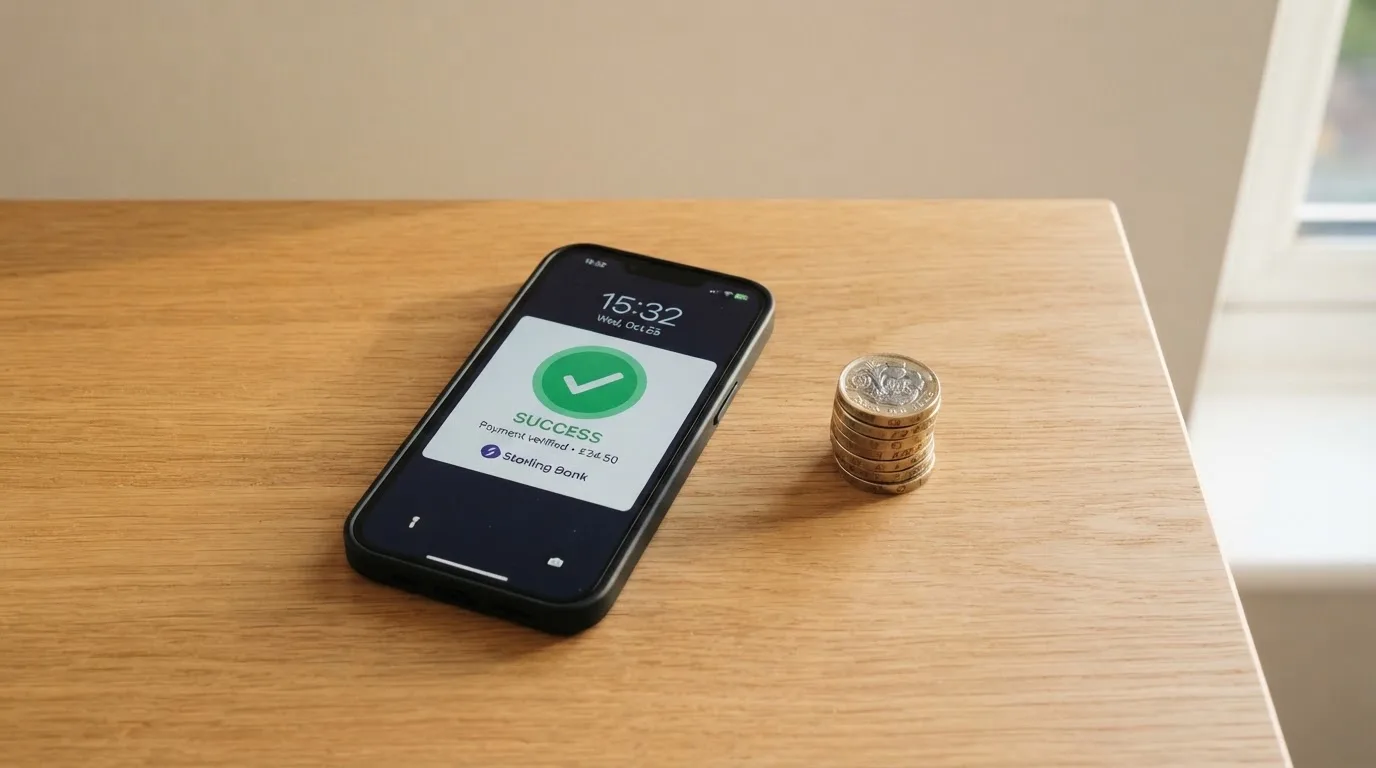
The practical consequence for a casino cashier is that a Dogecoin deposit confirms faster than a Bitcoin one — block times of roughly one minute against Bitcoin’s ten — but the price the operator credits the account in sterling can move meaningfully between the moment a player sends the DOGE and the moment the cashier locks the conversion rate. The Gambling Commission does not categorically forbid licensees from accepting crypto, but it does require them to file a Key Event notification when they start, and to show that they have thought through the added risks around price fluctuation, customer identification, and the treatment of those funds if the operator becomes insolvent. That last point matters: a deposit in fiat at a UK-licensed casino sits inside a segregated client account, and the regime around it is what section 33 of the Gambling Act 2005 exists to police.
Where the rails differ is in what happens before the cashier. A debit-card deposit is a payment-network transaction the bank already knows about; a DOGE deposit is a peer-to-peer transfer of value over a public ledger. The receiving casino still has to verify the player’s name, address and date of birth before the first deposit is allowed to be wagered — that obligation has been in force since 7 May 2019 and applies to every payment method. What the operator has to add for crypto is the layer around source-of-funds: where the DOGE came from, whether the sending wallet can be tied back to the player, and how the operator intends to evidence that in an anti-money-laundering audit. None of this is optional.
The other place the rails differ is cost. Card deposits ride interchange and scheme fees that the operator often absorbs; on Dogecoin the fee is the network fee the player pays the miner who includes the transaction in the next block, plus any spread the operator charges when it converts DOGE into sterling. There is no scheme on the DOGE side to refund a mistaken deposit to a wrong address, which is why the cashier screen at a licensed site tends to insist on a minimum confirmations threshold (usually somewhere between six and twenty blocks, in this coin’s case roughly six to twenty minutes) before it credits the account.
How UK crypto regulation fits around the casino
The Financial Conduct Authority has required firms carrying on cryptoasset exchange or custodian wallet activity by way of business to register under the Money Laundering Regulations since 10 January 2020. Of 417 applications received, the FCA’s own count had 68 registered, 263 withdrawn and 46 rejected as of the date this page reads. That is the regulatory frame a DOGE-acquiring UK player sits inside before the gambling question starts — it explains why a wallet provider has to ask for the same kind of identity evidence the casino will ask for a few minutes later. A new UK framework specifically for cryptoasset firms is due to begin on 25 October 2027, with the FCA’s broader authorisation regime under the Financial Services and Markets Act opening for applications on 30 September 2026.
HMRC treats cryptoassets as property rather than currency or money. Tokens are taxed by what they actually are and how they are used: Capital Gains Tax on disposal, Income Tax on receipts from mining or staking. A gambling win paid out in DOGE rather than in sterling is still a gambling win, and UK players owe no tax on gambling winnings whatever the payout currency, but a later disposal of the DOGE that carried that win sits inside the CGT regime. The two layers of tax are easy to confuse, which is why the Commission and HMRC both nudge readers to keep records of what was received, in what coin, and on what date.
None of this is the casino’s job to explain. The casino’s job, under its licence, is to verify the gambler, treat the funds safely, file the Key Event, and keep the connection to GAMSTOP live. The reader’s job, if the deposit is in DOGE, is to know what the FCA regime asks of the wallet side and what HMRC asks at disposal. The two regimes meet at the cashier and diverge again at the payout.
The set of operators on the register
The page’s working comparison is the Gambling Commission’s public register. On the date this page reads, the register listed 139 businesses holding an active remote casino operating licence, and the domain list attached to those accounts held 1065 Active and 361 White Label entries — a White Label domain trades under another operator’s licence rather than holding its own. Each domain carries a status, and the licence number on the register takes the form account-R-number-suffix, where the leading six digits repeat the licence holder’s account number and the R marks a remote licence.
Every brand in the table below is taken from that register, and each is an Active domain against the named licence account. The set is not a ranking and not a recommendation; it is the cross-section of large, GB-licensed casino brands the page works with.
| Brand | Licence holder and GB remote casino licence | Domain status on the register | Dogecoin support |
|---|---|---|---|
| Midnite | Dribble Media Limited — 042647-R-321653-022 | Active | — |
| 32Red | Platinum Gaming Limited — 045322-R-324275-019 | Active | — |
| Ladbrokes | LC International Limited — 054743-R-330863-014 | Active | — |
| Paddy Power | PPB Games Limited — 039411-R-319335-010 | Active | — |
| Casumo | Recro Limited — 061549-R-336718-002 | Active | — |
| MrQ | Tek Fox Ltd — 060629-R-337532-004 | Active | — |
| Betfair | PPB Games Limited — 039411-R-319335-010 | Active | — |
| Unibet | Platinum Gaming Limited — 045322-R-324275-019 | Active | — |
| bet365 | Hillside (UK Gaming) ENC — 055149-R-331499-004 | Active | — |
| 888casino | 888 UK Limited — 039028-R-319297-014 | Active | — |
The first thing to read off the table is the licence column rather than the brand column. Two licence accounts carry more than one brand each on this page: Platinum Gaming Limited covers both 32Red and Unibet, and PPB Games Limited covers both Paddy Power and Betfair. Treating either pair as competing operators would be wrong — they sit under the same licence account and share the same compliance obligations, the same GAMSTOP integration, the same Key Event filings and the same financial vulnerability checks. The brand the player logs in through does not change who the regulator is.
The second thing to read is what the Dogecoin column does not say. Research does not carry a confirmed Dogecoin acceptance statement for any of the ten brands on this page. The register does not list payment methods, and the Commission does not publish them either; what a brand actually accepts at the cashier is set on the brand’s own deposit page. Some of these brands have discussed crypto in public filings, others have not, and a player who wants Dogecoin specifically should treat the operator’s own cashier page as the only source that counts. A column of em dashes is the honest answer: the licence says nothing about the coin, and the page does not pretend otherwise.
The third thing to read is that every brand in the set sits inside the same protective regime. GAMSTOP applies at every one of them. The £5 / £2 stake cap applies at every one of them. The 2.5-second minimum spin interval applies at every one of them. The prompt for a deposit limit before the first deposit applies at every one of them. The financial vulnerability check at £150 net deposits in 30 days applies at every one of them. That uniformity is the point of a Commission licence: it is not that each operator chose to be careful, it is that the licence required them to be careful, and the page’s comparison starts there.
Midnite
Midnite is the youngest of the ten brands on this page. It is listed on the register as an Active domain of Dribble Media Limited under licence 042647-R-321653-022, and that licence account is not shared with any other brand on this list. Midnite has built its identity around esports and a smaller casino product beside it, which is what the rest of the comparison rests on.
On the licence, the brand is indistinguishable from the rest of the set: GAMSTOP-registered, £5/£2 stake cap, identity checks before first deposit, 2.5-second spin floor, no anonymous play. What sets Midnite apart in the comparison is the product mix — a reader who wants casino and sports under one licence account gets both, and a reader who only wants casino pays for the sports-platform overhead in a less specialised game library. Research carries no Dogecoin acceptance statement for Midnite, and the operator’s own cashier page is the only source that counts.
Verdict: a reader who values the wider product mix and accepts a younger operator with a single licence account gets a GB-licensed brand that ticks every box the regulator sets; a reader who only plays casino and wants the deepest game catalogue should look elsewhere on the set first.
32Red
32Red is one of the longer-established casino brands on the GB register, and it sits under Platinum Gaming Limited on licence 045322-R-324275-019. The same licence account covers Unibet on this list, which is the relevant point of comparison rather than a reason to skip 32Red on its own merits.
32Red’s product positioning has historically skewed toward casino rather than sports, and the licence account behind it has been on the register for long enough that the operator’s compliance filings, Key Event history and AML procedures are a matter of public record. Research into 32Red does not confirm Dogecoin acceptance, and the brand’s own cashier page is the source a player should consult before assuming support. What the licence does say is that a Dogecoin deposit, if accepted, would clear at the same £5 stake ceiling as a debit-card deposit, under the same GAMSTOP check, at the same identity-verified account.
Verdict: the casino-first brand on a shared Platinum Gaming licence account, with a longer compliance history than most of the set; a reader who wants casino without the sports-platform overhead and is comfortable with the brand not advertising crypto should put 32Red near the top of the comparison list.
Ladbrokes
Ladbrokes is one of the larger GB-licensed brands, with a sportsbook heritage that runs back long before the Commission took over remote licensing. The licence on the register is held by LC International Limited (account 54743), under 054743-R-330863-014, and the same account carries other high-street brands the page does not feature.
What a reader is comparing here is operational scale. LC International has the compliance infrastructure of a tier-one operator, and the Game-, AML- and Key-Event history that goes with it. Research carries no Dogecoin acceptance statement for Ladbrokes, and that absence is itself informative: a brand this size tends to be conservative on payment-method expansion because each new method is a Commission notification and a revised AML risk assessment, and the public record does not show a Dogecoin filing under this account. The cashier page is the source.
Verdict: the tier-one scale pick on this set, with the longest compliance history in the comparison; the absence of a public Dogecoin filing is the absence to weigh, not the absence to assume is permanent.
Paddy Power
Paddy Power sits under PPB Games Limited on licence 039411-R-319335-010, and the same licence account covers Betfair on this list. The shared account is the point of comparison rather than a quirk: Paddy Power and Betfair are not separate operators, they are two front doors on the same regulated business.
The product split mirrors the licence split: Paddy Power’s casino sits beside a sportsbook, and the casino product draws on the wider Flutter group catalogue. The compliance history under PPB Games is long, and the public register records the licence account as Active across both brands’ domains. Research carries no Dogecoin acceptance statement for either, and the same caveat applies as for Ladbrokes — the operator’s own cashier page is the only source that counts.
Verdict: the second of the two PPB Games brands on this list, picked for readers who already know the wider Flutter product and want the casino arm of it under the same licence account; treat it as a paired option with Betfair, not as an independent pick.
Casumo
Casumo sits under Recro Limited on licence 061549-R-336718-002, a licence account that does not share with another brand on this page. The brand built its identity on a loyalty and mission-style product layer over a casino catalogue, and that positioning is what the comparison works with.
On the licence, Casumo is bound by the same GAMSTOP, stake cap, identity-verification and vulnerability-check regime as every other brand on the list. Where it differs is the user-experience layer — the brand’s product design has historically leaned into a more gameified onboarding than the tier-one sportsbook brands. Research into Casumo does not confirm Dogecoin acceptance, and the absence is the absence to weigh against the operator’s own cashier page.
Verdict: the loyalty-and-mission pick on the set, with a single-licence-account profile and a product layer some readers want and others find beside the point; a useful second option for readers who have already decided against a sportsbook-first brand.
MrQ
MrQ is the smallest operator on this page by licence-account footprint, sitting under Tek Fox Ltd on 060629-R-337532-004. The brand’s product positioning is casino-only, no sportsbook, which is what differentiates it from the Flutter and LC International entries on this set.
A smaller licence account is not a weaker one. The Commission supervises Tek Fox Ltd under the same LCCP and social responsibility code as every other online licence, and the same Key Event and AML regime applies. What the smaller scale tends to change is the cashier’s payment-method list — smaller operators have fewer payment-method integrations, and the page’s research does not confirm payment methods for MrQ. A reader who values casino-only product over a wider catalogue and accepts the narrower cashier should put MrQ in the comparison.
Verdict: the smallest casino-only brand on the set, single-licence-account and uncomplicated; the absence of a Dogecoin acceptance statement is most likely to be permanent here, and a reader who needs crypto should weight that absence against the cleaner product scope.
Betfair
Betfair is the second of the two PPB Games brands on this page, and the pair with Paddy Power is the operative comparison. The licence account is 039411-R-319335-010, the domain is Active on the register, and the operator’s product mix is exchange-first sports plus a casino arm.
A reader choosing between Paddy Power and Betfair is choosing between two front doors on the same regulated business, and the comparison turns on which product the reader is actually here for. The casino product is broadly comparable; the difference is in the wider platform the licence account carries. Research carries no Dogecoin acceptance statement for either brand, and the absence applies symmetrically.
Verdict: the exchange-sports half of the PPB Games pair, with the same absence on crypto and the same compliance posture as Paddy Power; treat it as a paired option, not an independent pick.
Unibet
Unibet is the second of the two Platinum Gaming brands on this page, paired with 32Red under licence 045322-R-324275-019. The brand carries a wider international product footprint than 32Red, which is the point of comparison within the Platinum Gaming pair.
On the licence, Unibet is bound by the same regime as every other brand on the set. The product positioning has historically skewed toward sports with a casino arm, and that is the difference from 32Red’s casino-first product. Research into Unibet does not confirm Dogecoin acceptance, and the operator’s own cashier page is the source.
Verdict: the international-sports half of the Platinum Gaming pair, with a casino product that competes with 32Red under the same licence account; treat it as a paired option with 32Red, not as an independent pick.
bet365
bet365 sits under Hillside (UK Gaming) ENC on licence 055149-R-331499-004, and it is the largest single licence account on this page by brand recognition and customer base. The brand’s product is sportsbook-first with a casino arm, and the operational scale shapes the comparison.
A licence account of this size carries a long compliance history with the Commission, and the Key Event filings around payment methods are a matter of public record. Research carries no Dogecoin acceptance statement for bet365, and the absence is the more notable one on the set because tier-one operators tend to publicise payment-method additions in their regulatory filings. The cashier page is the source a player should consult, and the public register does not show a Dogecoin filing under this licence account.
Verdict: the tier-one scale pick alongside Ladbrokes, with the longest operational track record on the set; the absence of a public Dogecoin filing is the absence to weigh, and a player who specifically wants Dogecoin should not assume support at this brand.
888casino
888casino is the casino arm of 888 UK Limited, sitting under licence 039028-R-319297-014. The licence account is dedicated to the 888 brand family, and the casino product is the brand’s primary focus.
On the licence, 888casino is bound by the same Commission regime as the rest of the set. The product positioning has historically been casino-first with a long operational history under the same licence account. Research carries no Dogecoin acceptance statement for 888casino, and the absence is the absence to weigh against the operator’s own cashier page. The longer compliance history under a single licence account is the comparison point against the newer or paired-licence brands on this set.
Verdict: the casino-first brand with a long single-licence-account history, competing most directly with 32Red for the casino-only reader; the absence of a Dogecoin acceptance statement is the same absence to weigh as on the rest of the set, and a player should not assume support without checking the cashier.
How the choices split for different readers
The set above is not a ranking. It is a set of ten Active domains against GB remote casino licences, and the comparison a reader should make turns on what kind of reader they are.
For the reader who wants casino-only product and the simplest licence account, the smaller end of the set — MrQ, 888casino — gives a focused product without the sportsbook overhead, and the licence account is a single brand rather than a paired one. The trade is a narrower cashier, and the absence of a confirmed Dogecoin acceptance is most likely to be permanent at that end of the set.
For the reader who wants a wider product mix under one licence, the Flutter pair (Paddy Power, Betfair) and the Platinum Gaming pair (32Red, Unibet) are the operative options. The trade is that the reader is choosing between two front doors on the same regulated business, and the casino product on each side has to compete with the casino-only brands separately.
For the reader who values operational scale and the longest compliance history, the tier-one brands — bet365, Ladbrokes — carry the most public record and the most Key Event filings. The trade is that tier-one operators tend to be conservative on payment-method expansion, and the absence of a public Dogecoin filing under those licence accounts is the more notable absence.
For the reader who wants a loyalty-and-mission product layer, Casumo is the operative pick. The trade is a single licence account with a smaller compliance history than the tier-one brands, and the same absence on crypto as the rest of the set.
Midnite sits between the casino-only and the wider-product picks, and its position is a younger licence account with a casino-and-esports product mix. The trade is the operator’s narrower game catalogue against the wider product scope.
What none of the choices change is the licence regime. Every brand on the set is GAMSTOP-linked, every slot is stake-capped, every account is identity-verified before the first deposit, every brand sits inside the same LCCP and social responsibility code, and every brand’s Key Event filings are public. The comparison above is about product and licence-account structure, not about who opts out of the Commission’s rules.
What the wagering cap means in practice
Since 19 December 2025, wagering requirements at GB-licensed casinos are capped at 10x the bonus amount, and mixed-product bonuses — the kind that hand out casino spins in return for a sports bet — are banned outright. That is the rule, and the rule has a number attached.
A reader who wants to know what the cap means in their own session can read the rule the way the regulator wrote it. If the bonus amount is £100 and the wagering multiple is 10x, the required turnover before a withdrawal is £1,000. At a slot stake of £5 a spin and a spin taking 2.5 seconds, that is 200 spins, or roughly 500 seconds of slot play — about eight and a half minutes. The arithmetic is not the point; the point is that 10x and a £5 ceiling collapse the clearing time from a real activity into a formality, and a player who treats the bonus as a chance to “win money at the casino’s expense” is misreading what the rule actually changed.
The 10x figure is the band, not a single point. Different bonuses carry different multiples; the cap is the ceiling, not the floor. A bonus offered at the 5x end of the band clears twice as fast as one at the 10x end, and a reader comparing two offers should read the wagering multiple before the headline number. Where the multiple is not stated, the page cannot reconstruct it — research carries no operator-level wagering data for the brands on this set, and the operator’s own terms page is the source a player should consult before claiming.
What the cap does not do is change the house edge. A bonus cleared in eight minutes or eight hours still pays out at the underlying game’s RTP, and the expected loss on £1,000 of slot turnover at, say, a 96% RTP is £40. The bonus saves the player nothing about the underlying mathematics; it changes the shape of the clearing requirement. A reader who wants to compare bonuses honestly reads the multiple, reads the RTP, and reads the maximum cashout — three figures, none of them optional.
Offshore brands and what the licence does not reach
A reader searching this subject will meet offshore brands advertising Dogecoin deposits with no Commission registration, and the page’s position on those is plain. Any operator taking customers in Great Britain without a Commission licence is committing an offence under section 33 of the Gambling Act 2005, and the operator — not the player — is the one who faces enforcement. The Commission’s response has been cease-and-desist notices, search-engine delisting referrals, and payment and hosting referrals; it has no ISP-blocking power.
What the player loses on an unlicensed site is not the chance of winning. It is protection. There is no GAMSTOP at an offshore site, no Commission complaints route, no approved ADR, no segregated client funds regime, and no statutory stake cap. The £5 a spin ceiling does not exist. The 2.5-second spin floor does not exist. The deposit-limit prompt does not exist. The financial vulnerability check does not exist. The brand can advertise “no verification” because no UK regulator has asked it to verify.
The Commission does not penalise the player. It cannot, and it does not try to. The penalty is on the operator, and the cost to the player is the absence of the regime that the rest of this page has been describing. A reader who treats an unlicensed Dogecoin casino as equivalent to a GB-licensed one has misread what the licence is for.
Picking a path through the set
What the comparison above leaves a reader with is not a single best brand. It is a map of the choices the set opens up, and the path through it depends on what the reader came for.
A reader who wants the broadest product mix and accepts a paired licence account will start at the Flutter pair (Paddy Power, Betfair) or the Platinum Gaming pair (32Red, Unibet), and choose between them on product rather than on compliance — the compliance is shared.
A reader who wants casino-only and a single licence account will start at MrQ, 888casino or Casumo, and the choice between them turns on product feel — MrQ for the simplest casino, 888casino for the longest single-licence-account history, Casumo for the loyalty-and-mission layer.
A reader who wants operational scale will start at bet365 or Ladbrokes, and the choice between them turns on which tier-one product the reader is more comfortable with — both carry long compliance histories and conservative payment-method lists.
A reader who wants a younger licence account with a casino-and-esports product will look at Midnite, and accept the narrower game catalogue.
What every reader needs to do that none of those choices do for them is check the cashier page of the brand they pick, and confirm whether that brand actually accepts Dogecoin. The page’s research does not carry that confirmation for any of the ten brands on the set, and the licence register does not list payment methods. The set above is the comparison, and the cashier is the answer.
Frequently asked questions
Is it legal for a licensed UK casino to accept Dogecoin?
Yes. The Gambling Commission does not categorically prohibit licensees from accepting crypto, but it does require the operator to file a Key Event notification before doing so and to update its AML risk assessment. Once accepted, a Dogecoin deposit sits inside the same regime as any other deposit at that operator, and the player owes no UK tax on gambling winnings regardless of the payout currency.
Is there a minimum deposit when paying with Dogecoin?
The minimum is set by the operator, not by the regulator, and it varies by brand. A typical minimum sits in single pounds to low double pounds at the cashier, with the DOGE equivalent calculated at the conversion rate the operator applies at the moment of deposit. The operator’s own cashier page is the source a player should consult, and that page will also state the maximum deposit per transaction.
How long does a Dogecoin deposit take to show up in my account?
Dogecoin’s block time is around one minute, and the network confirms transactions in roughly six blocks for a typical cashier at a licensed operator — about six minutes. The licensed operator may apply additional confirmation time on top of that for its own risk assessment, and the cashier page will state the threshold. A deposit that does not confirm within the operator’s stated window should be raised with the operator’s customer support before being resent.
Do I need to verify my identity before depositing with Dogecoin?
Yes. Name, address and date of birth have to be verified before the first deposit is allowed to be wagered at a GB-licensed casino, and that obligation has been in force since 7 May 2019. It applies to every payment method equally, including Dogecoin, and the operator that suggests otherwise is mis-selling the licence it holds.
Does GAMSTOP self-exclusion cover an account funded with Dogecoin?
Yes. GAMSTOP has been a mandatory condition of every GB online operating licence since 31 March 2020, and the obligation runs through Dogecoin exactly as it runs through any other payment method. A player who has registered with GAMSTOP cannot deposit, wager or log in at any GB-licensed online casino, regardless of how the account is funded.
Are there any fees for depositing with Dogecoin?
The Dogecoin network itself charges a small miner fee per transaction, and the operator may apply a spread between the DOGE it receives and the sterling it credits. There is no interchange or scheme fee on the DOGE side as there is on card deposits. The cashier page at the licensed operator will state both the network fee estimate and the operator’s own fee or spread.